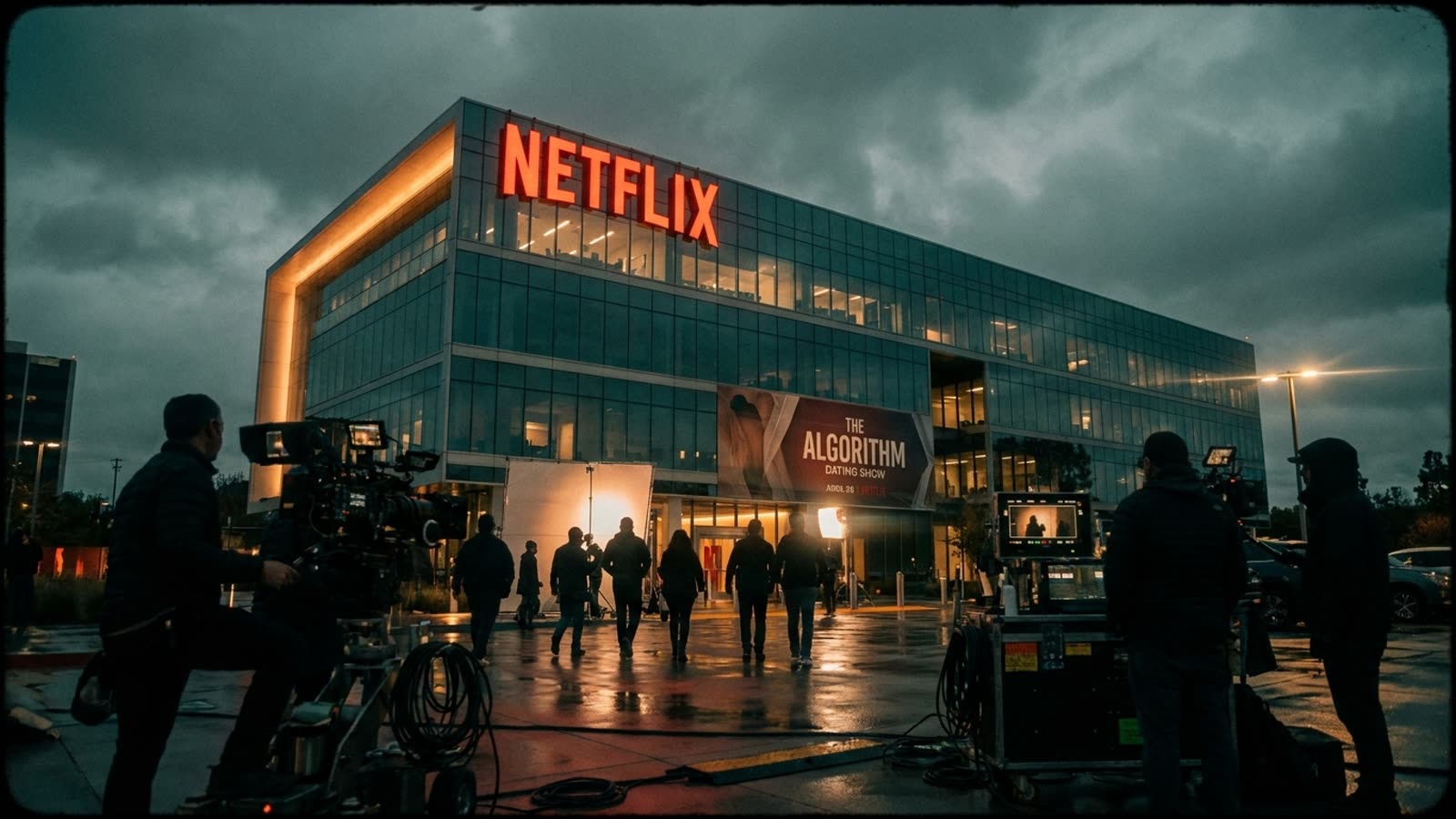
The streaming giant's latest dating entry — which pits contestants against an algorithm claiming to identify their "perfect match" — arrives at a moment when the premise barely qualifies as science fiction. More than half of American couples under 40 now meet through apps whose recommendation engines already perform exactly this function, just without the ring lights and confessional booths.
What Netflix understands, and what makes the format unexpectedly clever, is that the algorithm itself was never the point. The drama has always been whether humans will accept what the machine tells them.
The transparency trick
Traditional dating shows obscure their mechanics. Producers manipulate environments, edit selectively, and engineer conflicts while maintaining the fiction that love simply "happens." By contrast, making the algorithm a visible character — complete with compatibility scores and behavioral predictions — forces contestants to articulate why they might reject a mathematically optimized match.
This is, of course, what happens on Hinge and Bumble every day, just without the self-awareness. Users swipe left on algorithmically surfaced profiles constantly, trusting their gut over the machine's confidence intervals. The Netflix format merely dramatizes this universal experience of modern romance: the tension between data-driven suggestion and ineffable attraction.
Reality TV's late-stage evolution
The genre has been chasing relevance for years, cycling through increasingly baroque premises — dating naked, dating in pods, dating while a panel of family members watches. The algorithm angle represents something different: an acknowledgment that the fundamental weirdness of contemporary courtship might be more compelling than any producer-invented gimmick.
There's also a commercial logic. Netflix's recommendation engine is perhaps its most valuable asset, and a show that normalizes algorithmic matchmaking reinforces the broader proposition that machines know what you want better than you do. The content becomes advertising for the platform's core value proposition.
Our take
The show will likely be dismissed as dystopian or gimmicky, but it deserves credit for surfacing a truth the dating-app industrial complex prefers to keep invisible. We already let algorithms choose our romantic options; we just prefer not to think about it. A reality format that makes the machine legible — and lets us watch people argue with its conclusions — might be the most honest portrayal of 21st-century love yet committed to screen. Whether that's comforting or terrifying depends entirely on how your last swipe session went.