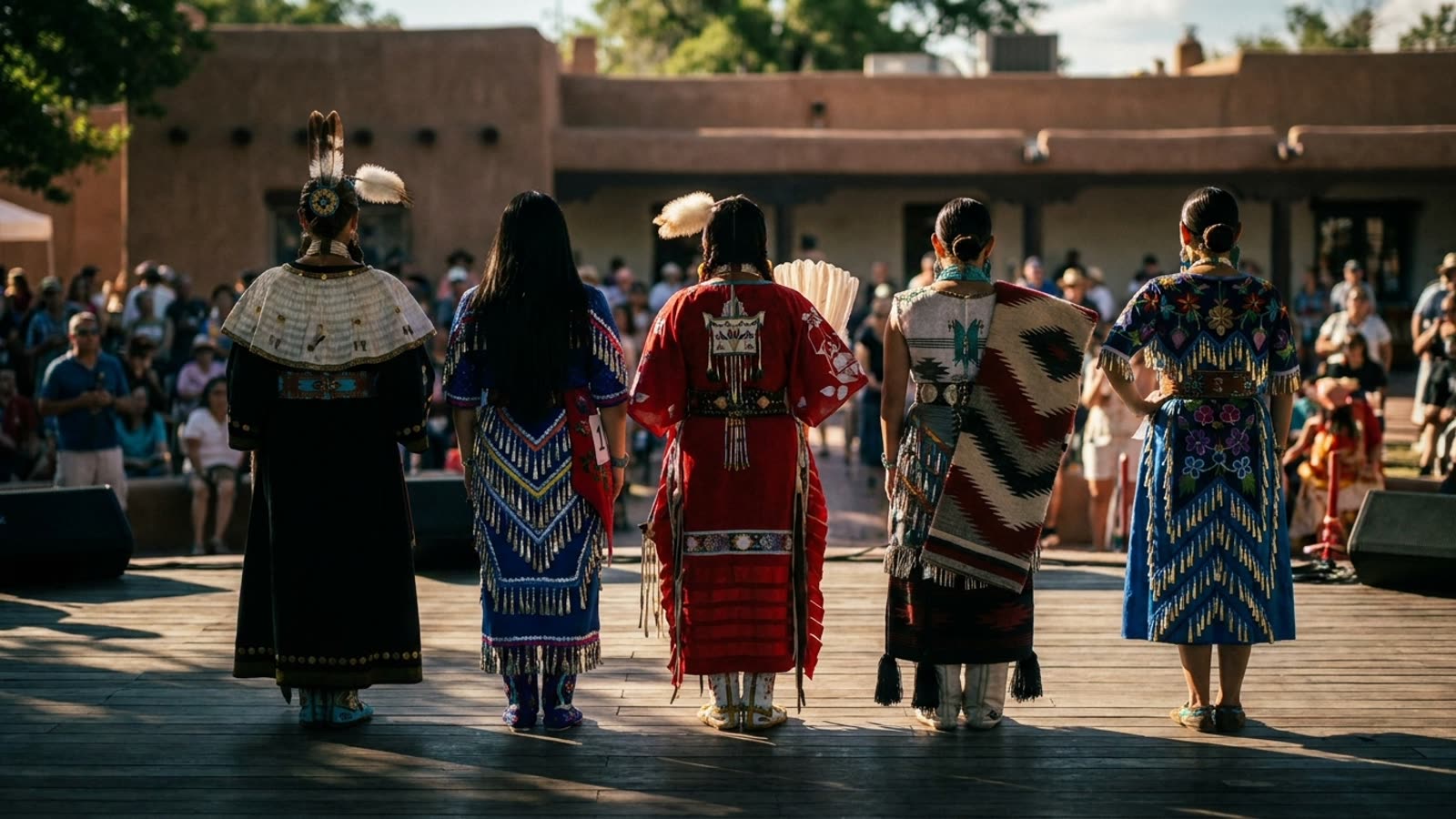
The most interesting fashion event of the past week did not happen in New York, Paris, or Milan. It happened in Santa Fe, where Indigenous designers and jewelers gathered to present new work that refuses the tired binary between "traditional craft" and "contemporary fashion." The showcase was small by industry standards, but its implications are not: Native designers are building a parallel luxury economy, one that treats provenance, technique, and cultural continuity as features rather than marketing copy.
Beyond the turquoise cliché
For decades, Native American design has been flattened into a handful of signifiers—turquoise, silver, geometric prints—that mainstream fashion borrows freely and credits rarely. The Santa Fe showcase offered something more complex. Designers presented garments and jewelry that drew on specific tribal traditions while incorporating unexpected materials, silhouettes, and references. The work was not nostalgic; it was argumentative. Each piece made a case for Indigenous aesthetics as a living, evolving practice rather than a museum exhibit.
The timing matters. Luxury fashion is in the middle of an authenticity crisis, with consumers increasingly skeptical of brands that claim artisanal heritage while manufacturing at industrial scale. Native designers offer something the heritage houses cannot fake: genuine connection to place, material, and technique. When a Navajo silversmith explains the provenance of their turquoise or a Pueblo potter describes the clay they gathered themselves, they are not telling a brand story. They are describing their Tuesday.
The economics of handcraft
There is a commercial dimension here that the industry has been slow to recognize. The global market for Indigenous art and fashion remains fragmented, with most sales happening through galleries, trading posts, and direct relationships rather than the wholesale and e-commerce channels that dominate mainstream fashion. This limits scale but preserves something valuable: the ability to command premium prices without surrendering creative control.
Some designers are beginning to bridge these worlds. A handful of Native-owned brands have secured stockists in major cities and built followings on social media, introducing their work to collectors who might never visit Santa Fe. But the growth has been organic and cautious, prioritizing sustainability over hypergrowth. In an industry addicted to next-season obsolescence, this patience looks increasingly like wisdom.
Our take
The fashion press tends to cover Indigenous design as a cultural story, which it is, but rarely as a business story, which it also is. That is a mistake. The designers showing in Santa Fe have solved problems that luxury conglomerates are spending millions to address: how to maintain craft integrity at scale, how to tell authentic stories, how to build loyalty without discounting. The rest of the industry could learn from them—if it is willing to listen rather than simply appropriate.