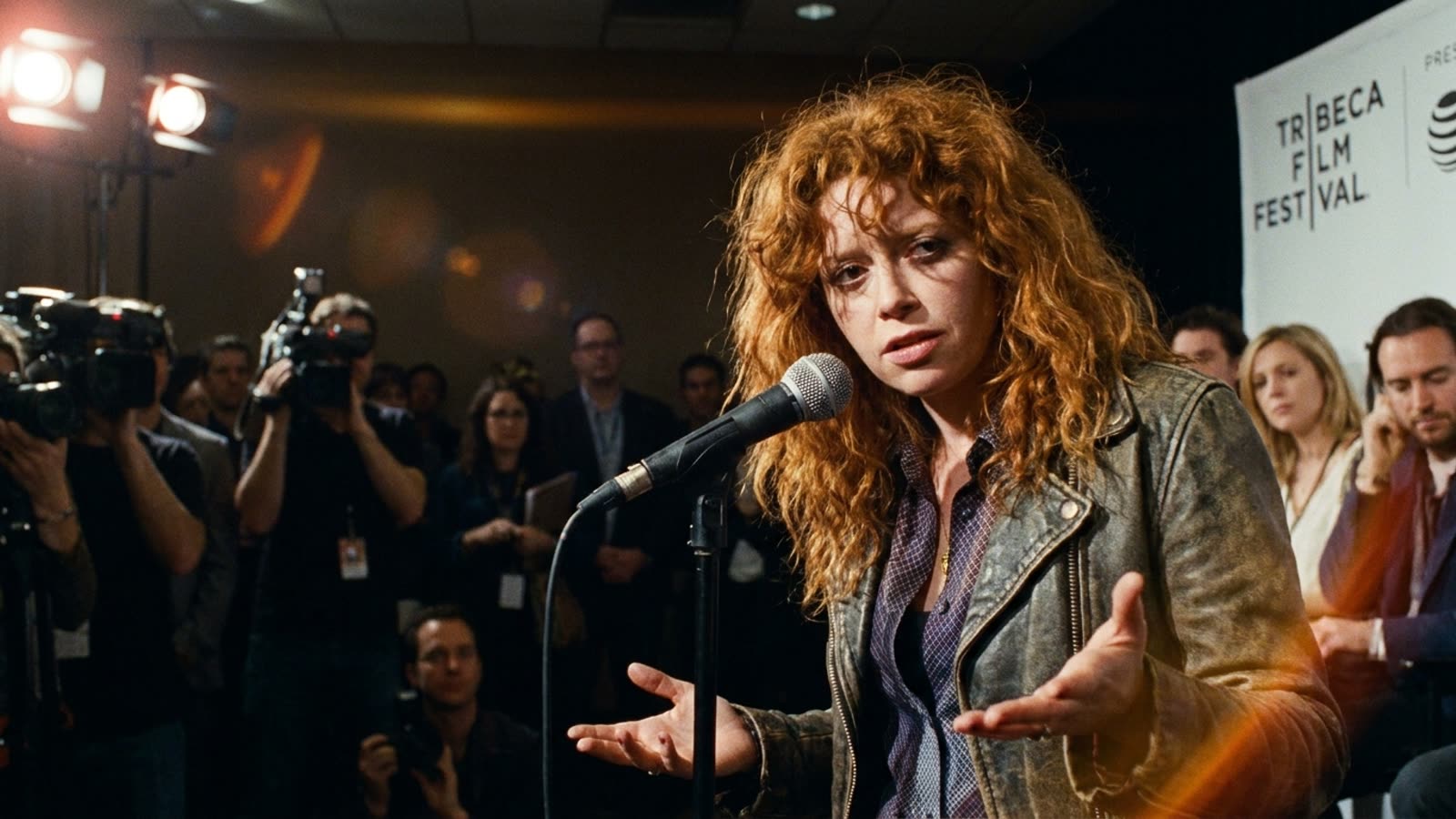
The footage from Tribeca is difficult to watch, and that difficulty is precisely the point. Natasha Lyonne, the raspy-voiced actress whose career resurrection with Netflix's Russian Doll made her a symbol of second-act triumph over addiction, appeared at a panel during the 2026 Tribeca Film Festival exhibiting slurred speech and erratic behavior that immediately set social media ablaze with speculation, concern, and the peculiar form of voyeurism that masquerades as empathy.
The video, which circulated widely within hours of the event, shows Lyonne struggling to complete sentences, her trademark sardonic delivery replaced by something more halting and confused. Festival attendees reported that the appearance felt "off" from the start, with Lyonne seeming disoriented during what should have been a standard promotional conversation.
The recovery narrative problem
Lyonne, now 47, has been admirably candid about her past struggles with heroin and alcohol, a history that nearly killed her in the early 2000s and left her with a heart infection requiring surgery. Her openness became central to her public persona and to the critical reading of Russian Doll itself, a show about a woman dying repeatedly that many interpreted as a meditation on addiction and self-destruction. This transparency, however, creates a trap: every public stumble becomes evidence in an ongoing trial about whether the redemption story holds.
The entertainment industry loves a comeback narrative right up until it doesn't. Studios and streamers have built entire marketing campaigns around Lyonne's survival story, her transformation from cautionary tale to prestige television auteur. What they have not built is any coherent framework for what happens when someone in recovery appears to falter publicly, beyond the usual cycle of concerned tweets and anonymous source quotes.
What we don't know
It is worth stating clearly: we do not know what caused Lyonne's behavior at Tribeca. Slurred speech and disorientation can result from prescription medications, exhaustion, medical conditions, or any number of factors that have nothing to do with substance use. The rush to diagnosis that follows any such incident reveals more about the audience than the subject. Representatives for Lyonne have not yet commented publicly on the appearance.
But the ambiguity itself is instructive. The same industry that demands confessional honesty from its recovering addicts offers no grace period for bad days, no allowance for the possibility that someone might simply be unwell in mundane ways. The surveillance is constant; the support is episodic at best.
Our take
Natasha Lyonne owes us nothing, least of all an explanation for a single uncomfortable public appearance. What the Tribeca footage actually reveals is the fundamental bad faith of celebrity recovery culture: we want the story of triumph without accepting that recovery is not a destination but a daily practice, often invisible and always precarious. The video will be analyzed, the think pieces will proliferate, and Lyonne will be expected to address it eventually, because that is the bargain she made when she let us into her history. It is not a fair bargain. It never was.