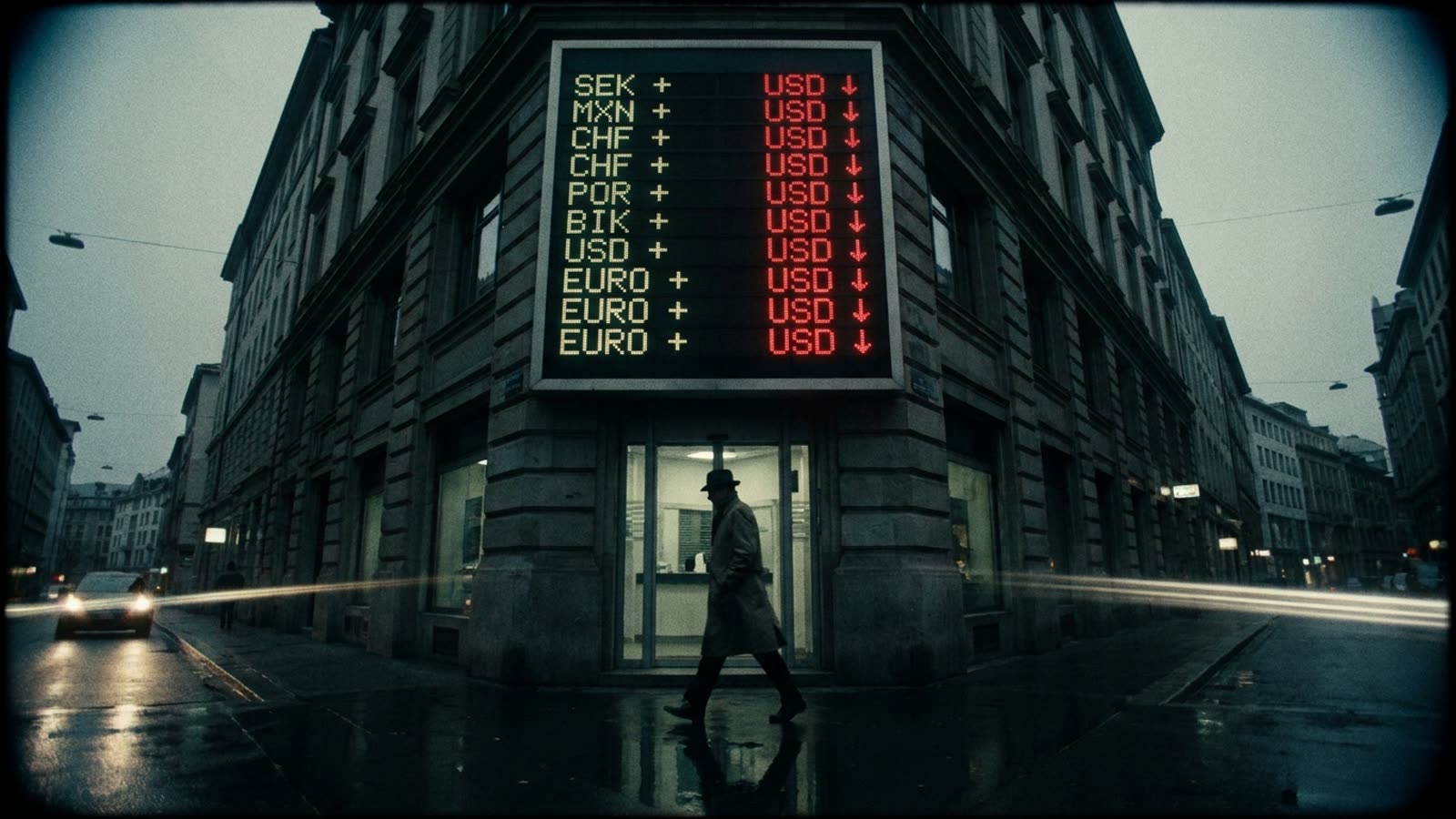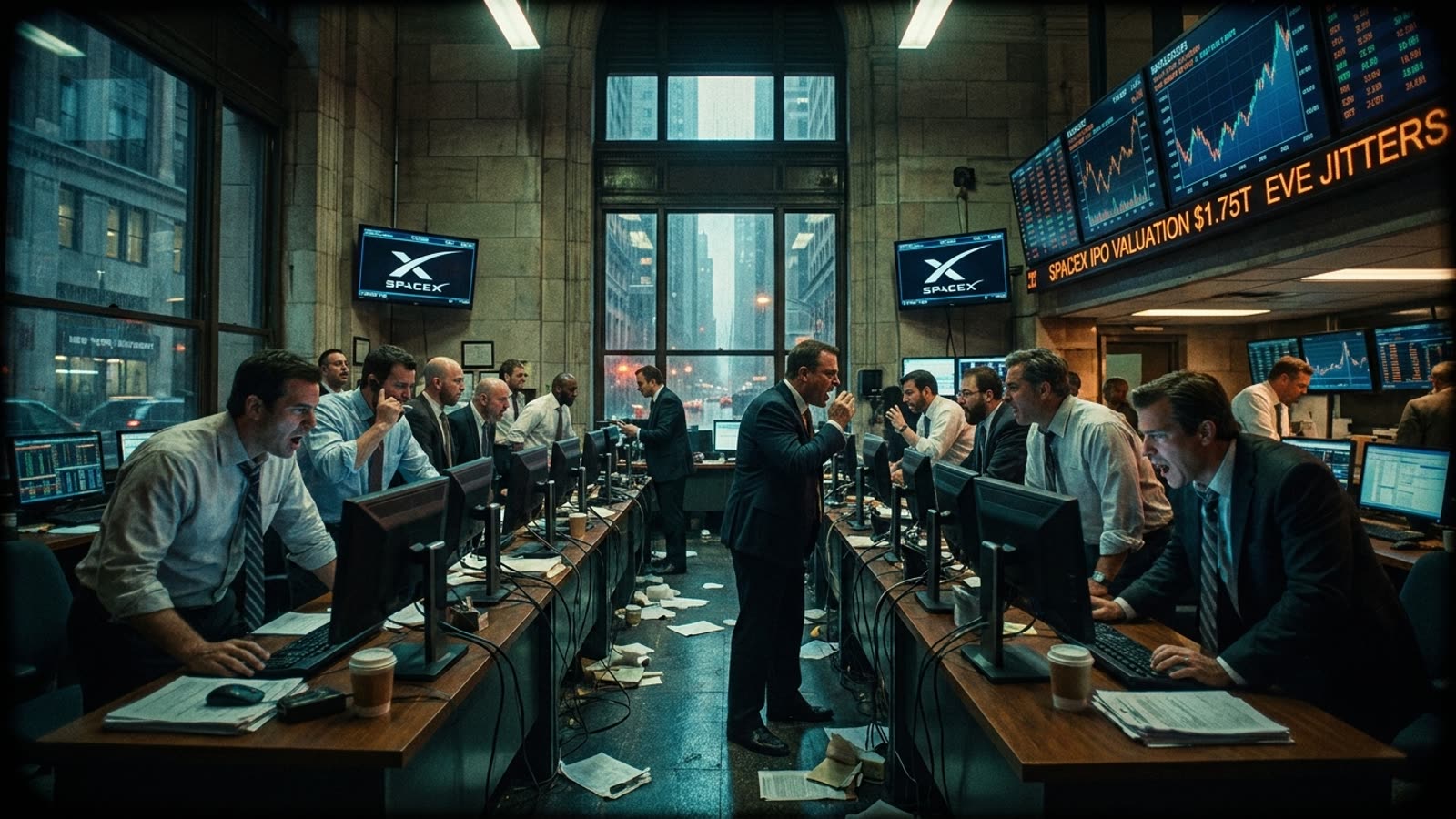
The Nasdaq Composite fell again on Wednesday, extending a week of choppy trading that has less to do with earnings or economic data and more to do with a single company that hasn't even gone public yet. SpaceX's initial public offering, scheduled for Thursday morning, has become the market's main character — and investors are acting accordingly.
The index dropped 1.2 percent in afternoon trading, with technology shares leading the decline. Bitcoin, often a barometer of risk appetite, held stubbornly below $62,000. The proximate causes are familiar enough: inflation data released earlier this week showed prices still running hot, and the Federal Reserve's rate path remains uncertain. But traders and analysts are increasingly pointing to something else — the gravitational pull of what may be the largest technology IPO since Alibaba.
The SpaceX effect
Elon Musk's aerospace company is expected to debut at a valuation north of $200 billion, a figure that would make it instantly one of the most valuable companies on any exchange. The offering has drawn comparisons to Facebook's 2012 debut, though the context is different: SpaceX is profitable, dominant in its market, and sits at the intersection of defense, telecommunications, and space exploration.
The problem for the broader market is that an IPO of this magnitude requires capital. Institutional investors have been repositioning portfolios for weeks, trimming positions in existing tech holdings to free up cash for SpaceX allocations. The result is a kind of pre-event deleveraging that shows up as general market weakness even when fundamentals haven't changed.
Inflation is not helping
The Consumer Price Index report released Monday showed headline inflation ticking up to 4.1 percent, driven largely by energy costs tied to the ongoing Iran conflict. Core inflation, which strips out food and energy, remained sticky at 3.4 percent. Neither figure was catastrophic, but both were unwelcome for investors hoping the Fed might signal rate cuts before year-end.
Treasury yields have responded accordingly, with the 10-year note climbing to 4.67 percent. Higher yields raise the discount rate on future earnings, which disproportionately hurts growth stocks — precisely the category that dominates the Nasdaq. The combination of rate uncertainty and a massive capital reallocation event has created what one strategist called "a market holding its breath."
What tomorrow brings
SpaceX is expected to price its offering Wednesday evening and begin trading Thursday morning under the ticker SPCE. Early indications suggest overwhelming demand, with the book reportedly oversubscribed by a factor of ten. If the debut goes smoothly, some of the capital that fled other tech names may return. If it stumbles — whether on valuation concerns, execution issues, or simply bad timing — the ripple effects could extend the current malaise.
Our take
Markets hate uncertainty, and the SpaceX IPO represents a particularly potent form of it. This isn't a company going public; it's a reordering of the technology landscape. The Nasdaq's current anxiety is less about whether SpaceX will succeed — most assume it will — and more about what happens to everything else when a new $200 billion giant enters the room. By Friday, we'll know whether this was prudent repositioning or unnecessary hand-wringing. Until then, expect more of the same.