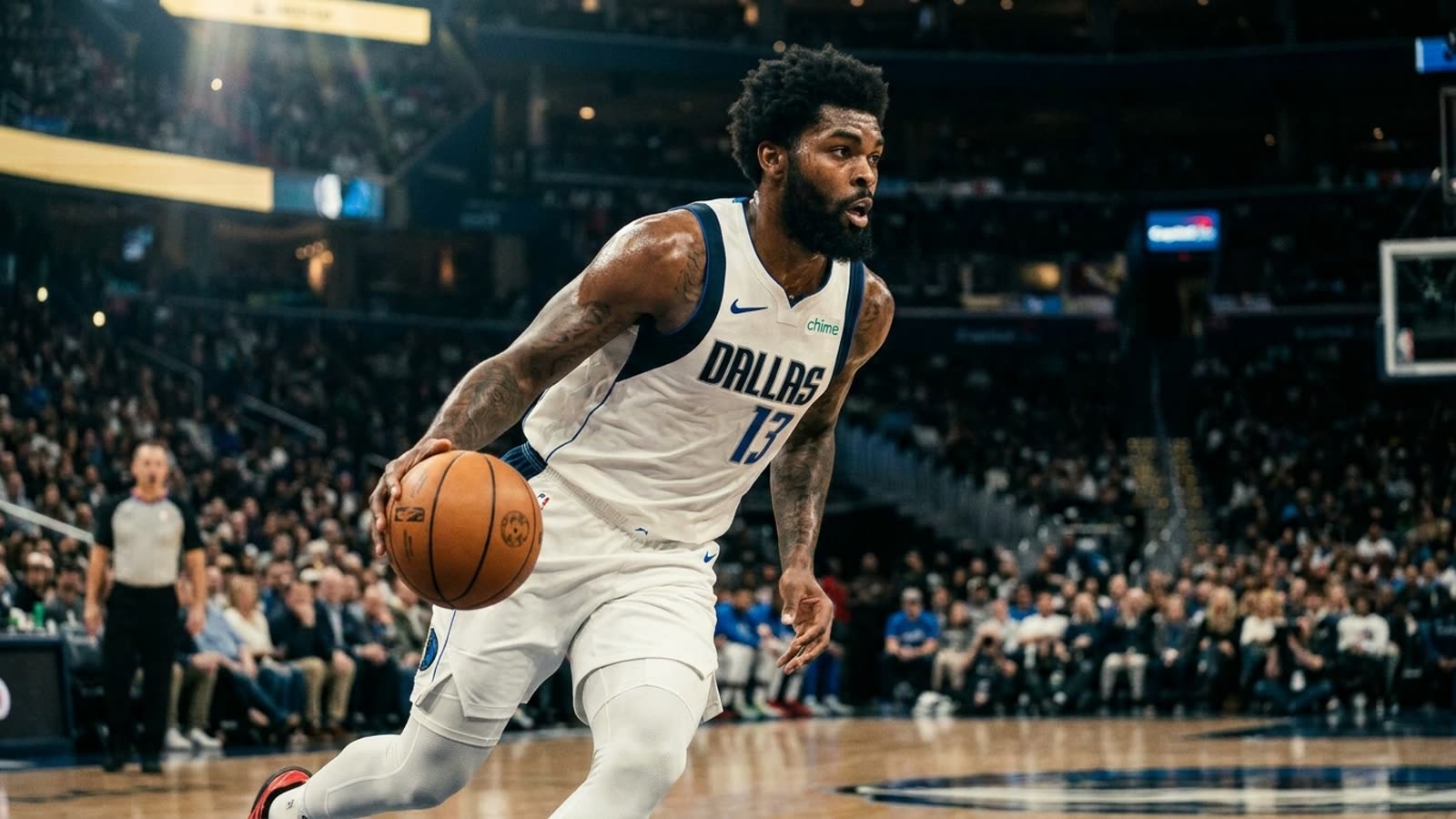
The NBA tunnel walk has become so codified—oversized silhouettes, obscure Japanese labels, the occasional conversation-starting bag—that it takes genuine effort to stand out. Naji Marshall, the Dallas Mavericks' 27-year-old forward, appears to be making that effort, and the results are worth paying attention to.
Marshall arrived in Dallas this season after four years in New Orleans, where his fashion choices registered somewhere between functional and forgettable. Something shifted. Whether it's the influence of a new city, a new stylist, or simply the confidence that comes with a larger contract, Marshall has emerged as one of the more compelling dressers in a league that treats pre-game arrivals as de facto fashion shows.
The democratization of NBA style
For years, tunnel fashion was the province of max-contract stars—Russell Westbrook's avant-garde experiments, LeBron's calculated statements, Harden's maximalist excess. Role players dressed like role players. That hierarchy has eroded. Social media flattened the attention economy; a well-dressed reserve can generate as many impressions as a starting point guard in a plain hoodie. Marshall seems to understand this implicitly.
His recent looks have leaned into tailored proportions rather than the ballooning fits that dominated the past few seasons—a subtle counter-programming that reads as intentional rather than behind the curve. The color palette skews earthy, the accessories minimal. It's not revolutionary, but it's considered, which is more than most players manage.
Why Dallas matters
The Mavericks organization has historically been style-neutral territory. Luka Dončić dresses like a man who would rather be playing video games (because he would). Kyrie Irving's aesthetic leans spiritual-minimalist. There's no dominant fashion voice in that locker room, which creates space for someone like Marshall to establish one.
Dallas itself is undergoing a quiet fashion evolution—the city's luxury retail footprint has expanded significantly, and its proximity to both coasts makes it a logical hub for brands looking beyond the obvious markets. Marshall arriving at this particular moment, in this particular city, feels less like coincidence than alignment.
Our take
Marshall won't land magazine covers or secure the kind of brand partnerships that flow to All-Stars. But he's doing something arguably more interesting: proving that personal style in professional sports doesn't require permission from the establishment. The tunnel is democratic now. You just have to show up with something to say.