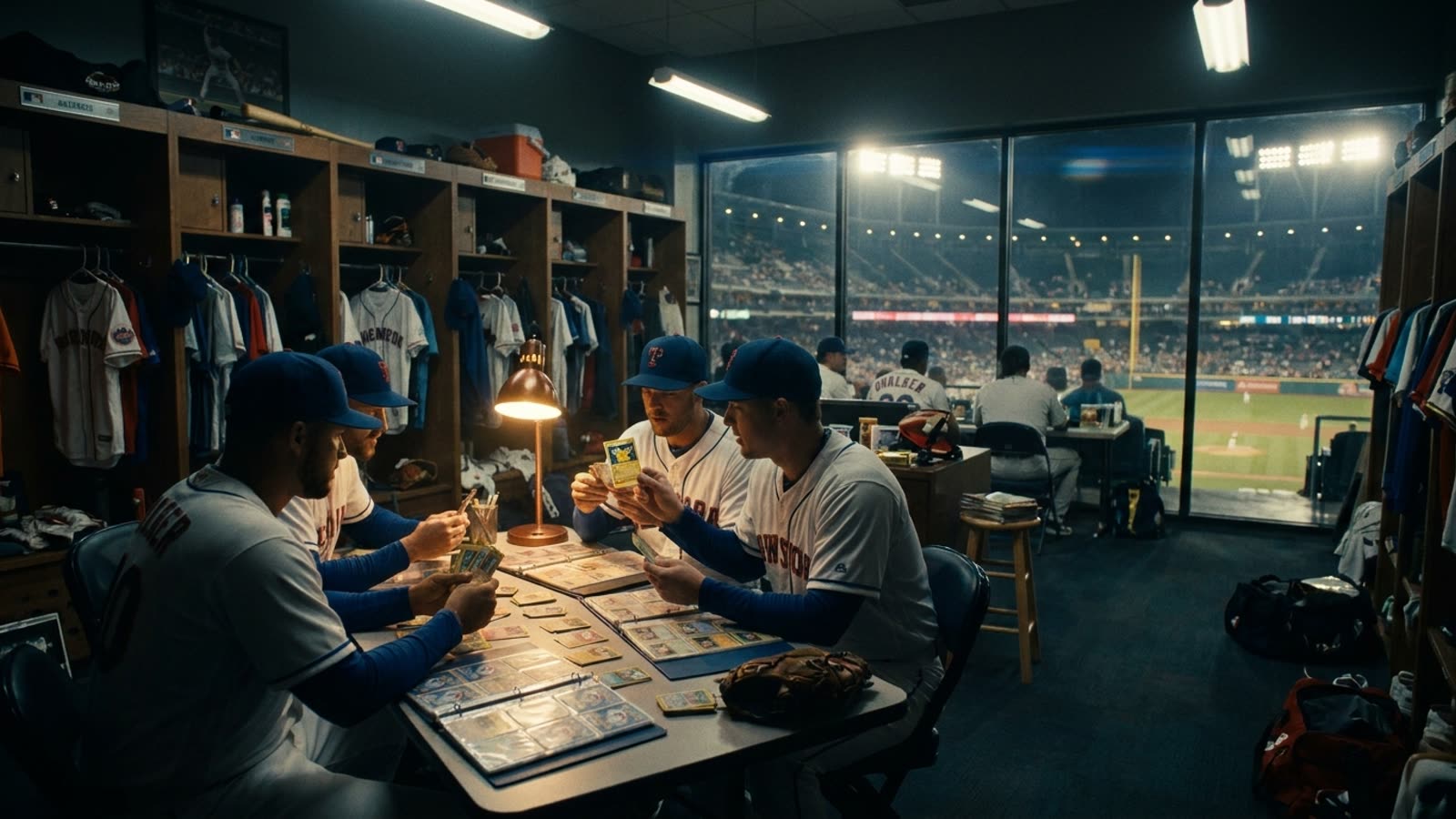
The modern MLB clubhouse smells like leather, pine tar, and childhood nostalgia. Somewhere between batting practice and first pitch, a surprising number of the game's highest-paid athletes can be found hunched over binders of holographic cardboard, debating the relative merits of a 1999 Base Set Charizard versus its 2023 Crown Zenith reprint.
Pokémon collecting has infiltrated professional baseball with the quiet persistence of a well-executed hit-and-run. What started as a handful of players posting pack openings on social media has metastasized into a full-blown subculture, complete with its own economy, hierarchy, and social rituals.
The economics of distraction
Baseball's 162-game season creates a unique problem: how do you fill the dead hours? The sport's grueling travel schedule — six months of hotels, charter flights, and clubhouse downtime — has historically been filled with card games, video games, and the occasional ill-advised investment scheme. Pokémon cards offer something different: a hobby that's simultaneously nostalgic, competitive, and potentially lucrative.
Players report spending anywhere from modest sums to substantial five- and six-figure investments on rare cards. The hobby has created unexpected bonds across roster lines — veterans mentoring rookies not on swing mechanics but on grading services and authentication. Some teams have informal trading sessions; others have developed full card-show-style setups during road trips.
Generational resonance
The timing is not accidental. Today's MLB rosters are dominated by players born in the late 1990s and early 2000s — the generation that experienced Pokémon's initial American invasion as children. For these athletes, the cards represent something uncomplicated in a profession defined by pressure: a direct line to a time before arbitration hearings and batting average anxiety.
The phenomenon also reflects broader shifts in athlete culture. The old model — cars, clubs, conspicuous consumption — has given way to something more eclectic. Pokémon sits comfortably alongside sneaker collecting, anime fandom, and gaming streams as markers of the modern player's identity.
Our take
There's something genuinely charming about watching men who earn millions to hit a ball argue about the centering on a Pikachu Illustrator card. Baseball has always been a sport that accommodates obsession — the endless statistics, the superstitious rituals, the devotion to process. Pokémon collecting fits that mold perfectly. It's nerdy, it's earnest, and it's a reminder that professional athletes are, at their core, just people looking for ways to pass the time. The hobby won't improve anyone's OPS, but it might make the long season a little more bearable.