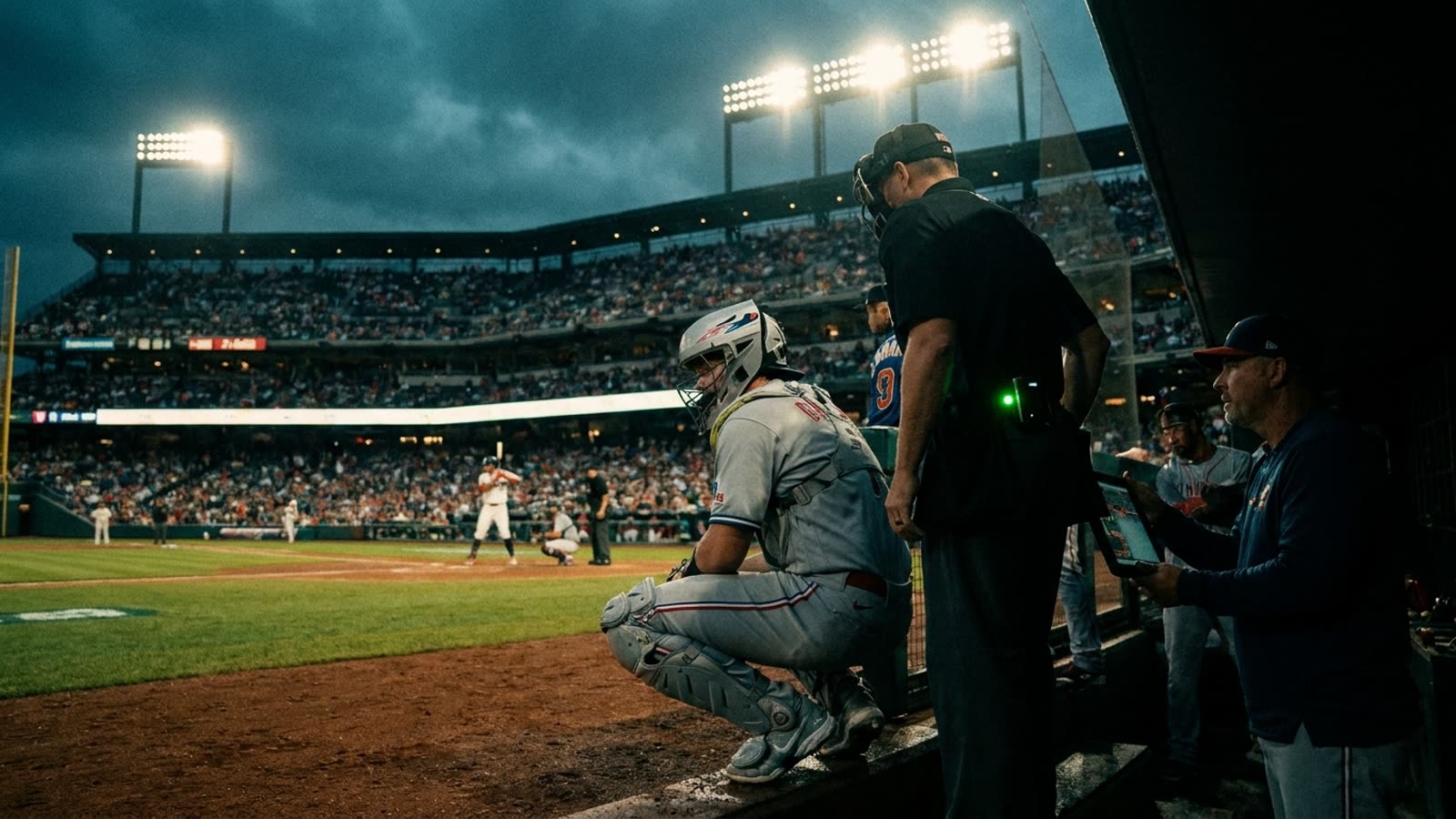
The most consequential development in Major League Baseball this season isn't a player or a trade—it's a piece of software. The league's Automated Ball-Strike (ABS) challenge system, rolled out across all 30 teams in April, promised to eliminate the most contentious calls in the sport. Two months in, it has done something more interesting: it has turned ball-strike disputes into a resource-management minigame that some organizations are winning decisively.
The system grants each team three challenges per game to appeal ball-strike calls to the ABS technology, which uses the same Hawk-Eye tracking cameras that have governed tennis for years. Lose a challenge, lose the challenge. Win, and you keep it. Simple enough. But the early data reveals stark asymmetries in how clubs are deploying this new weapon.
The information arbitrage
Teams with robust analytics departments recognized immediately that the ABS system's strike zone—a fixed rectangle calibrated to each batter's height—differs subtly from the zones that human umpires have called for decades. Certain pitch locations that veteran catchers have "stolen" for years are now reliably called balls by the machine. Other borderline pitches that hitters have taken for granted as balls are now strikes.
The Dodgers, Yankees, and Astros—organizations with the deepest data infrastructure—have reportedly built real-time dashboards that flag high-probability challenge opportunities within seconds of a call. Their challenge success rates hover near 70 percent. League average sits closer to 52 percent, barely better than a coin flip. The gap represents dozens of favorable counts over a full season, the kind of marginal advantage that compounds into wins.
Pitcher psychology shifts
The downstream effects on pitcher behavior are already visible. Hurlers who built careers on "painting corners" that umpires rewarded are suddenly seeing those pitches challenged and overturned. The adjustment is forcing a stylistic convergence: throw to the machine's zone, not the human's memory of it. For veterans whose muscle memory is calibrated to a different standard, the transition has been rocky.
Meanwhile, hitters with elite plate discipline—the sort who work deep counts and trust their eyes—have gained a new tool. A borderline called strike that once ended an at-bat can now be contested, and if the challenge succeeds, the at-bat continues with the count in the hitter's favor. The leverage is asymmetric: a successful challenge in a full-count, bases-loaded situation can swing a game; the same challenge in the second inning with nobody on is nearly worthless.
Our take
Baseball's robot-umpire experiment was sold as a fairness initiative, and it is that. But fairness and simplicity are not the same thing. What the league has actually introduced is a new competitive dimension that rewards preparation, real-time analytics, and strategic discipline—qualities that were already unevenly distributed across the sport. The teams that understood this from day one are already pulling ahead. Everyone else is still arguing with machines.