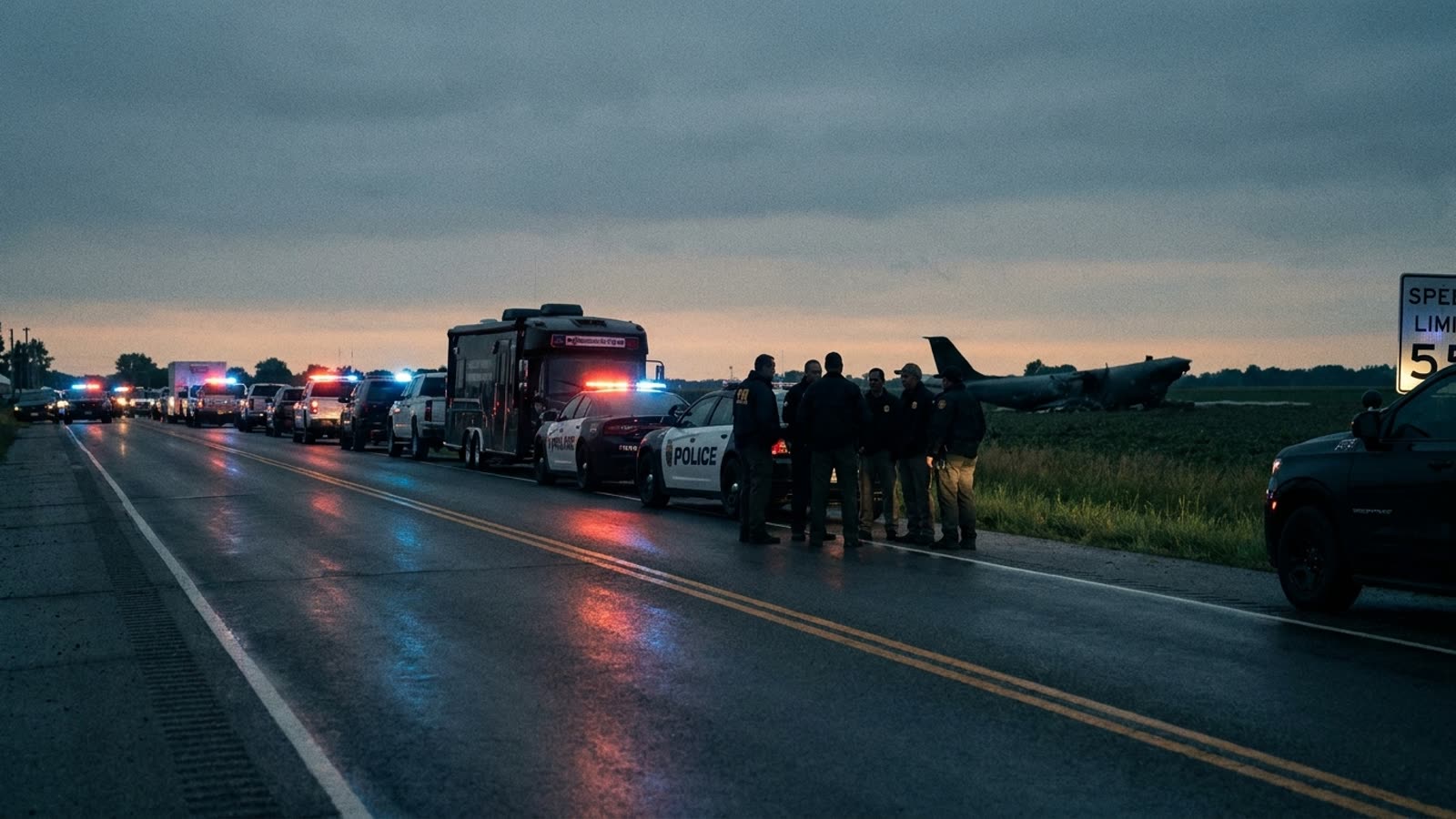
Skydiving kills people by design—the entire premise involves hurling oneself from a functioning aircraft. What almost never happens is the plane itself becoming the instrument of death. That changed in Missouri this weekend when a twin-engine aircraft carrying skydivers crashed shortly after takeoff, killing all twelve people aboard before anyone could deploy a parachute.
The accident, which occurred at a regional airfield, represents one of the deadliest skydiving-plane crashes in American aviation history. Details remain sparse as federal investigators mobilize, but early reports suggest the aircraft experienced catastrophic failure at low altitude—the worst possible scenario for occupants trained to survive falls from ten thousand feet but helpless in the seconds after wheels-up.
The overlooked risk
Skydiving's safety statistics focus almost exclusively on canopy malfunctions, mid-air collisions, and landing injuries. The Federal Aviation Administration certifies jump aircraft under the same general-aviation rules governing Cessnas that ferry businessmen between regional airports, despite the radically different operational profile: repeated climbs to altitude, constant door-open flight, airframes subjected to vibration and stress that leisure aircraft never experience.
Industry veterans have long warned that aging jump planes—many dating to the 1960s and 1970s—operate under maintenance regimes designed for far gentler use. The economics of recreational skydiving, where operators compete on price for weekend thrill-seekers, create pressure to extend airframe life well beyond original design parameters. The United States Parachute Association tracks fatalities meticulously but has no regulatory authority over the aircraft that carry jumpers aloft.
Why this matters beyond the sport
Twelve deaths will force a reckoning that scattered single-fatality incidents have not. Congressional attention to general-aviation safety has been minimal for decades, but mass-casualty events have a way of changing legislative calendars. Expect hearings on jump-plane certification, mandatory airframe retirement ages, and whether the FAA's current inspection regime is adequate for aircraft flying dozens of cycles daily.
The skydiving industry—a fragmented ecosystem of small operators, many family-owned—faces an existential question: can it absorb the insurance and regulatory costs that meaningful safety reform would impose, or will stricter oversight consolidate the market into a handful of well-capitalized survivors?
Our take
Every adventure sport involves a bargain with risk, and skydivers accept theirs with unusual clarity. What they should not have to accept is a regulatory framework that treats their aircraft as interchangeable with a dentist's weekend Bonanza. Twelve people boarded a plane expecting to jump from it; instead, they never got the chance. That failure belongs not to the sport but to the system that certified the machine.