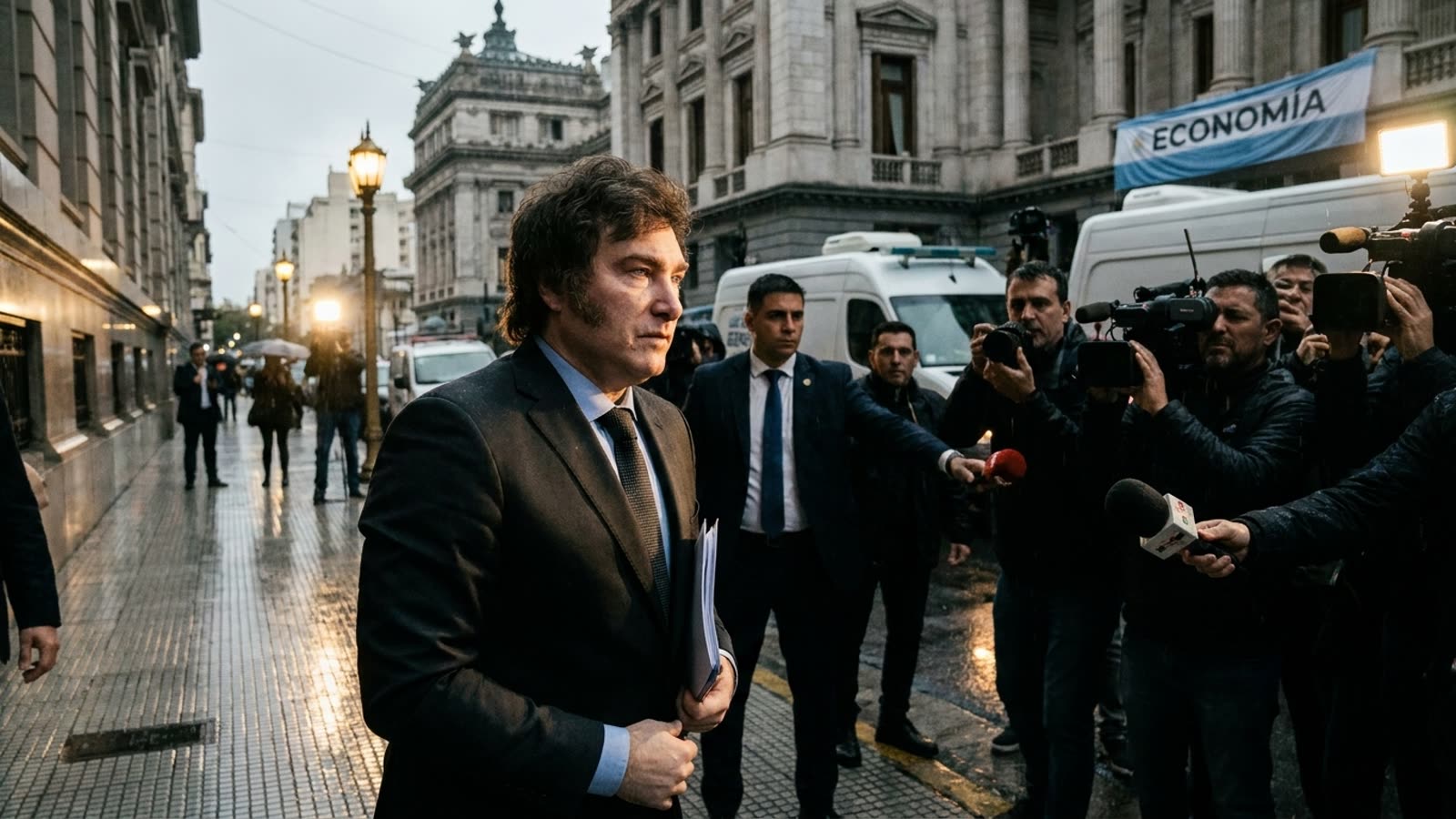
Argentina's austerity experiment has lost the man who made it work in practice.
Guillermo Francos, Javier Milei's Cabinet Chief and chief legislative negotiator, resigned this week — the most significant departure from an administration that has staked its legitimacy on maintaining a small, disciplined inner circle while waging war on the Argentine state. The resignation comes months after Francos was embroiled in controversy over private jet use, a politically toxic optic for a government that has made fiscal rectitude its singular brand identity.
The timing matters. Milei's shock therapy — the chainsaw approach to public spending, the elimination of ministries, the dollarization flirtation — has always depended on two distinct competencies: the president's ideological conviction and someone else's ability to translate that conviction into votes in a Congress where Milei's La Libertad Avanza party remains a minority. Francos was that someone.
The enforcer's role
Francos was not a libertarian true believer. He was a Peronist-turned-pragmatist, a career politician who understood how Argentina's fractious legislature actually functions — which committee chairs need stroking, which provincial governors need infrastructure promises, which opposition figures can be peeled off with the right inducements. This made him invaluable and, to Milei's purist base, perpetually suspect.
His negotiation of the omnibus reform bill earlier this year, though heavily diluted from its original form, represented the administration's only major legislative achievement. Without Francos, the question becomes whether Milei can find another operator willing to do the unglamorous work of coalition-building, or whether the president's confrontational style will now face Congress unmediated.
The jet problem
The private jet scandal was never about the money — trivial by the standards of Argentine political corruption — but about the symbolism. Milei has built his appeal on performative austerity: the leather jacket, the refusal of a presidential salary, the ostentatious budget cuts. A cabinet chief flying private while pensioners absorb benefit cuts is the kind of image that corrodes populist credibility from within.
That Francos survived the initial scandal but departed months later suggests either that the political damage proved more durable than anticipated, or that internal tensions unrelated to the jet had been building. Neither explanation is reassuring for an administration that has struggled to professionalize its operations.
What markets are watching
Investors who have bid up Argentine assets on the Milei reform thesis will parse this departure carefully. The peso's crawling peg, the IMF relationship, the eventual lifting of capital controls — all depend on legislative cooperation that just became harder to secure. Country risk spreads, which had compressed significantly since Milei's election, may begin reflecting the governance discount that the Francos resignation implies.
Our take
Milei's libertarian revolution was always going to face the same problem every ideological government encounters: ideas do not pass themselves. Francos was the compromise with political reality that made the uncompromising rhetoric possible. His departure does not doom the Milei project, but it does clarify its central vulnerability. Argentina has plenty of economists who can design austerity programs. It has far fewer operators who can shepherd them through a hostile Congress while a president calls legislators thieves on social media. Finding another Francos — or learning to govern without one — is now the administration's most urgent task.