Mike Ditka played football like it owed him money and coached it like it owed him respect. His death at 86 removes the last towering figure from an era when the sport was less a billion-dollar entertainment product and more a weekly referendum on American masculinity — and when one man could credibly embody both sides of the ball.
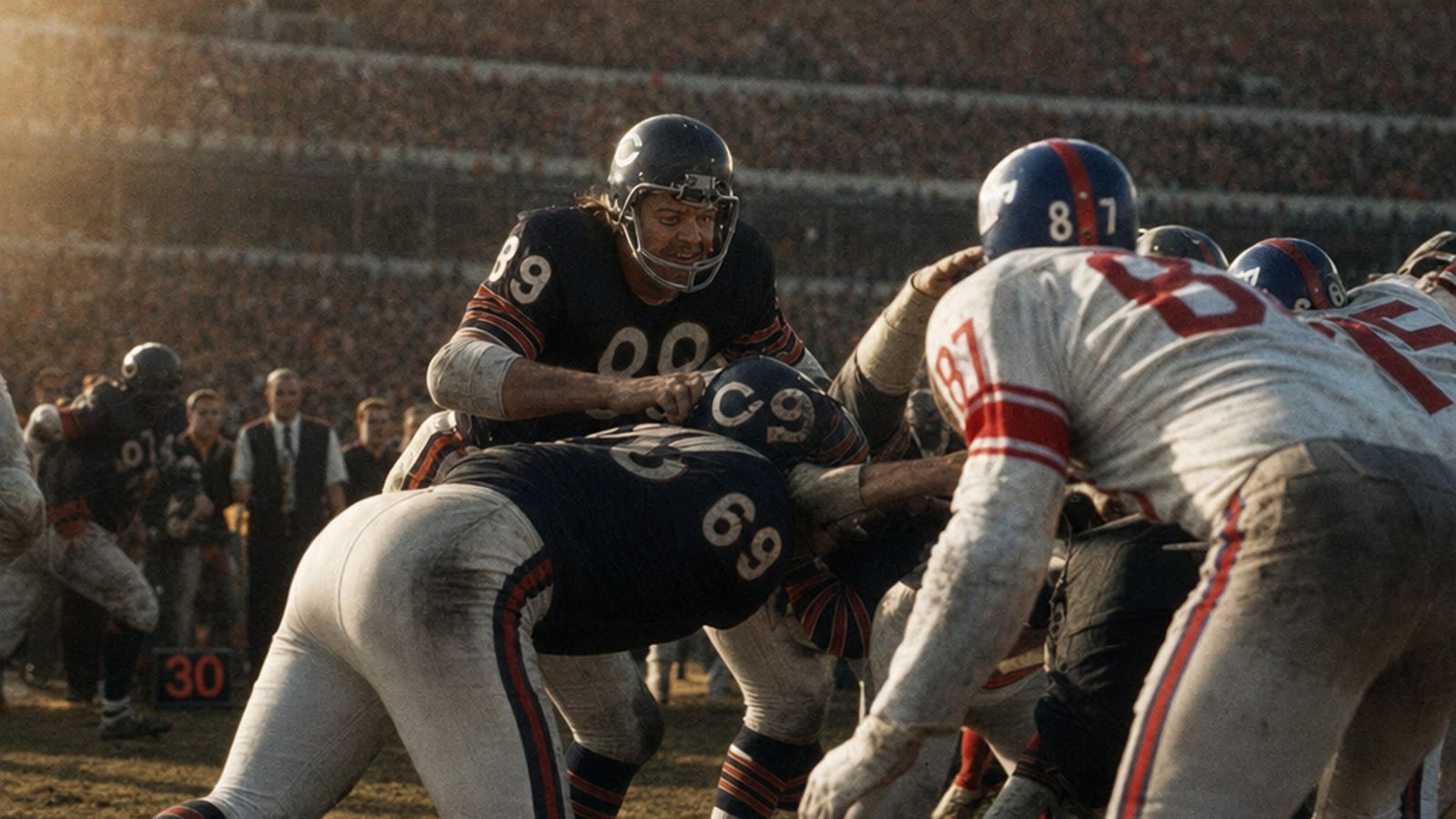
Ditka's career defies modern specialization. He was the prototype for the modern tight end, turning a blocking position into a receiving weapon during his years with the Chicago Bears in the 1960s. He was Rookie of the Year, a five-time Pro Bowler, and the first tight end inducted into the Pro Football Hall of Fame. Then he came back to Chicago as head coach and delivered the franchise's only Super Bowl title in 1986, riding a defense so dominant it recorded a shutout in the playoffs and a quarterback shuffle so chaotic it somehow worked anyway.
The '85 Bears remain the most culturally significant team in NFL history not named the Cowboys or Patriots. They recorded a novelty rap song. They had a 300-pound defensive lineman score a touchdown in the Super Bowl. They were appointment television in an era when that phrase still meant something. Ditka was their avatar — chomping cigars, berating officials, wearing sweater vests that somehow looked threatening.
The tight end revolution he started
Before Ditka, tight ends were essentially extra offensive linemen who occasionally caught a pass when the defense forgot they existed. Ditka caught 56 passes for 1,076 yards as a rookie in 1961 — numbers that would be respectable for a modern tight end and were otherworldly then. He created the template that Travis Kelce and George Kittle now execute with better nutrition and sports science but the same fundamental insight: a big man who can run routes changes offensive geometry.
His playing career included stops in Philadelphia and Dallas, where he won a Super Bowl ring as a player under Tom Landry. The apprenticeship mattered. Ditka absorbed Landry's organizational rigor and then added his own combustible personality when he got his own team.
Coaching as controlled fury
Ditka's Bears tenure from 1982 to 1992 produced a 106-62 record, six division titles, and that singular championship. It also produced legendary sideline tantrums, a heart attack in 1988, and an eventual firing after the team declined. His subsequent stint with the New Orleans Saints from 1997 to 1999 was a disaster — he traded an entire draft for Ricky Williams and went 15-33 — but even that failure had a certain mad grandeur.
He was not a sophisticated tactician. Buddy Ryan ran the defense that made the '85 Bears historic, and Ditka's relationship with Ryan was famously toxic. But Ditka understood something about professional football that analytics still struggles to quantify: the sport rewards teams that believe they are supposed to win, and belief is often manufactured through sheer force of personality.
Our take
Ditka belonged to a football that no longer exists — before concussion protocols, before load management, before players unionized their way to guaranteed contracts and coaches became interchangeable middle managers. He was a dinosaur who knew he was a dinosaur and didn't care. The NFL will honor him with a moment of silence and a highlight package, then return to its committee-designed product. That's probably progress. But something irreplaceable walked off the field when Ditka did, and it's not walking back.