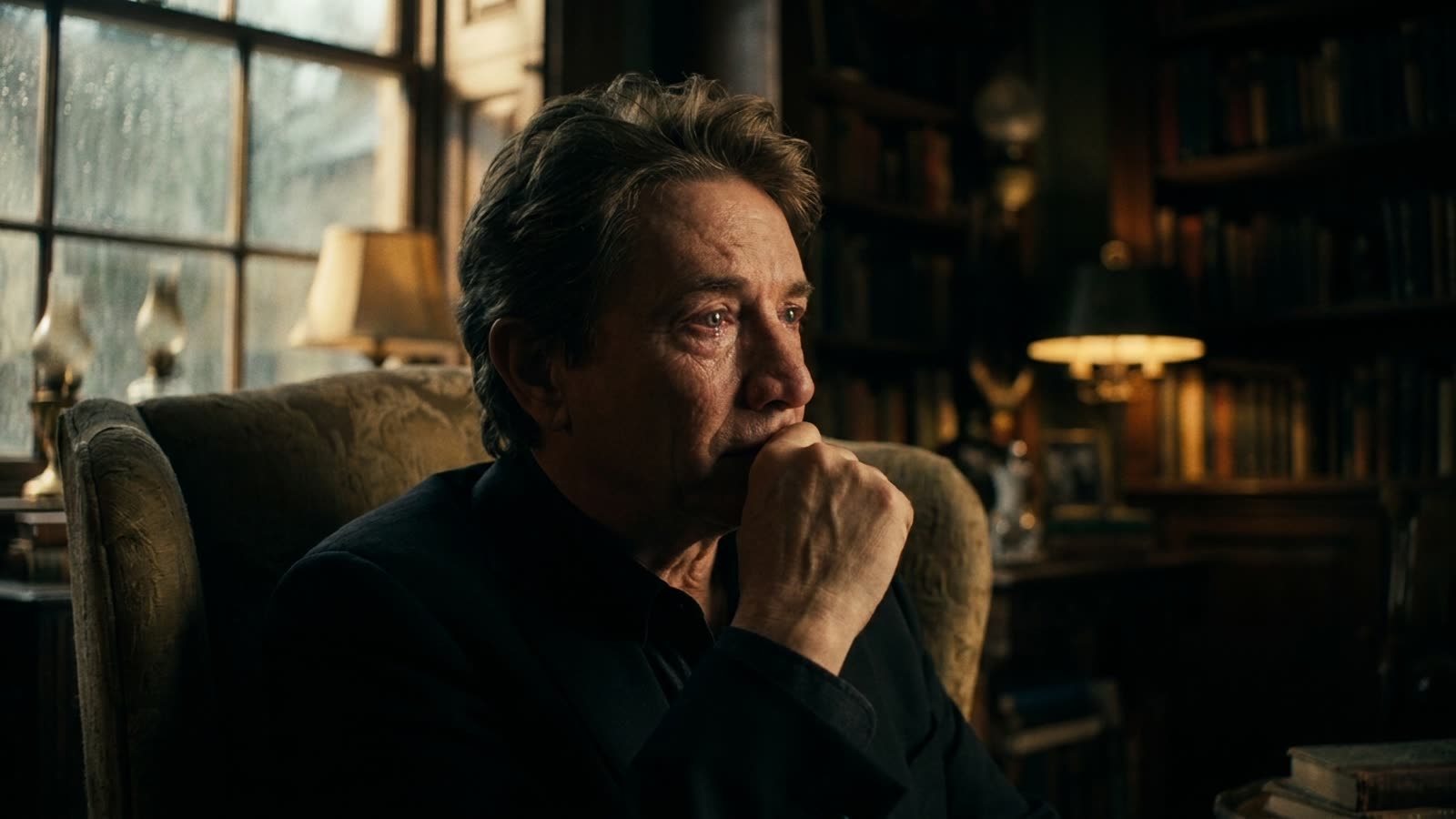
Martin Short has spent five decades making people laugh, but in a new interview he has done something far more difficult: he has made people listen.
The actor, now 76, revealed that his daughter has died following a long battle with what he described as "extreme mental health, borderline personality disorder." In discussing her death, Short drew a direct line between her illness and the cancer that killed his wife Nancy in 2010. "Mental health and cancer, like my wife's, are both diseases," he said. "And sometimes with diseases they are terminal."
It is a statement so plain it borders on radical.
The weight of the word 'terminal'
We have grown accustomed to celebrities discussing mental health in the language of recovery and resilience. The narrative arc bends toward hope: the breakdown, the treatment, the hard-won wisdom. What Short has offered is something else entirely—an acknowledgment that some battles are lost, that love and resources and the best intentions are sometimes not enough.
To call a mental illness "terminal" is to grant it the same terrible gravity we reserve for stage-four diagnoses. It is also, for many families, simply the truth. Suicide remains a leading cause of death for young people in America and the UK. Severe personality disorders carry mortality rates that rival some cancers. Yet we rarely speak of these deaths with the same frankness we afford physical disease.
Why this matters beyond Hollywood
Short is not a mental health advocate by trade. He is a sketch comedian, a song-and-dance man, a professional silly person. That is precisely what makes his words land with such force. He is not speaking from a prepared statement or a foundation's talking points. He is speaking as a father who buried his child.
The interview arrives at a moment when public discourse around mental health has grown both more prevalent and, paradoxically, more shallow. We have awareness campaigns and celebrity confessionals and pastel Instagram graphics urging us to "check in" on friends. What we have less of is honest conversation about what happens when checking in is not enough—when the illness wins.
A family's private nightmare made public
Short described the experience as "a nightmare for the family," a phrase that captures both the horror and the intimacy of such loss. Grief of this kind is isolating in ways that other bereavements are not. There is often shame, confusion, a sense that one should have done more. By speaking openly, Short offers a kind of permission to the countless families who have lived through similar nightmares in silence.
He has also, perhaps inadvertently, issued a challenge to how we talk about mental illness in public life. If we truly believe these are diseases—not failures of character, not choices, not problems that positive thinking can solve—then we must be willing to say that some of them kill.
Our take
Martin Short did not have to say any of this. He could have offered platitudes, or said nothing at all. Instead, he chose precision and honesty at a moment of unimaginable pain. In doing so, he has given language to families who have been grieving in a vocabulary that did not quite exist. That is not comedy. It is something closer to grace.