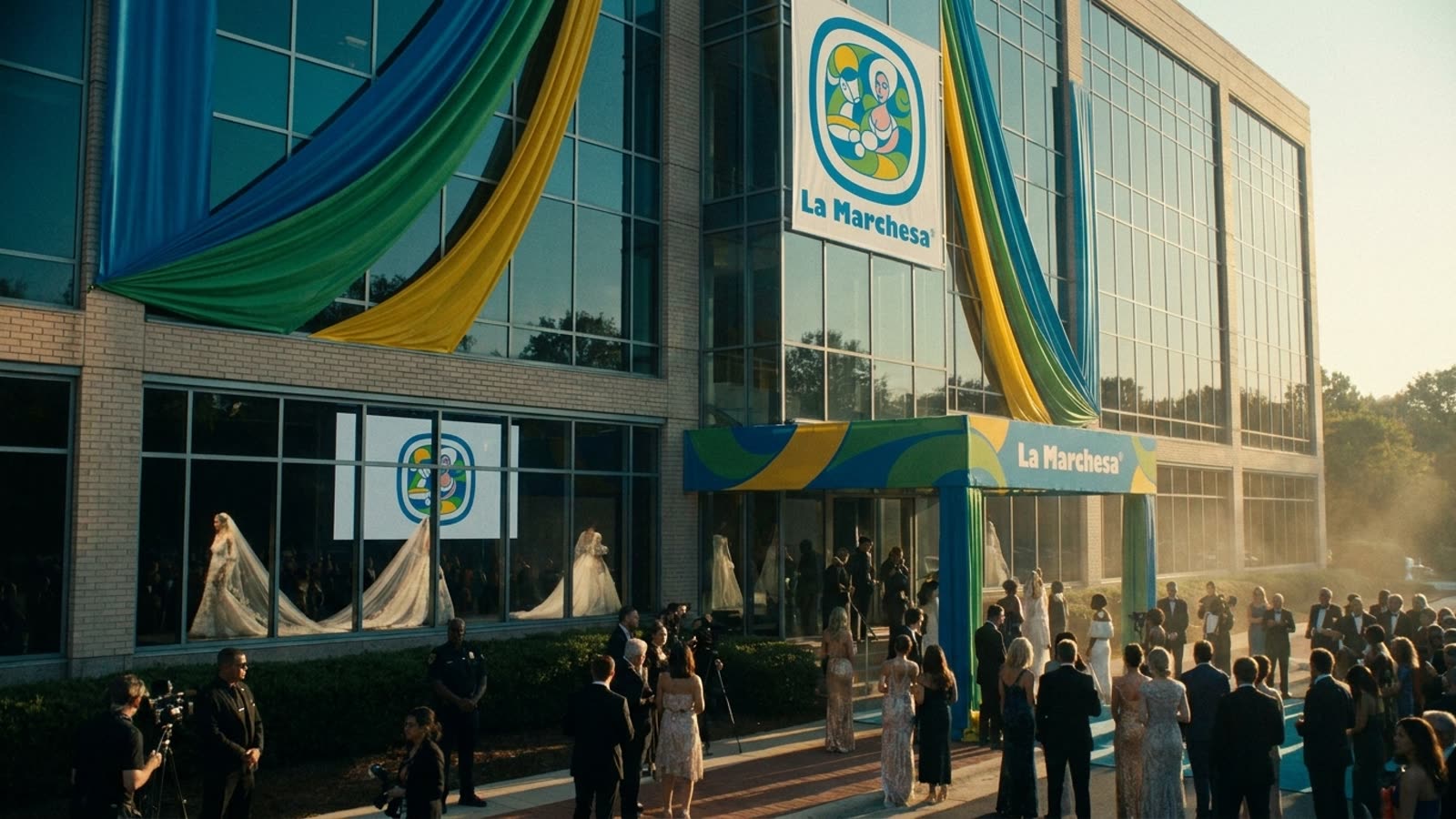
The Spring 2027 Marchesa show opened with a look that could have walked down a church aisle or into the Met Gala lobby without changing a single bead: an ivory column gown trailing three feet of organza, its bodice encrusted with seed pearls arranged in a pattern that suggested both heirloom lace and something freshly excavated from a Renaissance altarpiece. It was, in other words, peak Marchesa—and a declaration of intent from a house that has decided the future of evening wear is indistinguishable from the future of weddings.
Georgina Chapman and Keren Craig have always operated in the interstitial space between red carpet and registry office. Their gowns have dressed brides and starlets with equal frequency, and the brand's signature—intricate handwork, romantic silhouettes, a color palette that rarely strays far from blush and champagne—has made them a default choice for women who want to look expensive and ethereal at once. But the Spring 2027 collection pushes that ambiguity further than ever, presenting a lineup in which nearly every piece could plausibly serve as a wedding dress, a rehearsal-dinner dress, or a dress for the kind of party where someone inevitably gets engaged.
The ceremony-industrial complex
The timing is not accidental. The global wedding industry, after a pandemic-era contraction and a subsequent revenge-spending boom, has settled into a new equilibrium in which couples spend more per event but attend fewer of them. The result is a market hungry for versatility: brides who want a gown they can rewear, guests who want to look bridal-adjacent without upstaging anyone, and a general cultural mood in which the aesthetics of commitment—veils, trains, anything that suggests a vow—have become shorthand for seriousness and investment.
Marchesa is meeting that mood with open arms and a lot of tulle. The collection includes at least a dozen gowns that could function as wedding dresses with zero alteration, plus another dozen that would require only the addition of a veil to complete the transformation. The house has also introduced a new category it calls "ceremony separates"—embroidered corset tops paired with flowing skirts—that can be mixed and matched for various stages of a wedding weekend or, theoretically, worn to someone else's wedding without committing to a full bridal silhouette.
Craftsmanship as justification
The clothes themselves are, as always, technically impressive. Marchesa's atelier remains one of the few in the industry that executes this level of hand-embroidery in-house, and the Spring 2027 pieces showcase that capability with almost aggressive thoroughness. One gown featured an estimated forty hours of beadwork on the bodice alone; another incorporated hand-painted silk flowers that had been individually wired and sewn. The effect is undeniably beautiful, and it provides the kind of craftsmanship narrative that luxury brands increasingly rely on to justify their prices.
But craftsmanship, however genuine, cannot fully obscure the strategic calculation behind the collection. Marchesa is betting that the bridal-evening convergence is not a trend but a permanent shift—that women will continue to want clothes that feel ceremonial even when no ceremony is scheduled, and that the house's particular expertise in making women look like they are about to make a lifelong promise will remain commercially viable.
Our take
It is a reasonable bet, and probably a correct one. The cultural appetite for ritual and occasion shows no sign of abating, and Marchesa's ability to deliver that feeling in fabric form is genuinely unmatched. Whether the brand can sustain its relevance beyond the bridal-adjacent niche is another question—one the Spring 2027 collection does not attempt to answer. For now, Chapman and Craig are content to dress women who want to look like they are walking toward something important, even if they are only walking toward the bar.