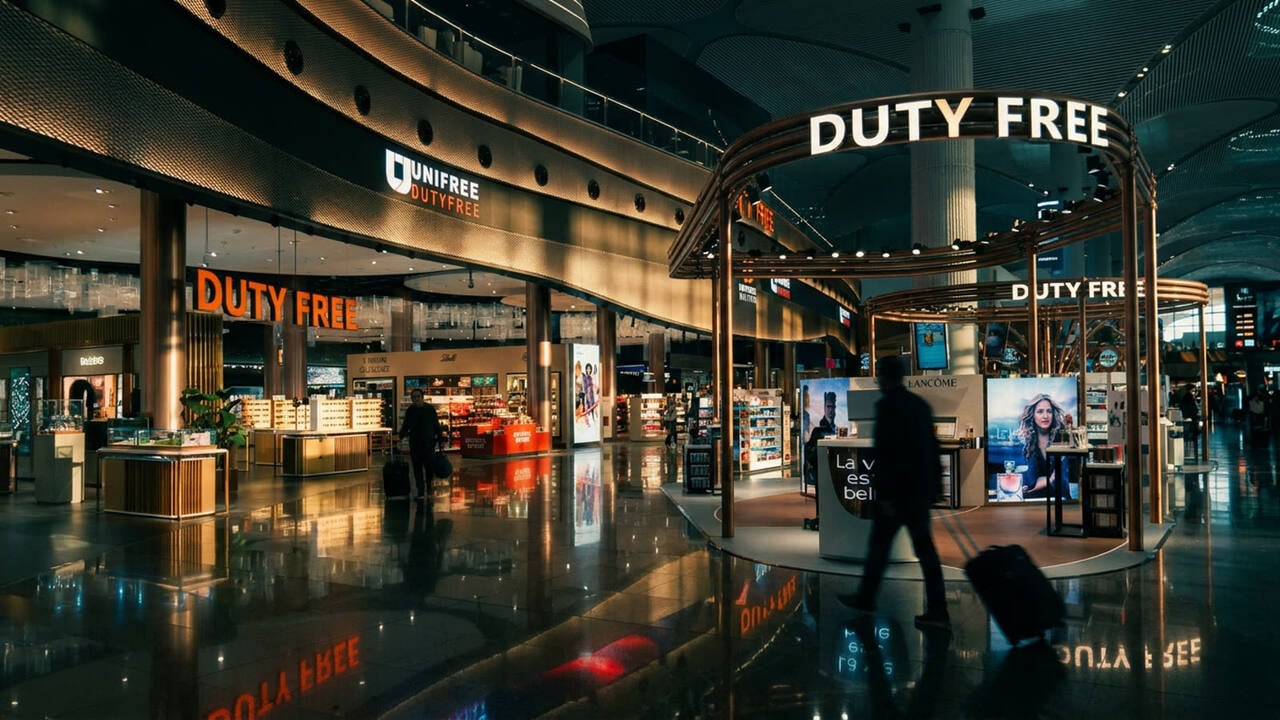
The notion that airport shopping represents a rip-off—captive travelers paying premiums for forgotten toothpaste and overpriced magazines—belongs to a previous era. For luxury goods, the calculus has inverted entirely. Savvy buyers are now routing international trips specifically to capture price differentials that can exceed 30 percent on identical merchandise.
The mechanism is straightforward but underappreciated. Luxury brands maintain rigid regional pricing strategies, setting dollar, euro, and yuan prices that rarely adjust in real time to currency movements. When the dollar strengthens against the euro—as it has done meaningfully over the past eighteen months—a Hermès bag priced at €9,000 in Paris suddenly costs substantially less than its $12,500 New York equivalent, even before duty-free exemptions enter the equation.
The tax mathematics
Value-added tax refunds compound the advantage. European VAT runs 19-25 percent depending on the country, and while tourists can theoretically reclaim much of this at departure, the process involves paperwork, queues, and percentage haircuts from refund processors. Duty-free purchases bypass this friction entirely—the VAT simply never applies. For a €15,000 watch, the difference between navigating a VAT refund kiosk and buying airside can approach €1,000 in real savings and considerable time.
Airport concessions have noticed. Heathrow's Terminal 5 now houses Chanel, Cartier, Dior, and Bulgari boutiques that rival their Bond Street flagships in inventory depth. Singapore Changi and Dubai International have transformed into luxury destination shopping, with brands allocating limited-edition releases to airport locations that guarantee wealthy, purchase-ready foot traffic.
Who benefits most
American and Chinese travelers capture the largest arbitrage. Americans benefit from dollar strength against most currencies and can import $800 in goods duty-free per trip—enough for accessories, cosmetics, and smaller leather goods. Chinese buyers face domestic luxury taxes that inflate prices 20-40 percent above European equivalents, making any international transit an automatic discount opportunity.
The phenomenon has grown sophisticated enough that travel agencies now market "shopping routes"—itineraries optimized not for destinations but for terminal retail. A Hong Kong-London-Milan circuit can yield cumulative savings that offset the airfare itself for buyers planning significant purchases.
Our take
This is rational behavior masquerading as indulgence. When identical goods cost meaningfully different amounts based purely on geography and tax jurisdiction, informed buyers will exploit the gap. Luxury brands tolerate the arbitrage because airport sales carry minimal overhead and reach customers at peak purchasing psychology—flush with vacation mentality, killing time, and freed from the guilt of deliberate shopping trips. The arrangement works for everyone except domestic retailers watching their margins evaporate to duty-free terminals. That tension will eventually force brands toward global price harmonization, but until then, the savviest shoppers really are heading straight for the gate.