The trajectory from visual merchandising assistant to industry legend is not supposed to exist. Fashion's upper echelons are populated by designers, editors, and the occasional photographer — not the people who once steamed fabric in stockrooms. Yet Linda Fargo, who will accept the CFDA Founder's Award at Monday's ceremony, built her empire from precisely that unglamorous foundation, proving that an eye for spectacle can be as valuable as a needle and thread.
Fargo's origin story reads like a deliberate rebuke to fashion's credentialism. She landed at Macy's display department in the mid-1980s, arranging props and dressing windows at a time when such work was considered a trade, not a creative discipline. The job taught her something that design school could not: how to make strangers stop walking. A window has perhaps three seconds to arrest a New Yorker's attention. Fargo learned to weaponize color, scale, and surprise in that narrow window of opportunity.
The Bergdorf decades
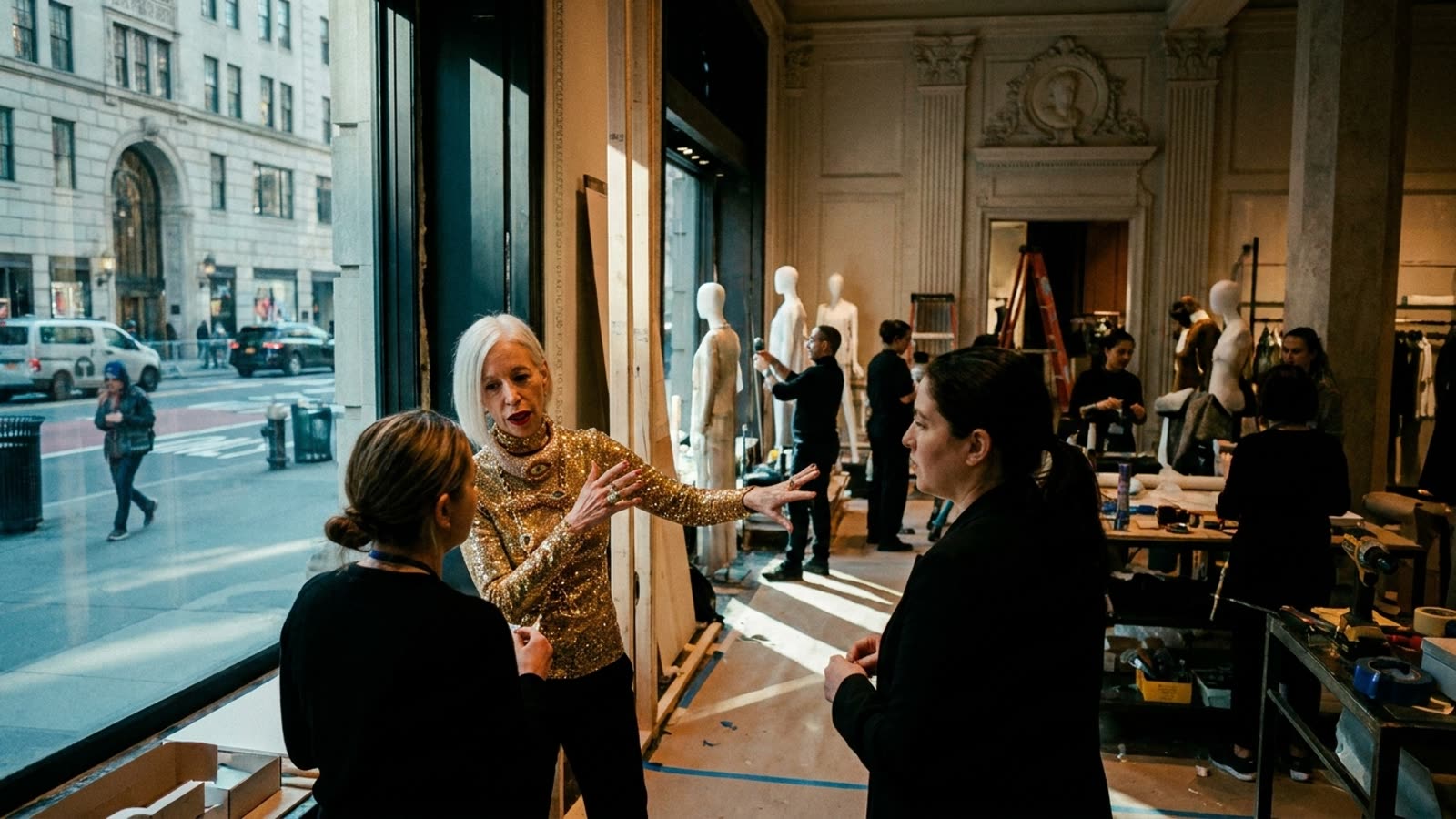
Her move to Bergdorf Goodman in the early 1990s was not a promotion in the traditional sense — it was a lateral leap into a different universe. The Fifth Avenue institution operated on different principles than Macy's mass-market machinery. Fargo rose through roles in visual presentation before eventually becoming the store's fashion director and, later, senior vice president of fashion and store presentation. Her windows became destination viewing: collaborations with artists, installations that bordered on gallery exhibitions, and seasonal spectacles that drew crowds who had no intention of buying anything inside.
What distinguished Fargo from her contemporaries was her understanding that luxury retail had become a content business decades before Instagram made that obvious. A Bergdorf window was not advertising; it was cultural commentary that happened to feature merchandise. She commissioned Simon Doonan before his celebrity, championed emerging designers when the store's buying committees were skeptical, and maintained Bergdorf's reputation as a tastemaker even as department stores nationwide collapsed into irrelevance.
Why the Founder's Award matters
The CFDA Founder's Award is not given for designing clothes. It recognizes contributions to the industry's infrastructure — the editors, retailers, and patrons who shape what designers can become. Previous recipients include André Leon Talley, Grace Coddington, and Anna Wintour. Fargo joins that company as something rarer: a merchant who operated as a curator, a businesswoman who thought like an artist.
Her recognition arrives at a moment when physical retail is either dying or being reborn, depending on whom you ask. The department stores that trained Fargo — the Macy's and Bloomingdale's and Neiman Marcuses — are shadows of their former selves, battered by e-commerce and private equity extraction. Bergdorf has survived partly because it never tried to be everything to everyone, and partly because Fargo understood that scarcity and spectacle are the only defenses against commodification.
Our take
Fashion loves to celebrate the prodigies and the pedigreed. Fargo's career is a reminder that the industry also runs on people who learned their craft by doing it — who understand that a window display is architecture, that a store floor is theater, and that luxury is ultimately a story well told. The CFDA is honoring her at the right moment: when American retail desperately needs to remember what made it worth visiting in the first place.