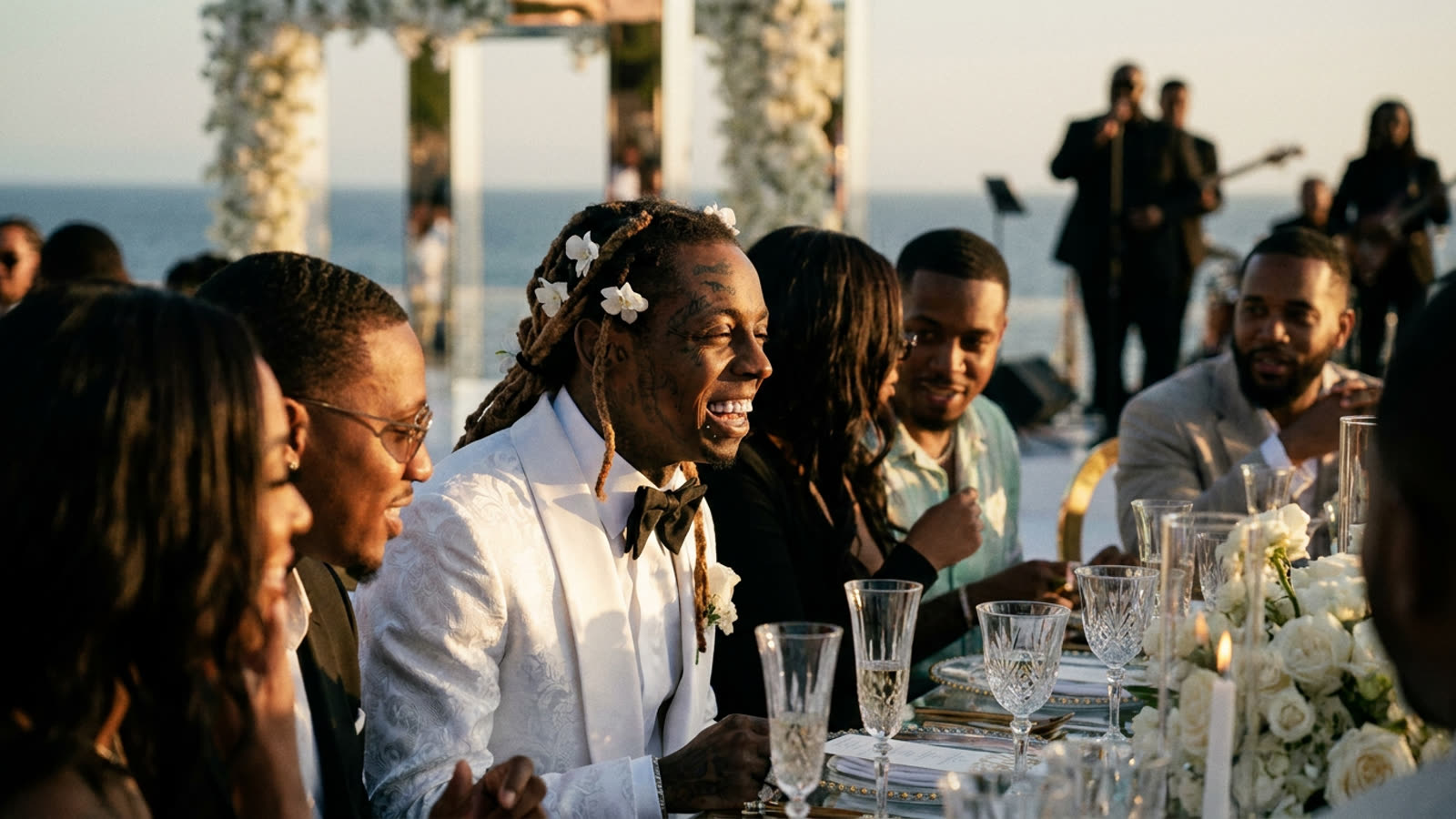
Lil Wayne, the man who once rapped about every woman he ever looked at twice, has apparently been engaged for some time and simply chose not to mention it. The news emerged this week with all the fanfare of a whispered secret at a dinner party — which, given Wayne's historically operatic love life, feels almost revolutionary.
The identity of his fiancée remains unconfirmed in official channels, though the rapper has been linked to model Denise Bidot on and off since 2020, with their relationship weathering multiple reported breakups and reconciliations. What's notable isn't who Wayne is marrying but how he's chosen to handle the announcement: quietly, almost reluctantly, as if the information had been pried loose rather than strategically released.
The case for privacy in hip-hop
This marks a significant departure for an artist whose romantic entanglements have historically played out in lyrics, interviews, and tabloid pages. Wayne's relationships with Toya Johnson, Lauren London, and others became part of his public mythology — the genius who couldn't quite figure out domesticity. His five children with four different mothers became a running biographical footnote, cited in profiles as evidence of either his complicated personal life or his commitment to fatherhood, depending on the writer's sympathies.
But something shifted. The generation of rappers who came up treating relationships as content — material for songs, social media drama, reality shows — are aging into a different understanding of what deserves protection. Drake has become increasingly guarded about his son. Jay-Z and Beyoncé turned their marriage into an empire but keep its daily mechanics fiercely private. Wayne, it seems, has taken notes.
What engagement means at 43
Wayne has never been married, despite decades in the spotlight and relationships that produced an extended family. An engagement at 43, after surviving a near-fatal seizure disorder, multiple legal battles, and the particular pressures of being one of hip-hop's most celebrated and scrutinized figures, carries different weight than a young star's impulsive proposal.
There's a maturity in the quietness — a suggestion that Wayne has learned to distinguish between the parts of his life that belong to his audience and the parts that belong only to him. The man who once documented everything has discovered the value of keeping something back.
Our take
Lil Wayne spent two decades proving he was the best rapper alive, often at the cost of any semblance of a private life. That he's now choosing discretion over disclosure isn't just personal growth; it's a rebuke to the content-industrial complex that demands celebrities monetize every milestone. Some things, it turns out, are more valuable when they're not for sale. Weezy figured that out. The rest of the culture is still catching up.