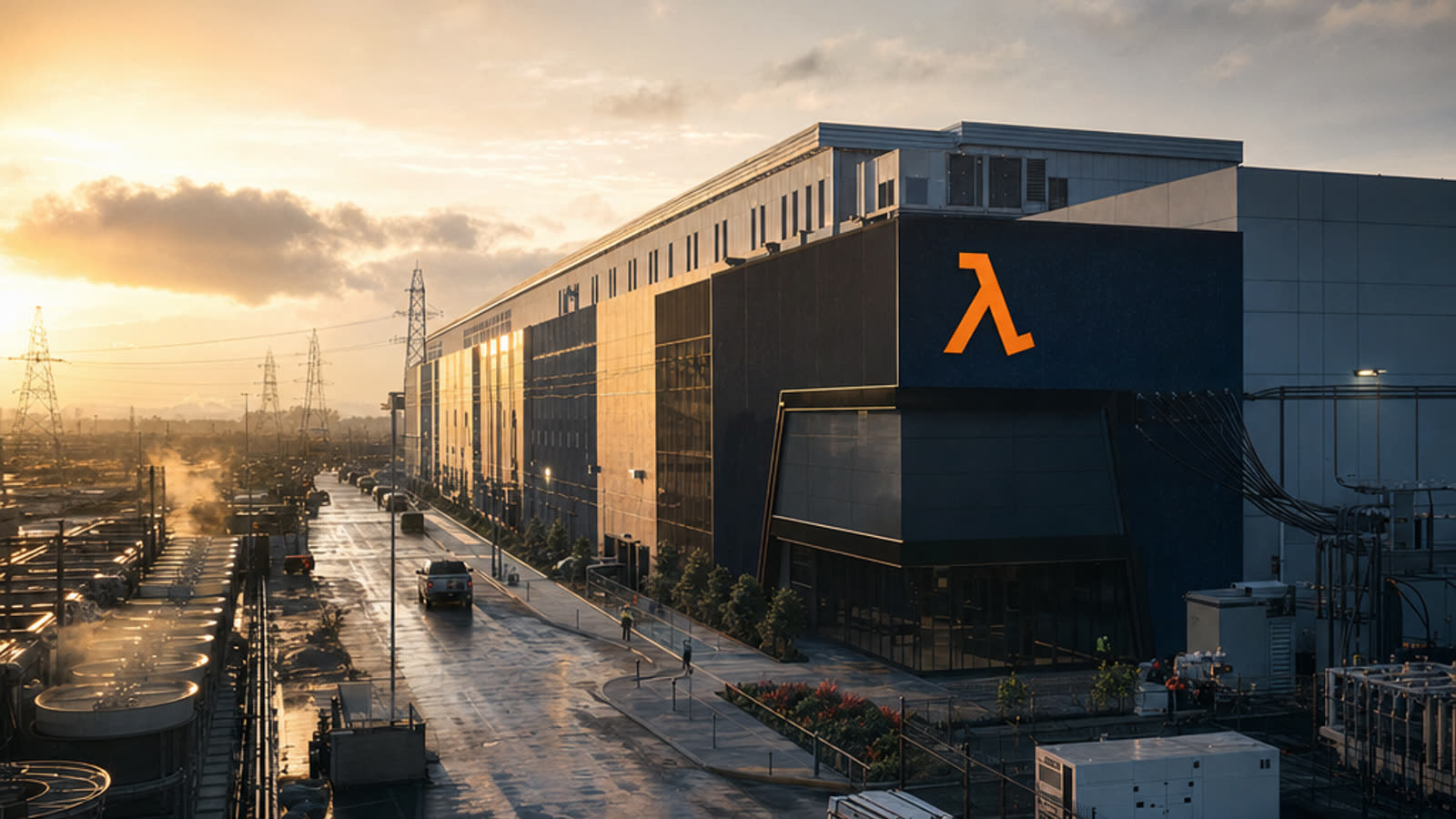
The AI boom has produced no shortage of billion-dollar valuations, but Lambda's planned $4 billion raise ahead of an initial public offering stands out for what it reveals about where smart money thinks the real bottleneck lies. It is not in the models themselves, nor in the chatbots and copilots they power. It is in the raw computational substrate that makes everything else possible.
Lambda, founded in 2012 and long a quiet provider of GPU cloud services to researchers and enterprises, has emerged as a critical piece of infrastructure in an industry defined by insatiable demand for processing power. The company's bet is straightforward: no matter which foundation model wins, no matter which application layer captures consumer attention, everyone needs compute. And there is not nearly enough to go around.
The compute bottleneck persists
Nvidia's dominance in AI chips has created a peculiar market dynamic. Hyperscalers like Amazon, Google, and Microsoft have the capital to secure massive GPU allocations, but smaller AI labs, startups, and enterprise customers often find themselves locked out or facing months-long wait times. Lambda has positioned itself as the accessible alternative—a cloud provider purpose-built for machine learning workloads, offering H100 clusters without the procurement headaches.
The $4 billion figure is notable not just for its size but for its timing. After a frothy 2024 and early 2025 in AI investing, some observers expected a correction. Instead, infrastructure plays continue to command premium valuations, suggesting investors believe the compute shortage will persist well beyond current supply constraints.
IPO market tests AI appetite
Lambda's planned public offering will arrive in a market still digesting mixed signals about AI's commercial trajectory. OpenAI has delayed its own IPO amid safety concerns, while Anthropic's pitch reportedly includes warnings about existential risk—not exactly the stuff of traditional S-1 filings. Lambda's story is cleaner: revenue tied directly to GPU hours sold, a customer base spanning research institutions and Fortune 500 companies, and a growth curve that tracks the broader AI training boom.
The company will face questions about margin sustainability as Nvidia raises prices and hyperscalers expand their own offerings. But Lambda's thesis is that specialization wins—that a focused compute provider can outserve generalists on price, availability, and developer experience.
Our take
Lambda's raise is a reminder that the most durable AI investments may be the least glamorous. While the world debates whether GPT-5 will achieve reasoning or Claude will develop consciousness, someone has to keep the data centers humming. Lambda is betting that someone will pay handsomely for that privilege, and so far, the market agrees. The IPO will test whether public investors share that conviction—or whether they have grown tired of infrastructure stories dressed up as AI plays.