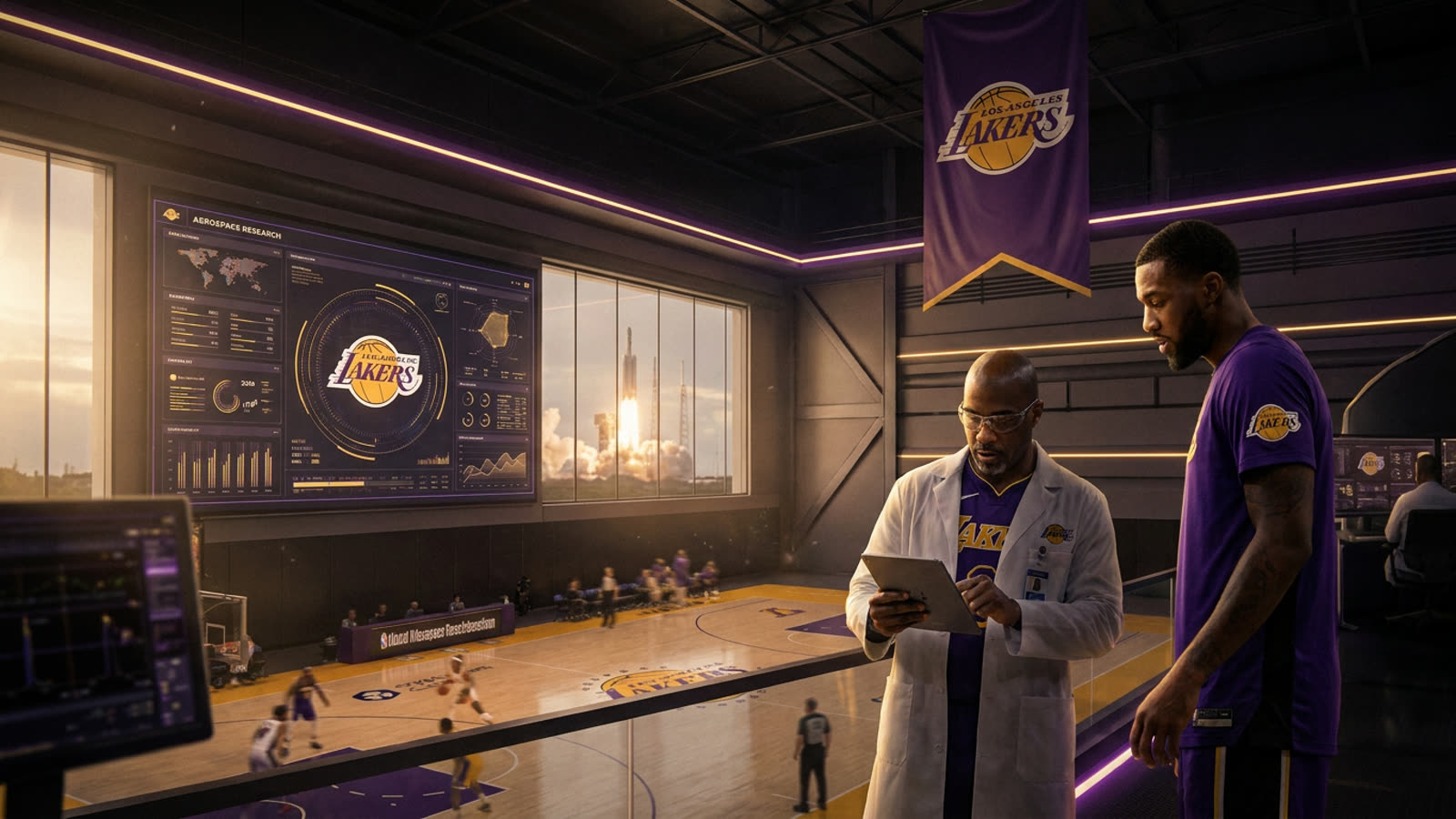
The Los Angeles Lakers have spent the better part of a decade watching younger franchises win championships with spreadsheets and Python scripts while they clung to the belief that star power and championship pedigree would suffice. That era ended this week when the franchise announced the hiring of an assistant general manager whose résumé includes not basketball operations experience but an actual doctorate in aerospace engineering.
The move is striking not because analytics hires are novel—they are now table stakes across the NBA—but because this is the Lakers, a franchise whose institutional identity has been built on the mystique of Showtime, the triangle offense, and the conviction that greatness recognizes greatness without the need for efficiency metrics. For years, the Lakers front office operated as if hiring someone who could explain expected possession value was an admission of weakness.
The analytics gap
The contrast with the league's recent champions is instructive. The Denver Nuggets built their title around Nikola Jokić, a second-round pick identified through data-driven scouting. The Boston Celtics constructed a roster optimized for three-point volume and defensive versatility. The Oklahoma City Thunder, currently in the Western Conference Finals, have become a case study in draft capital accumulation and developmental patience—all undergirded by one of the league's most sophisticated analytics departments.
The Lakers, meanwhile, have lurched from win-now trade to win-now trade, mortgaging future assets for aging stars and hoping LeBron James's gravitational pull would compensate for structural deficiencies. The results have been mixed at best: one championship in the bubble, followed by seasons of injury-plagued mediocrity and early playoff exits.
Why aerospace?
The specific background of the new hire matters. Aerospace engineering is fundamentally about optimizing complex systems under constraints—fuel efficiency, structural integrity, trajectory calculations. The translation to basketball is not as fanciful as it sounds. Modern NBA front offices are essentially optimization problems: maximizing win probability given salary cap constraints, player development curves, and injury risk models.
Several franchises have already discovered the value of hiring outside the traditional basketball pipeline. The Philadelphia 76ers famously employed data scientists during the Process era. The Houston Rockets under Daryl Morey pioneered the three-point revolution with analysts drawn from quantitative finance. The Lakers are not innovating here; they are catching up.
Our take
The hire is welcome, if overdue. The Lakers have coasted on brand equity and free-agent appeal for too long, assuming that players would want to come to Los Angeles regardless of organizational competence. That assumption is being tested as younger franchises demonstrate that smart process beats glamorous improvisation. Whether one rocket scientist can change a culture remains to be seen, but the acknowledgment that the culture needed changing is itself progress.