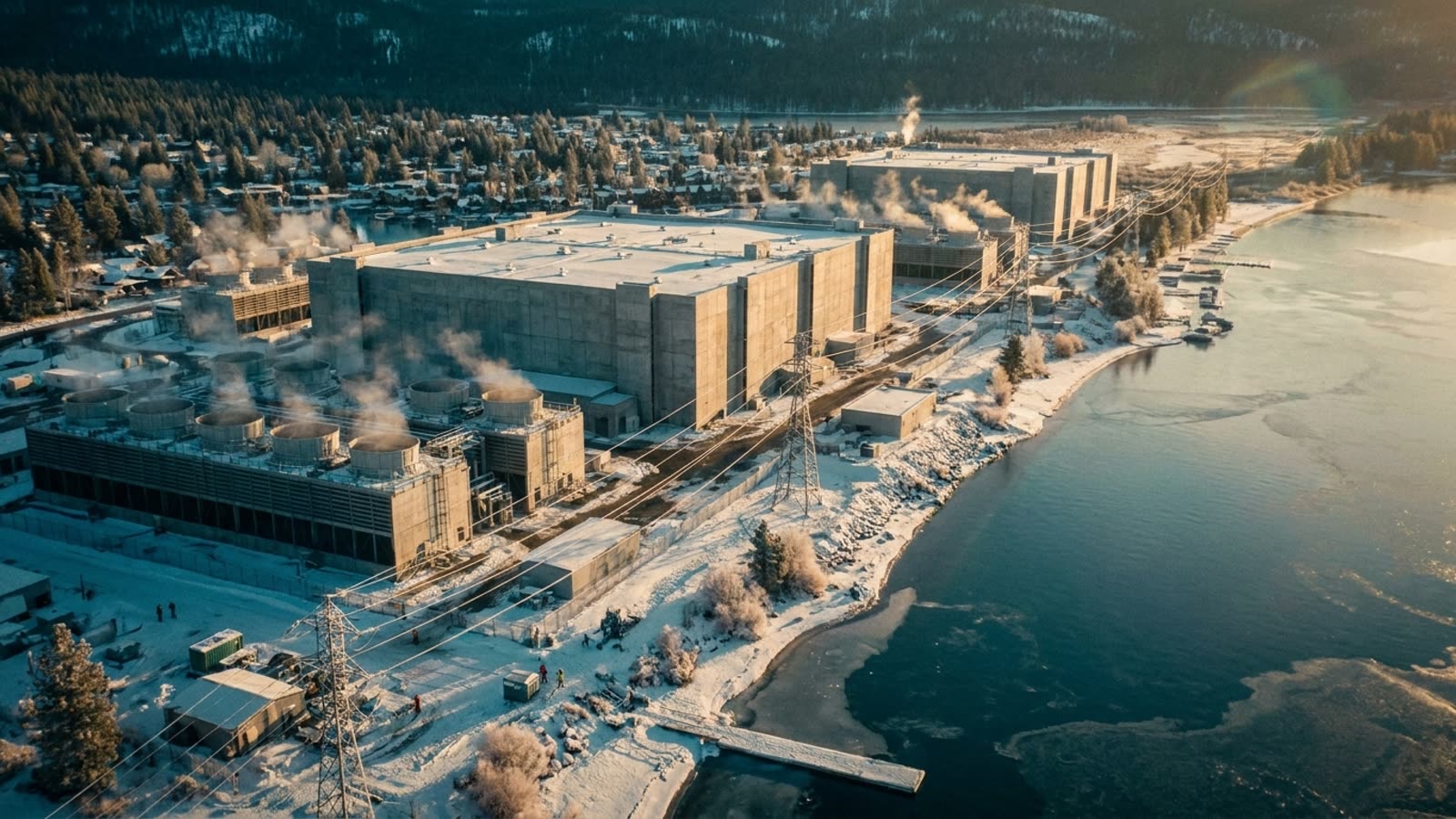
A utility serving Lake Tahoe residents has effectively abandoned them in favor of a data center customer, marking perhaps the starkest example yet of how AI infrastructure demands are reshaping the American energy landscape in ways that directly harm ordinary households.
The details are grimly straightforward: a regional energy provider, faced with the choice between serving its existing residential customers or pivoting to serve a data center offering vastly more lucrative and consistent demand, chose the latter. Lake Tahoe residents—people who built lives around the assumption of reliable electricity—now find themselves scrambling for alternatives in a market where alternatives are increasingly scarce.
The arithmetic of abandonment
The economics driving this decision are not mysterious. A single hyperscale data center can consume as much electricity as a small city, paying industrial rates that dwarf what residential customers generate. For a utility operating on thin margins, the math is seductive: one sophisticated customer with predictable, massive demand versus thousands of households with variable loads, payment delays, and regulatory obligations around service continuity.
What makes the Lake Tahoe case notable is not that a utility made this calculation—they all are—but that one finally acted on it so baldly. The usual playbook involves gradual rate increases, capacity constraints blamed on infrastructure limitations, and quiet lobbying to relax service obligations. This utility simply chose the data center and left.
A pattern, not an anomaly
The Lake Tahoe situation arrives weeks after Pennsylvania residents packed a town hall to protest data center proliferation in their communities, and amid reports that homeowners are being recruited to host mini data centers in their garages. These are not separate phenomena. They are all expressions of the same underlying pressure: AI development requires compute, compute requires power, and power is finite.
The major AI laboratories—OpenAI, Anthropic, Google DeepMind, xAI—are engaged in what amounts to an arms race for training capacity. Their compute needs double roughly every six months. Somewhere, that electricity has to come from, and increasingly that somewhere is wherever the power currently flows to someone else.
The policy vacuum
American energy regulation was not designed for this moment. Utilities operate under frameworks that assume they serve geographic communities, not that they might rationally choose to abandon those communities for better customers. The Federal Energy Regulatory Commission has authority over wholesale markets but limited tools to prevent what happened in Lake Tahoe. State public utility commissions can mandate service obligations, but enforcement is slow and penalties are modest compared to data center revenues.
The result is a regulatory gap that AI companies and their infrastructure partners are exploiting with increasing aggression. They are not breaking laws; they are operating in spaces where the laws never anticipated their existence.
Our take
The Lake Tahoe case should end any pretense that AI development is a victimless technological revolution. Every GPU cycle has an energy cost, and that cost is now being extracted directly from American households who never signed up to subsidize the race to artificial general intelligence. The AI industry's preferred framing—that compute infrastructure benefits everyone through eventual productivity gains—rings hollow to residents who cannot turn on their lights. At some point, probably soon, this becomes a political problem that neither the AI laboratories nor their utility partners can ignore. The question is how many communities get sacrificed before that point arrives.