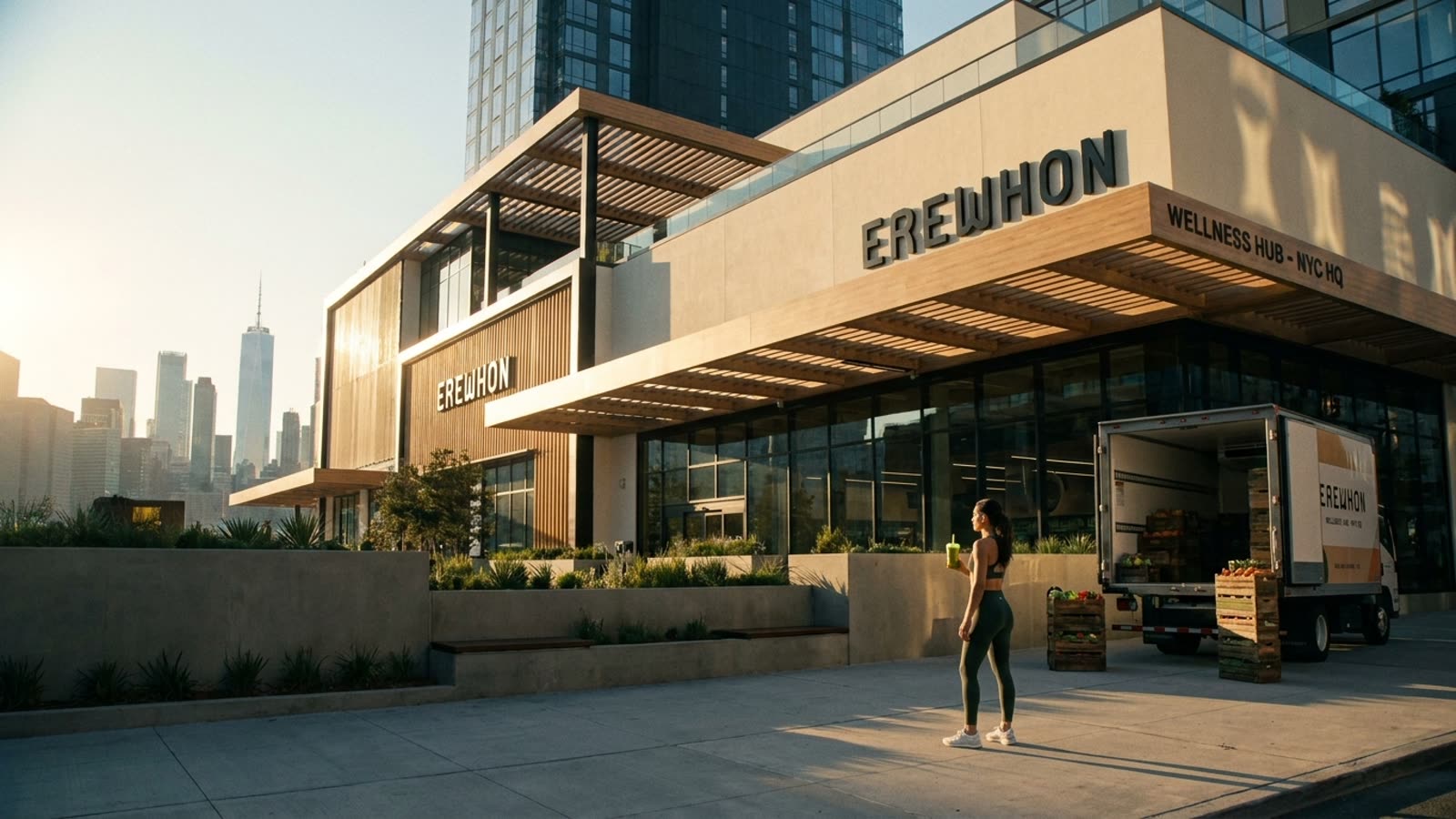
The most telling detail about contemporary New York isn't a gallery opening or a late-night jazz set—it's the line outside Erewhon's new SoHo location at 7 a.m. on a Tuesday. Angelenos have been doing this for years, of course, clutching their $19 smoothies like rosaries. But watching New Yorkers adopt the ritual wholesale suggests something more profound than a grocery store expansion: the cultural capital of American aspiration has quietly migrated westward.
The evidence is everywhere if you know where to look. Photo bans at restaurants—once a Los Angeles affectation mocked by Manhattan's media class—are now standard at the city's most coveted reservations. The 6 a.m. Pilates class, which would have seemed pathological to any self-respecting New Yorker a decade ago, now requires booking weeks in advance. Even the city's legendary late-night culture has dimmed; the bars that once served as creative incubators now close earlier, their former patrons presumably home hydrating for tomorrow's cold plunge.
The economics of wellness imperialism
This isn't merely about aesthetics. Los Angeles wellness culture exports beautifully because it packages class signifiers as health choices. The $22 adaptogenic latte isn't indulgent—it's self-care. The sunrise hike isn't performative—it's grounding. New York's traditional status markers—the corner table at Balthazar, the impossible-to-get theater tickets—required cultural fluency that took years to acquire. LA's version requires only a credit card and an early alarm.
The economics favor the colonizers. Erewhon's Manhattan expansion follows a playbook perfected in Calabasas and Silver Lake: premium pricing creates exclusivity, exclusivity creates aspiration, aspiration creates lines around the block. The company reportedly plans six more New York locations by 2028. Each one will serve as a beachhead for the broader lifestyle package—the supplements, the athleisure, the entire apparatus of optimized living.
What New York lost
The old New York identity was built on friction. The city was difficult, expensive, and hostile to weakness—and that was the point. You earned your place through endurance, through surviving winters and subway delays and landlords who treated you like an inconvenience. The reward was access to a creative ferment that couldn't exist anywhere else, fueled by cheap rent (relatively speaking), cheap drinks, and the collision of ambitious people in cramped spaces.
That city hasn't entirely vanished, but it's been overlaid with something gentler and more transactional. The creative class that once defined downtown Manhattan has largely decamped to Brooklyn, then to cheaper cities entirely. What remains increasingly resembles the Los Angeles model: networked professionals who treat the city as a backdrop for personal optimization rather than a crucible for collective invention.
Our take
Cities have always borrowed from each other, and moral panic about New York's decline is itself a New York tradition stretching back decades. But there's something genuinely novel about this particular surrender. Los Angeles won not by producing better art or ideas but by producing a more exportable lifestyle brand. New York adopted it not because Angelenos were more persuasive but because the old New York identity—chaotic, nocturnal, slightly masochistic—no longer fits how the professional class wants to live. The smoothie isn't the disease. It's the symptom of a city that forgot why anyone tolerated the difficulty in the first place.