The 2026 World Cup has already delivered its generational transition moment with Messi's record-breaking heroics, but the tournament's next act begins in earnest when Kylian Mbappé and Erling Haaland take the pitch on the same matchday. This is not merely a scheduling coincidence—it is the formal coronation of the two men who will define men's football for the next decade.
Mbappé, now 27, enters these group-stage fixtures as the reigning face of French football and, increasingly, the sport's global commercial avatar. Haaland, 25, arrives having demolished every scoring record placed before him at Manchester City, his physical dominance so complete that defenders have simply stopped pretending they can contain him. Both are in their athletic primes. Both lead nations with genuine ambitions. And both understand that World Cup glory—not club trophies, not individual awards—is the currency that separates the great from the immortal.
The burden of expectation
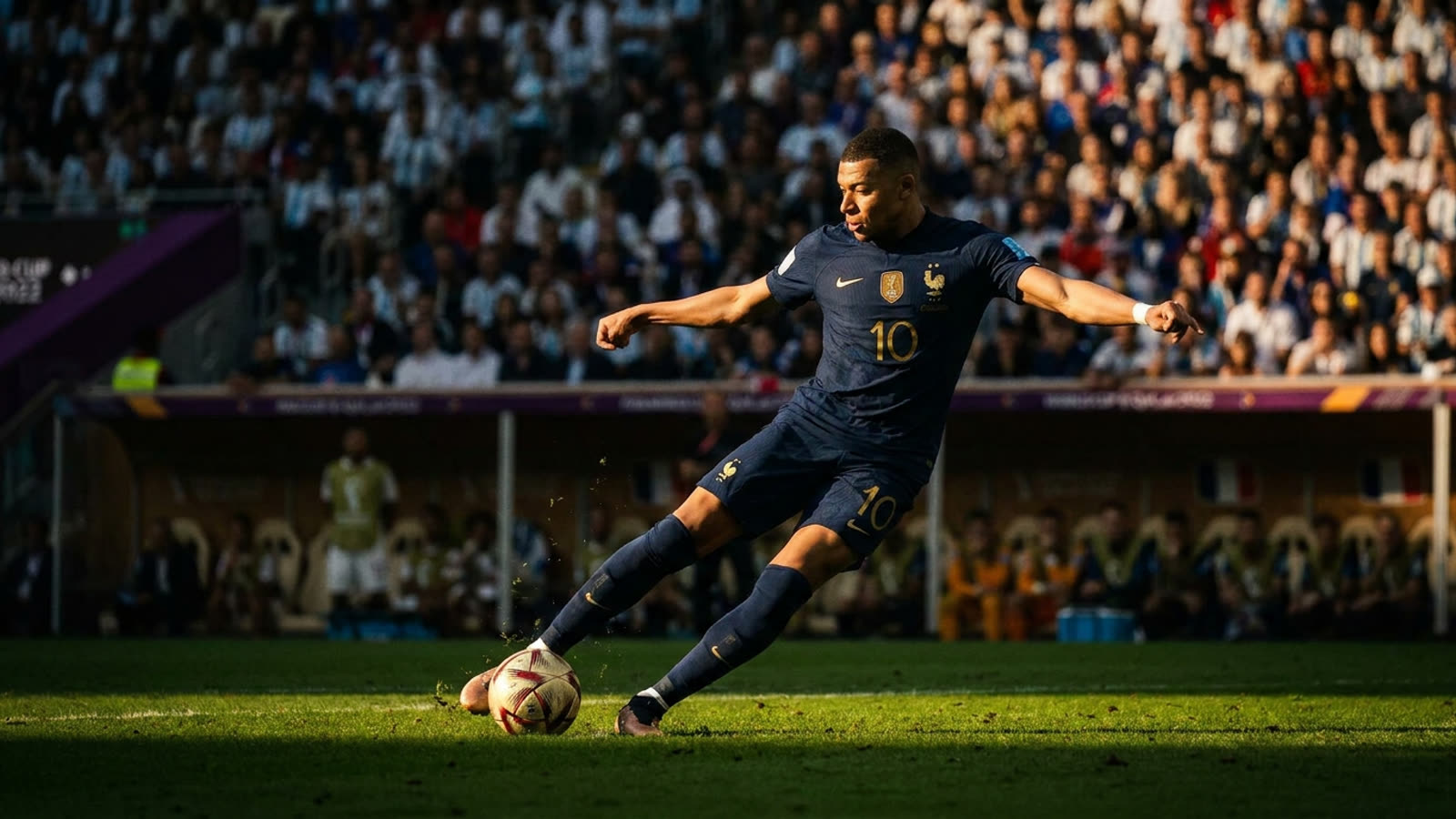
France enters as perpetual favorites, their depth so absurd that leaving world-class players home barely registers as news. Mbappé's burden is not to perform but to transcend—to deliver the kind of tournament that erases the bitter memory of his penalty miss in the 2022 final, even as his hat trick in that same match demonstrated his capacity for the extraordinary. He has won one World Cup already, but the 2018 triumph increasingly feels like a prologue rather than a defining chapter.
Norway's situation could not be more different. Haaland has never played in a World Cup, the nation having missed qualification for decades before finally breaking through. The pressure on him is existential for Norwegian football: prove that this golden generation can compete with the established powers, or watch the sport's attention drift elsewhere. Every goal he scores carries the weight of a country desperate to matter again.
Style as destiny
What makes their parallel ascent so compelling is how completely their games diverge. Mbappé is acceleration personified, a player who makes defenders look slow not through trickery but through pure, devastating pace deployed at precisely the right moment. Haaland is inevitability—a striker so physically overwhelming that his goals often feel less like achievements than natural consequences of his presence in the box.
The tactical questions they pose to opponents are equally distinct. Stop Mbappé by compressing space and you concede the flanks; give him room and he'll be behind your defensive line before the ball arrives. Haaland requires constant double-marking, which opens acres of space for City teammates—but Norway lacks City's supporting cast, making his World Cup a fascinating test of whether individual brilliance can overcome systemic limitations.
Our take
The Messi-Ronaldo era, for all its brilliance, became exhausting in its later years—two aging titans clinging to relevance while younger players waited impatiently in the wings. Mbappé and Haaland represent something cleaner: a rivalry that will unfold entirely in their primes, with no nostalgia clouding the competition. This World Cup is their formal introduction to the tournament's center stage. The next three or four will determine which one history remembers as the era's defining player.