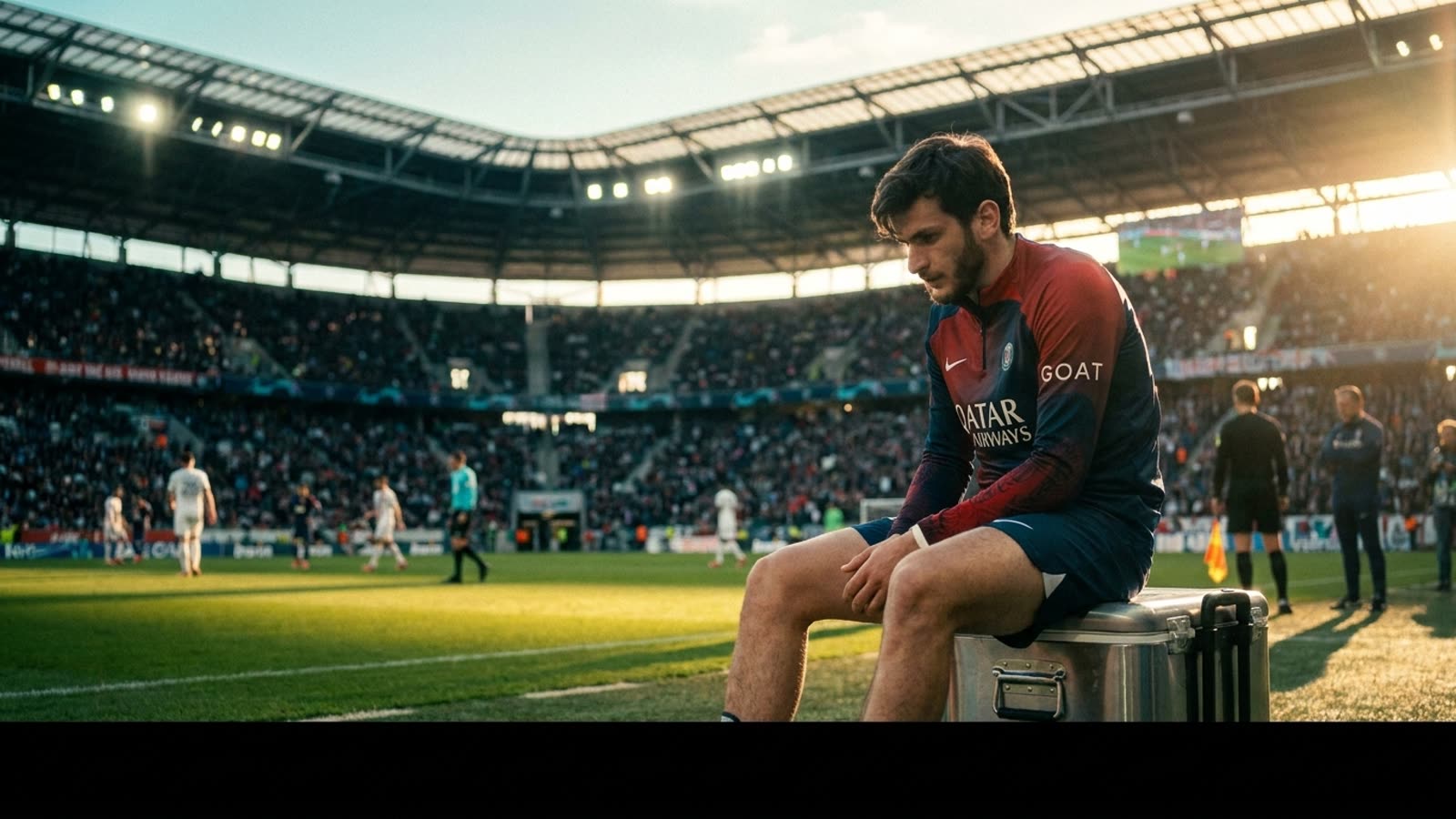
The cruelest thing about Khvicha Kvaratskhelia's injury is that it happened in the middle of the performance that was supposed to announce him as the world's best player.
Tuesday night at the Parc des Princes was everything European football promises and rarely delivers: a 4-2 PSG victory over Barcelona that featured six goals, two comebacks, and the kind of individual brilliance that makes neutral fans pick sides. Kvaratskhelia was at the centre of all of it, tormenting Barcelona's right side with the low-hipped dribbling that has made him the most watchable footballer on the planet. Then, in the 71st minute, he planted his left foot to cut inside, and his knee buckled without contact.
The diagnosis nobody wanted
PSG confirmed Wednesday morning what the replays had already suggested: a ruptured anterior cruciate ligament requiring surgery. The recovery timeline typically runs eight to ten months, meaning Kvaratskhelia will miss the remainder of the Champions League campaign, the Ligue 1 title race, and likely the start of next season. For a player who joined from Napoli for a reported fee north of €100 million last winter, this represents a catastrophic interruption to what was shaping up as a Ballon d'Or-calibre campaign.
The 25-year-old Georgian had recorded seven goals and nine assists across all competitions this season, but statistics undersell his importance. Kvaratskhelia is the rare winger who makes teammates better by making opponents worse — his mere presence on the left forces defences to commit two or three players to his flank, opening the pitch for everyone else.
What PSG lose tactically
Luis Enrique's system depends on wide players who can hold the ball under pressure and create numerical advantages in tight spaces. Without Kvaratskhelia, PSG's left side becomes predictable. Bradley Barcola is a capable deputy, but he lacks the Georgian's ability to stop, feint, and accelerate in a single motion — the quality that made Barcelona's Jules Koundé look ordinary on Tuesday.
The timing compounds the damage. PSG face Inter Milan and Bayern Munich in their next two Champions League fixtures, matches that will likely determine whether they finish in the top eight and earn a bye to the round of sixteen. Navigating that stretch without their most dangerous attacker asks a lot of a squad that has historically wobbled when European pressure intensifies.
Our take
Kvaratskhelia's injury is a reminder that football's margins are measured in millimetres and milliseconds. One awkward plant, one fraction of a degree too much torque, and a season pivots from triumph to tragedy. PSG will survive — they have the depth and the financial muscle to adapt. But the version of this team that looked capable of winning everything on Tuesday night no longer exists. What remains is merely very good, which in the Champions League knockout rounds is rarely enough.