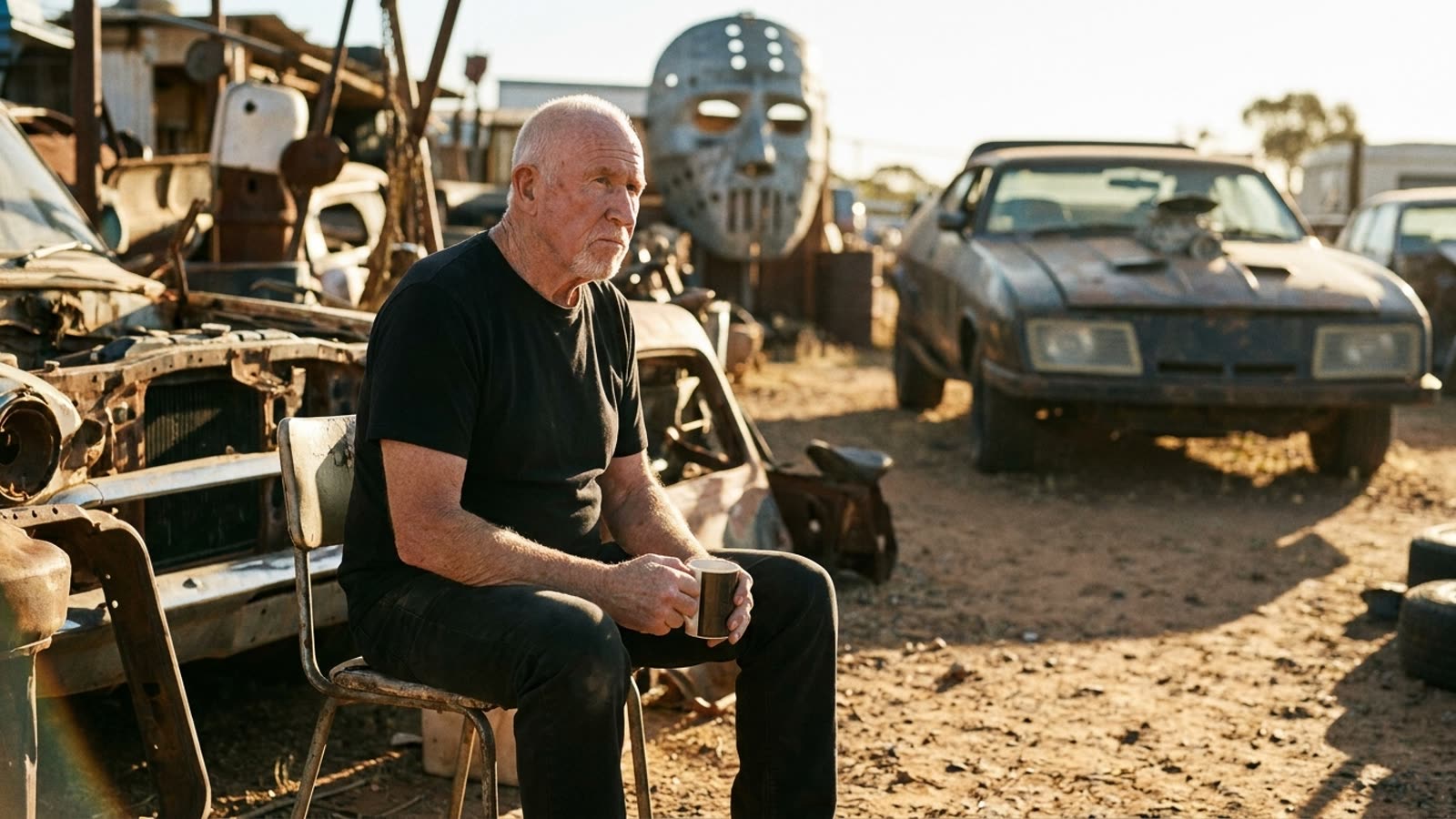
When George Miller needed someone to embody civilization's collapse in 1981's The Road Warrior, he found a Swedish bodybuilding champion who understood that true menace requires no monologue. Kjell Nilsson, who died this week at 76, played Lord Humungus with a physicality so complete that his hockey-masked villain needed only a handful of lines to become one of cinema's most influential antagonists.
The genius of Nilsson's performance was its restraint. In an era when action villains delivered scenery-chewing speeches, Humungus spoke with terrifying calm, his voice a measured purr beneath that iconic mask. "Just walk away," he intones to the besieged settlers, offering mercy that somehow sounds worse than the violence he promises. Nilsson delivered perhaps two hundred words across the entire film. Each one landed like a threat.
The body as instrument
Nilsson arrived at acting through the unlikely route of competitive bodybuilding, where he'd won multiple Swedish championships in the 1970s. Miller reportedly spotted him and recognized that the role required someone who could project authority through sheer physical presence. The director was right. Humungus commands his marauding horde not through elaborate backstory but through the way Nilsson inhabited the character's body — the deliberate gestures, the coiled stillness before violence, the way he seemed to occupy more space than physics should allow.
This physical intelligence set the template. Every leather-clad warlord in every post-apocalyptic film since — from Waterworld to the Fallout games to Miller's own Fury Road — owes a debt to what Nilsson established. The masked strongman ruling through presence rather than exposition became a genre staple because Nilsson proved it worked.
A career in the shadow
Hollywood rarely knows what to do with actors who succeed through physical rather than verbal performance. Nilsson's subsequent career never matched the heights of The Road Warrior. He appeared in a handful of European productions and eventually returned to Sweden, where he worked as a personal trainer and occasionally appeared at fan conventions, bemused by the enduring devotion to a role he'd played for a few weeks more than four decades ago.
This trajectory says something uncomfortable about the film industry's hierarchy of talent. Nilsson created something genuinely original — a villain who terrifies through economy rather than excess — yet the system had no framework for rewarding that achievement with comparable opportunities.
Our take
The best screen villains understand that less dialogue means more dread. Nilsson grasped this instinctively, delivering a performance that film school professors still dissect and action directors still imitate. That he spent the subsequent decades largely forgotten by the industry while his creation became foundational is Hollywood's loss, not his. Lord Humungus endures because Kjell Nilsson knew that the apocalypse doesn't explain itself — it simply arrives, speaks softly, and lets you imagine the worst.