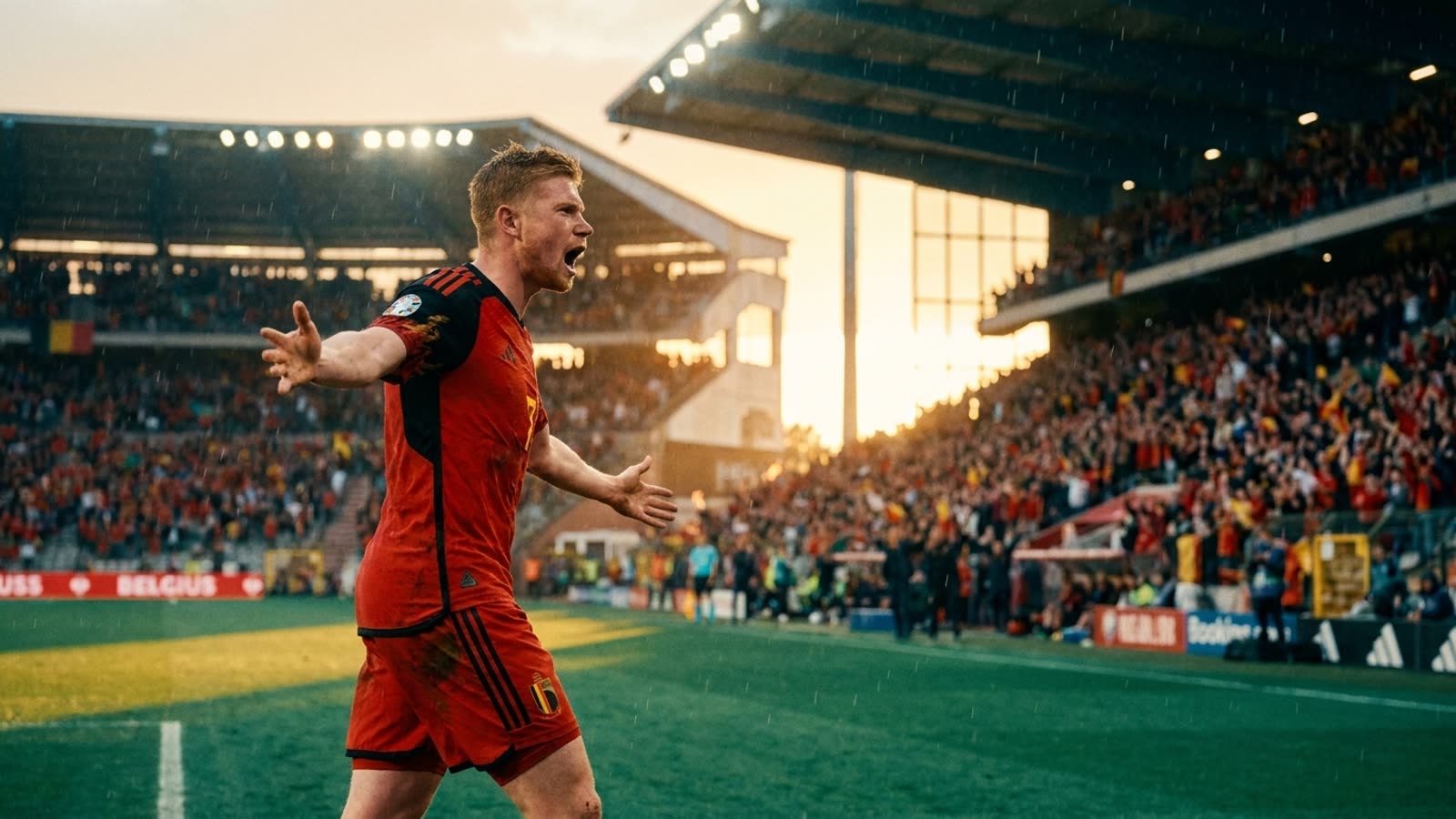
For ninety minutes in a sweltering stadium, Kevin De Bruyne played football that belonged in a museum. Two assists, one goal, and a passing accuracy that would make a metronome jealous — Belgium's 4-1 evisceration of the United States in the Round of 16 was not merely a victory but a statement from a 35-year-old who refuses to fade quietly.
De Bruyne has won everything at club level with Manchester City: Premier League titles stacked like cordwood, a Champions League medal, individual awards that fill trophy cabinets. But the World Cup has always eluded Belgium's golden generation, that talented cohort that peaked somewhere around 2018 and has been managing decline ever since. On Sunday, decline looked like a rumor.
The architecture of dominance
What separated this performance from De Bruyne's usual excellence was its completeness. He did not simply create chances; he dictated tempo, chose when Belgium would attack and when they would breathe. His first assist, a weighted through ball to Romelu Lukaku that split two American defenders like they were traffic cones, came in the 23rd minute. His second, a corner delivery met by Wout Faes's forehead, arrived just before halftime. The goal — a curling effort from the edge of the box in the 67th minute — felt almost gratuitous, the composer adding a flourish because he could.
Belgium's tactical setup gave De Bruyne the freedom to roam, but freedom means nothing without the vision to exploit it. He completed 87 of 94 passes attempted, found teammates in the final third 31 times, and created four clear scoring opportunities. The American midfield, tasked with containing him, looked like men chasing their own shadows.
What this means for Belgium's run
The Red Devils now face Spain in the quarterfinals, a match that will test whether Sunday's performance was a genuine resurgence or a flattering result against inferior opposition. Spain's press is relentless, their midfield depth formidable. De Bruyne will not find the same pockets of space he enjoyed against the United States.
Yet there is something clarifying about watching a player operate at this level in what may be his final World Cup. De Bruyne turns 36 in June 2027; the next tournament, assuming Belgium qualifies, would require him to perform at 39. This is almost certainly his last realistic chance at the trophy that has defined his generation's frustration.
Our take
De Bruyne's performance was a reminder that elite football intelligence does not diminish with age — it merely finds new expressions. Belgium's golden generation has disappointed before, often spectacularly. But if they are to finally deliver, it will be because their conductor decided that this summer, at this tournament, he would not accept anything less than perfection. Spain should be worried.