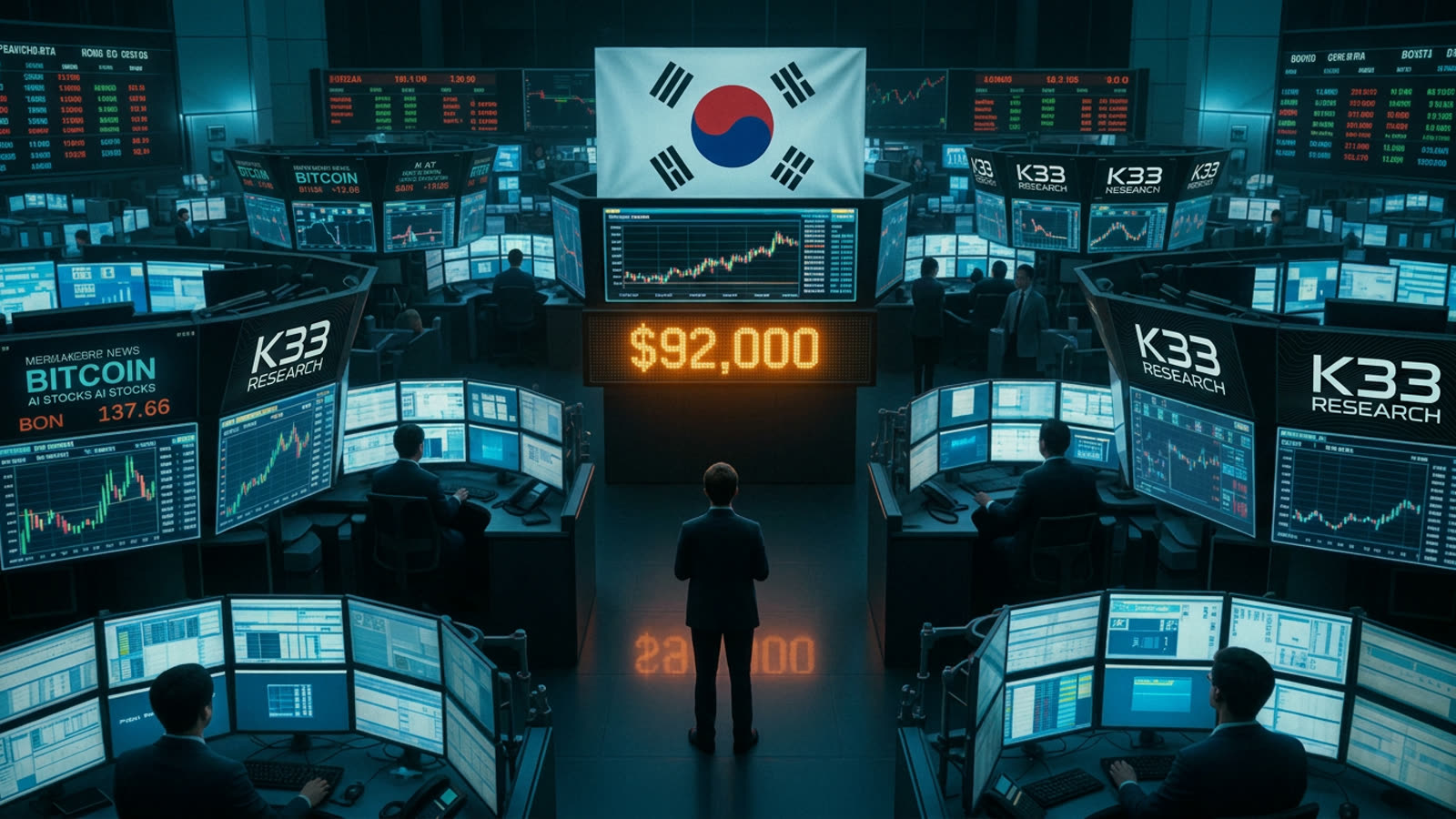
The narrative that Bitcoin suffers when risk appetite fades has become so familiar it barely registers. But K33 Research's latest note inverts the script: risk appetite is alive and well, it argues—just not for crypto. Capital is rotating aggressively into artificial-intelligence equities, and Bitcoin is being left to bob in the wake.
The thesis lands at an awkward moment. Bitcoin has spent the past fortnight sliding from the mid-$70,000s toward the $68,000 handle, shedding gains accumulated during the spring rally. Spot ETF flows, once the market's favorite leading indicator, have turned choppy, with intermittent outflows suggesting institutional conviction is softening rather than collapsing. K33's analysts see this as symptomatic of a broader capital reallocation: money managers are not retreating to cash, they are chasing the semiconductor and AI infrastructure trade that has dominated equity-market returns since early 2024.
The AI magnet
Nvidia's market capitalization has roughly tripled since the start of 2024, and the company now trades at valuations that would have seemed hallucinatory a decade ago. Broadcom, AMD, and a constellation of smaller chip designers have ridden the same updraft. For allocators benchmarked against equity indexes, underweighting AI has become career risk. Bitcoin, by contrast, offers no earnings, no forward guidance, and—after a 300-percent-plus rally from the 2022 lows—less obvious upside asymmetry than it once did.
K33's model suggests that when AI-adjacent equities outperform the S&P 500 by a wide margin, Bitcoin's correlation with tech actually weakens rather than strengthens. The implication is uncomfortable for crypto bulls who spent years arguing that Bitcoin is "digital Nasdaq." It may be digital something, but right now it is not digital Nvidia.
Summer seasonality
Crypto veterans will note that Bitcoin has a long history of drifting sideways—or worse—between Memorial Day and Labor Day. Liquidity thins, trading desks staff down, and the asset tends to mean-revert toward whatever range the spring rally established. K33 expects this pattern to hold, forecasting a "choppy" trading environment with limited directional conviction until at least September.
That does not mean a crash is imminent. The ETF infrastructure that debuted in January 2024 has structurally deepened the bid, and long-term holders remain reluctant to sell into weakness. But it does mean that the explosive breakout many hoped for after the April halving may have to wait.
Our take
The K33 note is less a bearish call than a reality check. Bitcoin is not broken; it is simply unfashionable. AI equities are absorbing the marginal risk dollar because they offer a story—exponential productivity gains, geopolitical chip wars, trillion-dollar addressable markets—that Bitcoin, for all its virtues, cannot match right now. The good news is that fashion is cyclical. When the AI trade inevitably cools, or when macro conditions shift, Bitcoin's uncorrelated appeal will resurface. Until then, patience is the only strategy that makes sense.