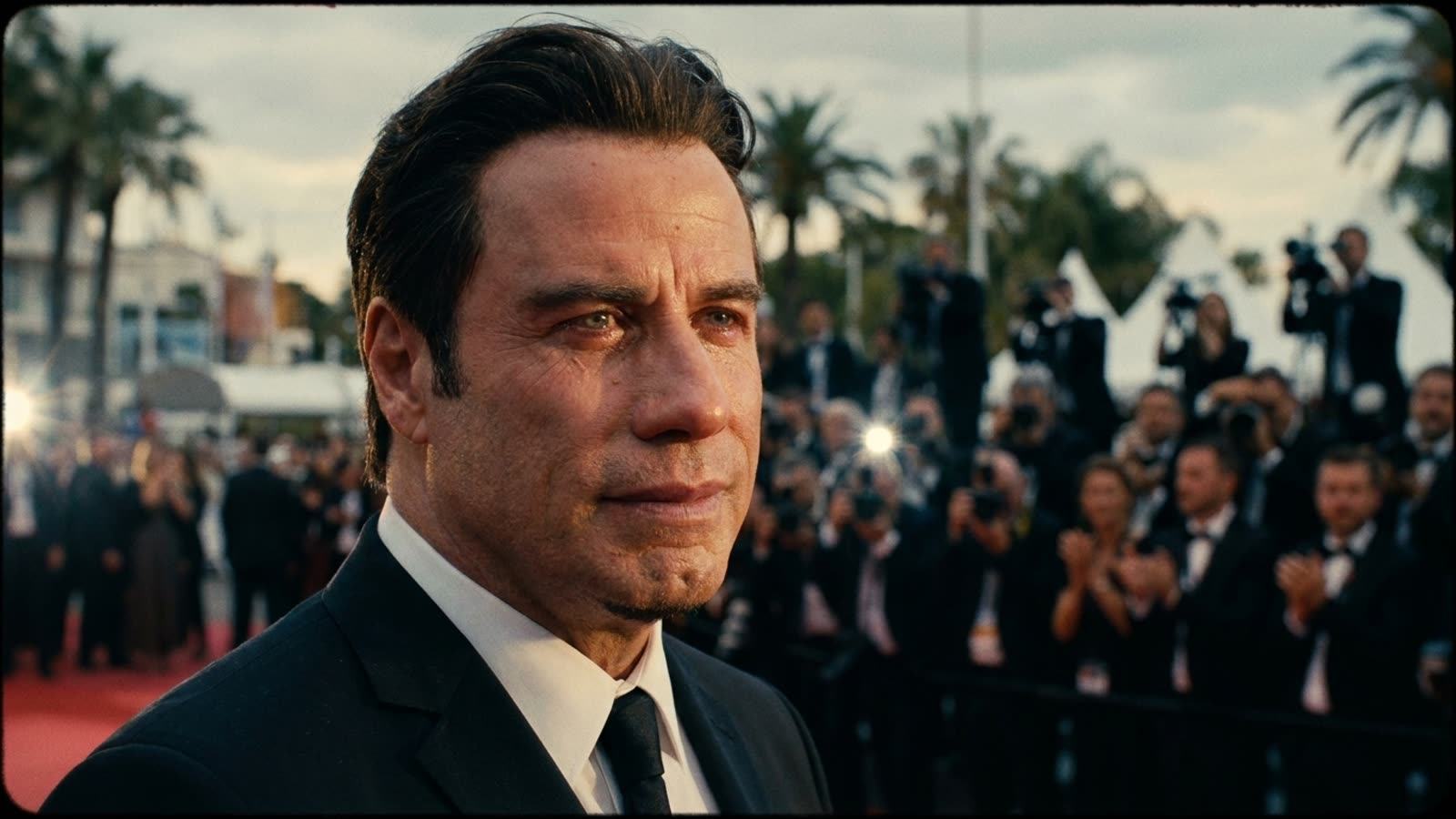
The image was almost too on-the-nose: John Travolta, 72, standing on the Cannes stage in a perfectly cut tuxedo, tears streaming down his face, clutching a golden palm frond he never expected to hold. "This is beyond the Oscar," he said, his voice cracking. He wasn't wrong, and not just because the Academy never gave him one.
The honorary Palme d'Or, presented Thursday evening before the world premiere of his directorial debut "Propeller One-Way Night Coach," represents something more interesting than a lifetime achievement trophy. It's Cannes making a deliberate statement about redemption narratives, about the difference between cultural relevance and artistic legitimacy, and about what happens when an actor everyone counted out refuses to leave the stage.
The Resurrection That Keeps Resurrecting
Travolta's career has followed a pattern so predictable it's become its own genre. The 1970s gave us "Saturday Night Fever" and "Grease," twin monuments to a specific kind of American charisma. The 1980s nearly buried him in forgettable sequels and box-office poison. Then Quentin Tarantino handed him a syringe and a dance scene in 1994, and suddenly Travolta was back—Oscar-nominated, A-list, vindicated.
The second decline was slower, quieter, and arguably crueler. A string of direct-to-video thrillers. Tabloid fodder. The kind of career trajectory that makes industry observers wince and change the subject. By 2020, the consensus was settled: Travolta was a nostalgia act, valuable only for his willingness to show up at award shows and remind people he still existed.
Cannes, apparently, disagrees.
Why Cannes, Why Now
The festival's decision to honor Travolta isn't purely sentimental. "Propeller One-Way Night Coach," which Apple will release on May 29, reportedly represents a genuine artistic gamble—a passion project Travolta has been developing for over a decade, financed partly with his own money when studios balked. Early reactions from the premiere suggest something more personal and formally ambitious than anyone expected from an actor whose recent filmography includes "Trading Paint" and "The Fanatic."
There's also a strategic calculation at play. Cannes has spent the past several years recalibrating its relationship with Hollywood, welcoming streamers while maintaining its art-house credibility. Honoring Travolta—an actor who represents both Old Hollywood glamour and the industry's capacity for second chances—threads that needle elegantly. It's a crowd-pleaser that doesn't feel like pandering.
Our take
The cynical reading is that Cannes gave Travolta a trophy because he's famous and dying celebrities make good television. The more interesting reading is that the festival recognized something the American film industry has been too embarrassed to acknowledge: Travolta, for all his missteps, possesses a screen presence that most working actors would kill for. His willingness to direct at 72, to risk humiliation one more time, suggests either delusion or courage. Cannes is betting on courage. For now, so are we.