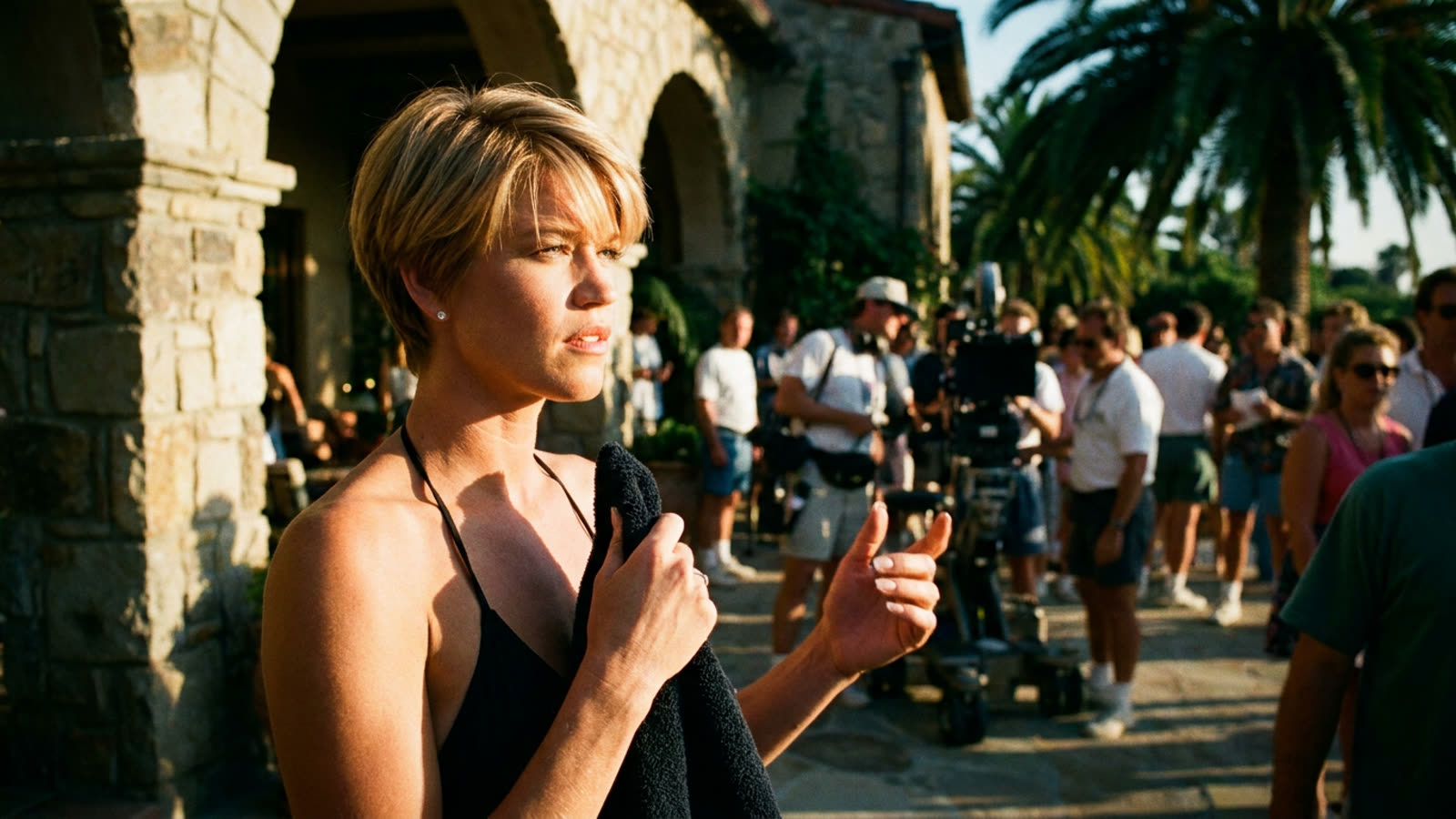
The early 1990s produced a specific type of Hollywood supporting player: women cast as secretaries, receptionists, and harried assistants who existed primarily to react to leading men's antics. Jewel Bentley was supposed to be one of them. Instead, she became something rarer — a character actress who made forgettable roles memorable, then walked away before the industry could reduce her to a punchline.
Her turn in 1990's Taking Care of Business, opposite Jim Belushi and Charles Grodin, remains a masterclass in scene theft. Cast as a secretary navigating the chaos of mistaken identity and corporate fraud, Bentley delivered line readings that suggested her character understood exactly how absurd everyone around her was — and had decided to find it amusing rather than exhausting.
The Art of the Reaction Shot
What distinguished Bentley from the parade of "girl Friday" types cluttering early-90s comedies was her refusal to play straight woman as straight jacket. Her reactions carried subtext: exasperation that bordered on philosophical resignation, amusement that never quite tipped into complicity. Directors learned to keep cameras on her during other actors' lines.
This was the era before streaming algorithms could resurrect forgotten performers, before "that guy" Twitter accounts turned character actors into micro-celebrities. Bentley worked steadily through the decade in television and film, accumulating the kind of résumé that reads like a time capsule of network programming.
The Deliberate Exit
By the late 1990s, Bentley had largely stepped back from on-screen work. Unlike the narratives we prefer — blacklisting, personal tragedy, industry cruelty — her departure appears to have been a choice. She joined the quieter ranks of performers who decided that Hollywood's diminishing returns weren't worth the cost of perpetual availability.
The entertainment industry has never known what to do with women who leave voluntarily. We prefer cautionary tales to autonomy, comebacks to contentment. Bentley offered neither, which may explain why her name surfaces only in nostalgia listicles rather than retrospective profiles.
Our take
The "'Memba Her?" framing that periodically resurrects Bentley's name carries an unintentional cruelty — the suggestion that being remembered is the only metric of a career well-spent. But there's another reading available: some performers understood, earlier than most, that the industry's memory is fickle and its rewards are unevenly distributed. Bentley took her scenes, made them count, and left before anyone could tell her she'd overstayed. That's not disappearance. That's editing.