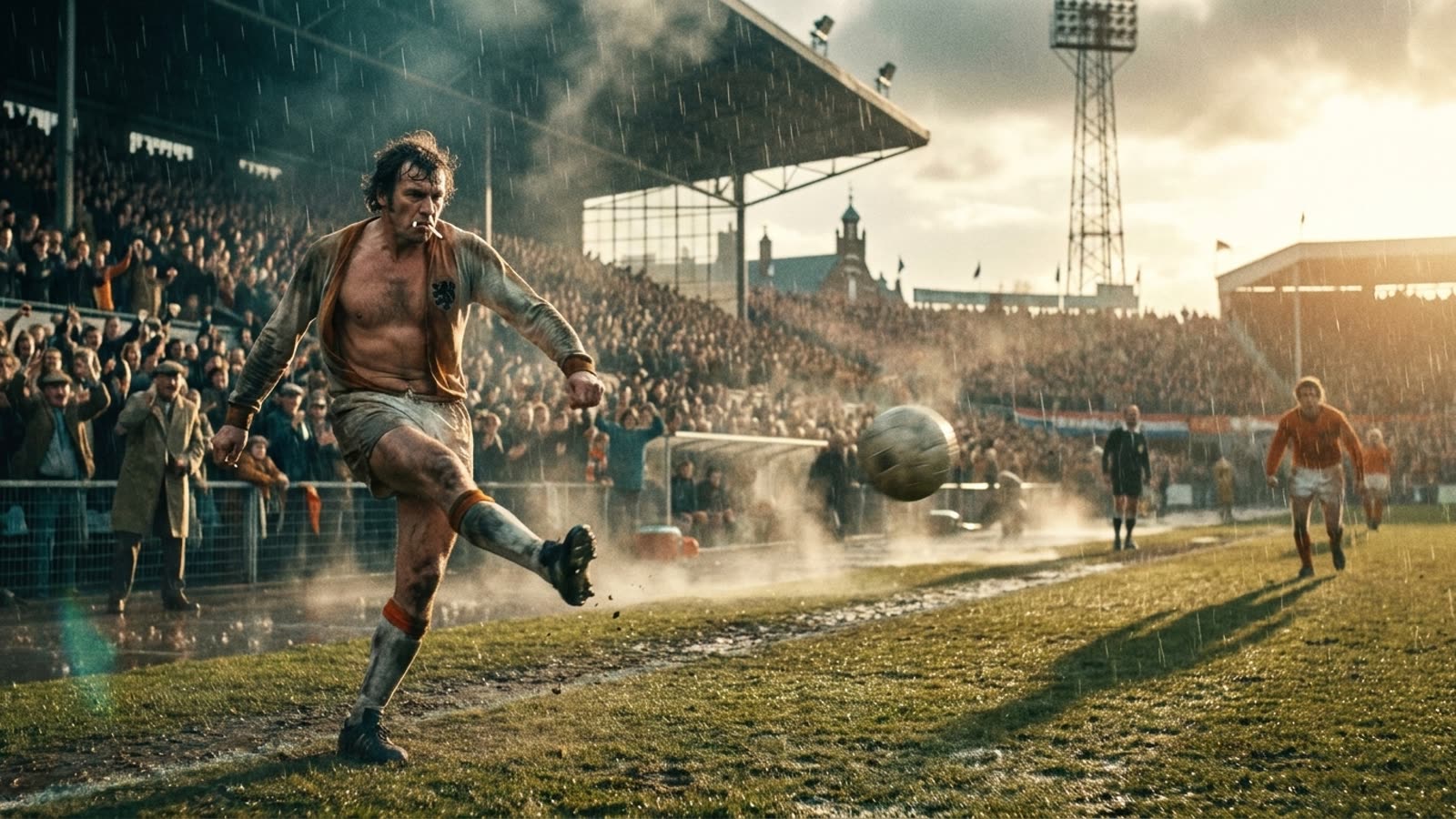
The most influential goalkeeper of the twentieth century was not the best at stopping shots. Jan Jongbloed conceded soft goals, wandered from his line with alarming frequency, and chain-smoked between training sessions well into his thirties. He also played in two World Cup finals, at ages 33 and 37, and pioneered a style of goalkeeping that would take four decades to become orthodoxy.
Jongbloed's gift was not reflexes but spatial intelligence. Where traditional keepers hugged their line and punched crosses, the Amsterdammer read the game like an outfield player, racing off his line to intercept through balls, starting attacks with accurate throws, and positioning himself as a de facto extra defender. In Rinus Michels' and later Ernst Happel's Total Football system, the goalkeeper was not exempt from the collective pressing and passing responsibilities. Jongbloed was the only Dutch keeper of his era willing—and able—to play that way.
The accidental revolutionary
Jongbloed spent most of his career at unfashionable clubs: DWS Amsterdam, FC Amsterdam, Roda JC. He was never Ajax's first choice during their European Cup dynasty; that honor belonged to the more conventional Heinz Stuy. But when the Netherlands needed a keeper for the 1974 World Cup, national coach Michels wanted someone who could play. Jongbloed, then 33 and considered past his prime, got the call.
What followed was a masterclass in proactive goalkeeping. Against Brazil in the second group stage, Jongbloed's sweeping runs neutralized the South Americans' long balls. Against Argentina, his distribution helped the Dutch transition from defense to attack in seconds. In the final against West Germany, he was beaten by a penalty and a low drive from Gerd Müller—goals that owed more to Dutch defensive errors than goalkeeping failures. The Netherlands lost 2-1, but Jongbloed's reputation was made.
Why it took so long to catch on
If Jongbloed's approach was so effective, why did it take until the 2010s for sweeper-keeping to become standard? The answer lies in risk tolerance and coaching conservatism. A goalkeeper who stays on his line and makes a mistake concedes a goal. A goalkeeper who rushes out and misjudges a ball looks foolish and concedes an empty-net tap-in. Managers, understandably, preferred the former error.
The tactical shift required two developments: the back-pass rule change in 1992, which forced keepers to use their feet, and the rise of possession-based systems that demanded every player contribute to build-up play. Pep Guardiola's Barcelona, with Víctor Valdés as an auxiliary midfielder, and later his Bayern Munich and Manchester City teams made sweeper-keeping non-negotiable. Manuel Neuer became the template, but the blueprint was drawn in Amsterdam half a century earlier.
Our take
Jongbloed never won a World Cup, never played for a glamour club, and would probably fail a modern fitness test. But his influence echoes every time Ederson launches a sixty-yard pass or Alisson races to the edge of his box to snuff out a counter-attack. Football remembers its goalscorers and forgets its goalkeepers; it remembers its winners and forgets its runners-up. Jongbloed was a losing finalist who smoked too much and stopped too little. He also saw the future of his position before anyone else did, which is a kind of genius that deserves more than a footnote.