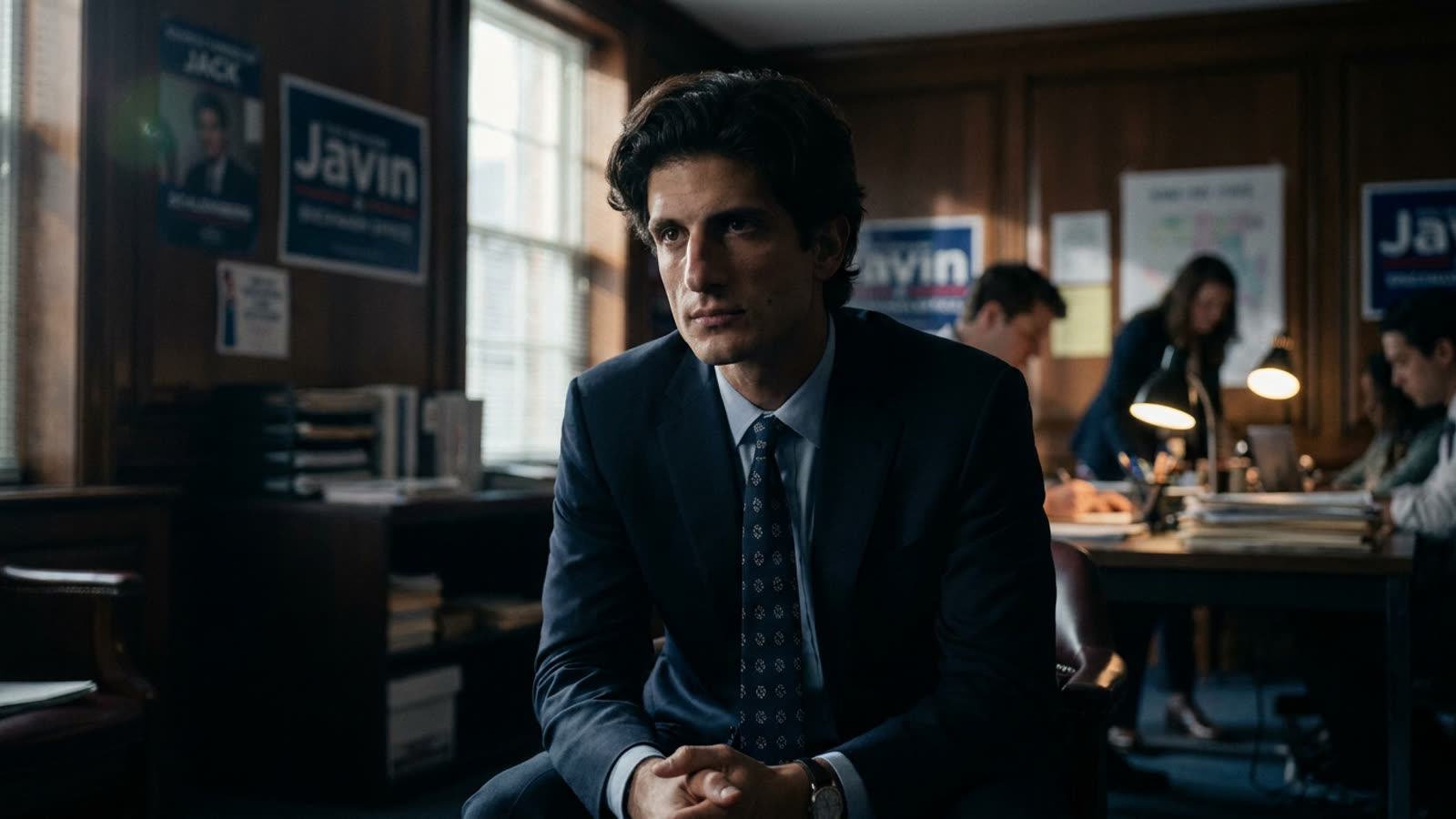
The Schlossberg campaign was supposed to be a coronation. A Kennedy returning to elected office, this time in a competitive New York House district, armed with the kind of name recognition that money cannot buy and a social media following cultivated through self-aware humor and shirtless thirst traps. Instead, what has emerged is something closer to a case study in how not to run for Congress.
According to reporting from The Hollywood Reporter, Jack Schlossberg's campaign has been defined by staff turnover, erratic scheduling, and a candidate who allegedly naps during strategy sessions. Multiple sources describe an operation in disarray, with firings occurring at a pace that has left even seasoned political operatives bewildered. The question hovering over the race is no longer whether Schlossberg can win, but whether he actually wants to do the work required to try.
The Burden of Being a Kennedy
Schlossberg, 33, is the only grandson of President John F. Kennedy, a lineage that comes with both extraordinary advantages and suffocating expectations. His mother, Caroline Kennedy, has served as ambassador to Japan and Australia. His late uncle, Ted Kennedy, was the lion of the Senate. The family name opens doors that remain permanently closed to ordinary candidates.
But political dynasties demand more than DNA. They require the appearance of effort, the performance of seriousness. Schlossberg's campaign has reportedly struggled with both. Staff members have described a candidate who seems ambivalent about the grinding retail politics that define competitive House races—the endless fundraising calls, the constituent coffees, the mind-numbing repetition of talking points.
The Social Media Paradox
Schlossberg built his public profile through Instagram and TikTok, where his goofy, self-deprecating videos earned him a following among younger audiences who found his willingness to mock his own privilege refreshing. He impersonated various Kennedy relatives. He posted workout videos. He seemed to be in on the joke of his own existence.
The problem is that what works on social media—irony, detachment, the studied appearance of not trying too hard—is precisely what fails in electoral politics. Voters in a competitive district want to believe their representative cares deeply, perhaps obsessively, about representing them. A candidate who seems to view the whole enterprise with bemused detachment is a candidate who loses.
The Discipline Gap
The reports of napping are, in some ways, the most damning detail. Not because rest is shameful—campaigns are exhausting—but because it suggests a candidate who has not internalized the fundamental truth of competitive elections: someone else wants this more than you do, and they are outworking you right now.
Schlossberg's opponents in the Democratic primary are not household names. They do not have Kennedy money or Kennedy connections. What they have is hunger, and in politics, hunger often beats heritage.
Our take
There is something almost poignant about watching a Kennedy struggle with the question of whether he actually wants power or merely inherited the expectation that he should seek it. Schlossberg has every advantage except the one that matters most: clarity of purpose. His campaign's dysfunction is not a logistical problem; it is a philosophical one. If he cannot answer why he wants this seat—beyond the vague pull of family legacy—voters will answer the question for him.