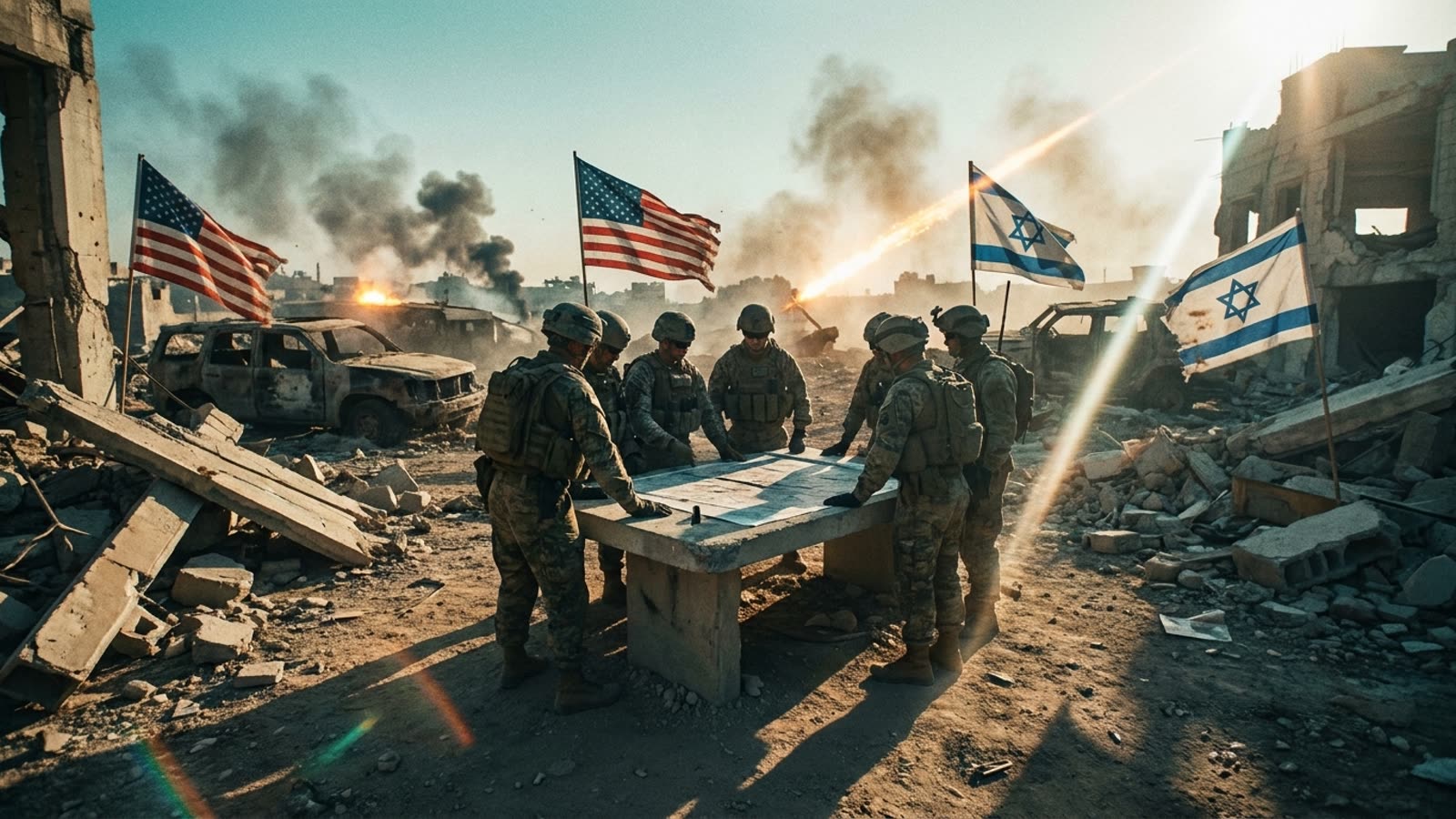
For years, Israel and Iran waged their conflict through proxies, cyberattacks, and the occasional assassination—always maintaining the fiction of indirect hostility. That pretense ended this weekend when both nations launched strikes against each other's territory, the first direct military exchange since a shaky ceasefire was brokered earlier this year. The shadow war has become an open one, and the rules that prevented regional conflagration for decades may no longer apply.
The strikes themselves appear calibrated to signal resolve without triggering all-out war. Israel targeted Iranian military infrastructure; Iran responded with missile and drone attacks on Israeli positions. Neither side has reported mass casualties, and both governments have stopped short of declaring formal war. But the symbolism matters more than the damage assessments: two nations that built their strategic doctrines around avoiding direct confrontation have now crossed that threshold twice in a matter of months.
The ceasefire that wasn't
The agreement that supposedly froze hostilities was always more aspiration than architecture. Brokered under intense American pressure following the April escalation, it lacked the verification mechanisms and third-party enforcement that give ceasefires durability. Both sides treated it as a pause for rearmament rather than a foundation for de-escalation. Intelligence officials in Washington reportedly warned the White House that renewed hostilities were a matter of when, not if.
What triggered this round remains contested. Israeli officials point to Iranian drone activity near the Golan Heights; Tehran claims Israeli sabotage operations inside Iran never stopped. The truth is likely that neither side ever fully complied, and the ceasefire simply collapsed under the weight of mutual suspicion.
Trump's demand and its limits
President Trump's public call for both nations to "stop shooting" reflects Washington's diminished leverage in a conflict it can no longer referee. The statement, delivered without the diplomatic groundwork that typically precedes such interventions, reads more as exasperation than strategy. Neither Jerusalem nor Tehran has shown much appetite for American mediation in recent months, each calculating that Washington's regional priorities have shifted.
The administration faces an uncomfortable reality: Israel is a treaty ally that expects unconditional support, while Iran is a adversary whose behavior Washington wants to change without committing military resources. Threading that needle requires the kind of sustained diplomatic engagement that has been conspicuously absent.
Regional contagion risk
The immediate danger is not a full-scale war between Israel and Iran—both governments understand the catastrophic costs. The greater risk is that this exchange emboldens proxy forces across the region. Hezbollah in Lebanon, Houthi forces in Yemen, and various Iraqi militias all take cues from Tehran. If they interpret this weekend's strikes as permission to escalate their own operations, the conflict could metastasize in ways neither capital can control.
Oil markets have already priced in the uncertainty, with crude surging on fears of supply disruption. But the economic tremors are secondary to the strategic question: can the Middle East's informal rules of engagement survive when the two most powerful adversaries have demonstrated willingness to strike each other directly?
Our take
The ceasefire was always a diplomatic Band-Aid on a strategic wound. What we are witnessing is not a breakdown of peace but the exposure of a conflict that never truly paused. Washington's influence in the region has atrophied through years of inconsistent policy, and neither Israel nor Iran believes American pressure alone can alter their calculations. The next few weeks will determine whether this exchange becomes a new equilibrium—tense but contained—or the opening chapter of something far worse. History suggests the former, but history has been wrong before.