The war between Israel and Hamas has entered its third calendar year, and the vocabulary surrounding it has quietly shifted. What began as a crisis demanding urgent resolution has become something closer to background noise—a conflict that diplomats reference in speeches but no longer treat as solvable in the near term.
This is not cynicism; it is realism. The fundamental conditions that would permit a durable ceasefire remain absent. Hamas retains enough organizational capacity to continue operations, Israel maintains its stated objective of eliminating the group's military infrastructure, and neither side has shown willingness to accept terms the other could plausibly offer. The hostage question, which once dominated international attention, has receded into a grim accounting exercise.
The arithmetic of stalemate
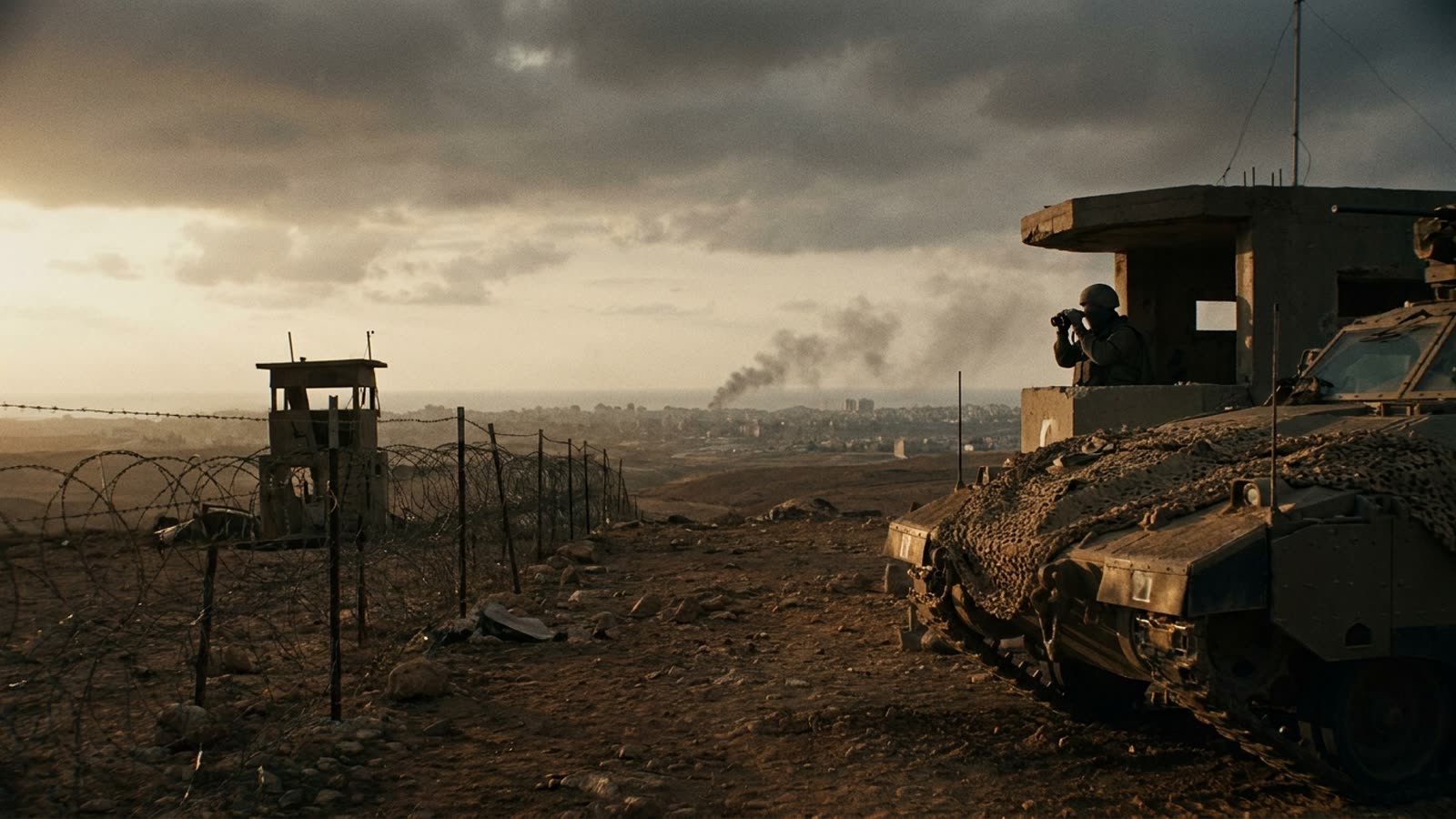
Israel's military campaign in Gaza has achieved significant tactical objectives—destruction of tunnel networks, elimination of senior Hamas commanders, territorial control of key areas—without producing strategic resolution. The group's decentralized structure means that degrading one cell does not prevent another from operating. Meanwhile, the humanitarian catastrophe in Gaza has generated sustained international criticism without translating into pressure sufficient to alter Israeli policy.
The Biden administration spent its final months attempting shuttle diplomacy that produced framework agreements neither party implemented. The Trump administration, consumed by its Iran gambit, has treated Gaza as a secondary concern, occasionally floating maximalist proposals—full Palestinian resettlement, permanent Israeli security control—that exist more as negotiating theater than serious policy.
Regional recalibration
The war's persistence has forced neighboring states into awkward accommodations. Egypt and Jordan maintain their peace treaties while managing domestic populations increasingly hostile to perceived complicity. Saudi Arabia's normalization track with Israel, once considered inevitable, remains frozen—not abandoned, but indefinitely paused. The Abraham Accords signatories have discovered that warm relations with Jerusalem become diplomatically costly when Gaza dominates Al Jazeera's evening broadcast.
Iran, despite its current preoccupation with American military pressure, continues supplying Hamas through circuitous channels. The group's survival serves Tehran's interests regardless of whether it can achieve military victory.
Our take
The honest assessment is that this war will end when one side exhausts itself or when external powers impose a settlement neither wants—and neither condition appears imminent. The international community's shift from urgent mediation to resigned management reflects not moral failure but rational adaptation to circumstances. Wars end through victory, exhaustion, or intervention. Israel cannot achieve the first, Hamas refuses the second, and no power is willing to attempt the third. What remains is a conflict that persists because no one has found a reason, or a way, to stop it.