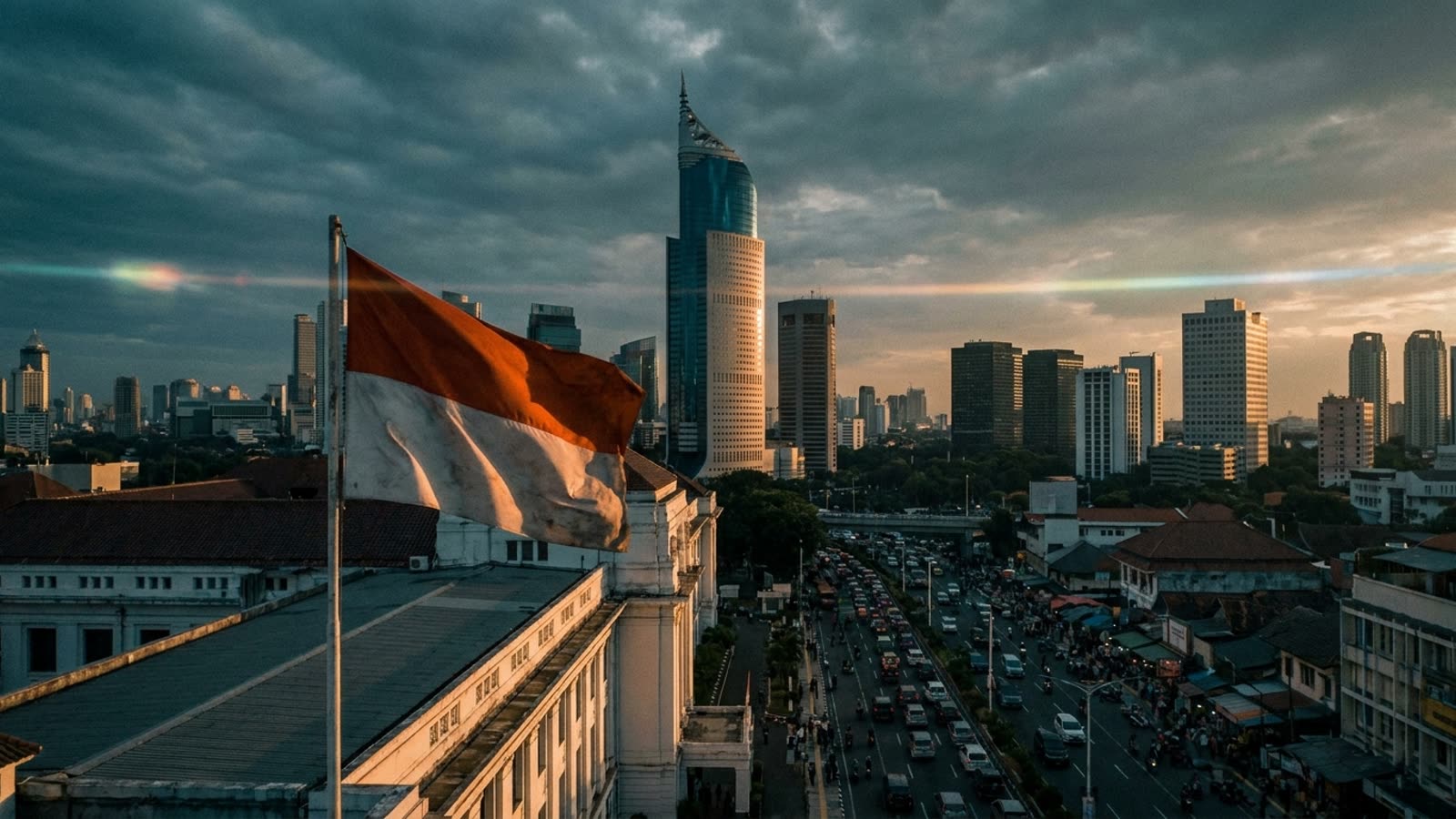
For years, Indonesia pitched itself as the patient alternative to China—stable politics, young demographics, commodity wealth, and a government that mostly stayed out of investors' way. That narrative took a sledgehammer to the face this week when MSCI warned it may cut the country from its flagship emerging-market indices, triggering the worst single-day stock rout in Jakarta since the pandemic.
The issue isn't growth. Indonesia's economy is still expanding at a respectable clip. The issue is something more fundamental: can foreign investors actually get their money out when they want to? MSCI's concerns center on market infrastructure—settlement failures, liquidity constraints, and regulatory opacity that make Indonesia look less like a maturing market and more like a trap with good PR.
The index math is merciless
Passive investing has transformed how capital flows to emerging markets. When a country sits in MSCI's indices, billions of dollars from pension funds, sovereign wealth funds, and ETFs flow in automatically. When it gets cut, those same billions flow out—mechanically, indifferently, and fast. Indonesia currently represents roughly 2% of the MSCI Emerging Markets Index. That sounds modest until you realize it translates to tens of billions in passive allocations. An index deletion wouldn't just hurt sentiment; it would force selling by funds that have no choice in the matter.
Jakarta's credibility problem
Indonesian officials have spent the past decade courting foreign capital with infrastructure projects, tax incentives, and nickel-processing ambitions tied to the EV supply chain. But the MSCI warning reveals a gap between the sales pitch and the plumbing. Foreign investors have complained for years about unpredictable settlement timelines and difficulty executing large trades without moving prices dramatically. The government's response has been to promise reforms while delivering incrementally. MSCI's patience, it appears, has limits.
Contagion risk for the neighborhood
Indonesia isn't the only Southeast Asian market with investability questions. Vietnam has been stuck in MSCI's frontier category for years, unable to graduate to emerging status. The Philippines and Thailand face their own liquidity challenges. If MSCI follows through on Indonesia, it sends a signal to the entire region: index inclusion is not a participation trophy. It can be revoked.
Our take
This is what happens when a country treats market infrastructure as an afterthought while chasing headline-grabbing industrial policy. Indonesia wanted to be the nickel superpower, the EV battery hub, the demographic dividend story. All worthy ambitions. But global capital doesn't care about your five-year plan if it can't settle a trade reliably. Jakarta now faces a choice: fix the boring, unglamorous mechanics of its capital markets, or watch the passive money walk out the door and not look back. The index providers are not bluffing.