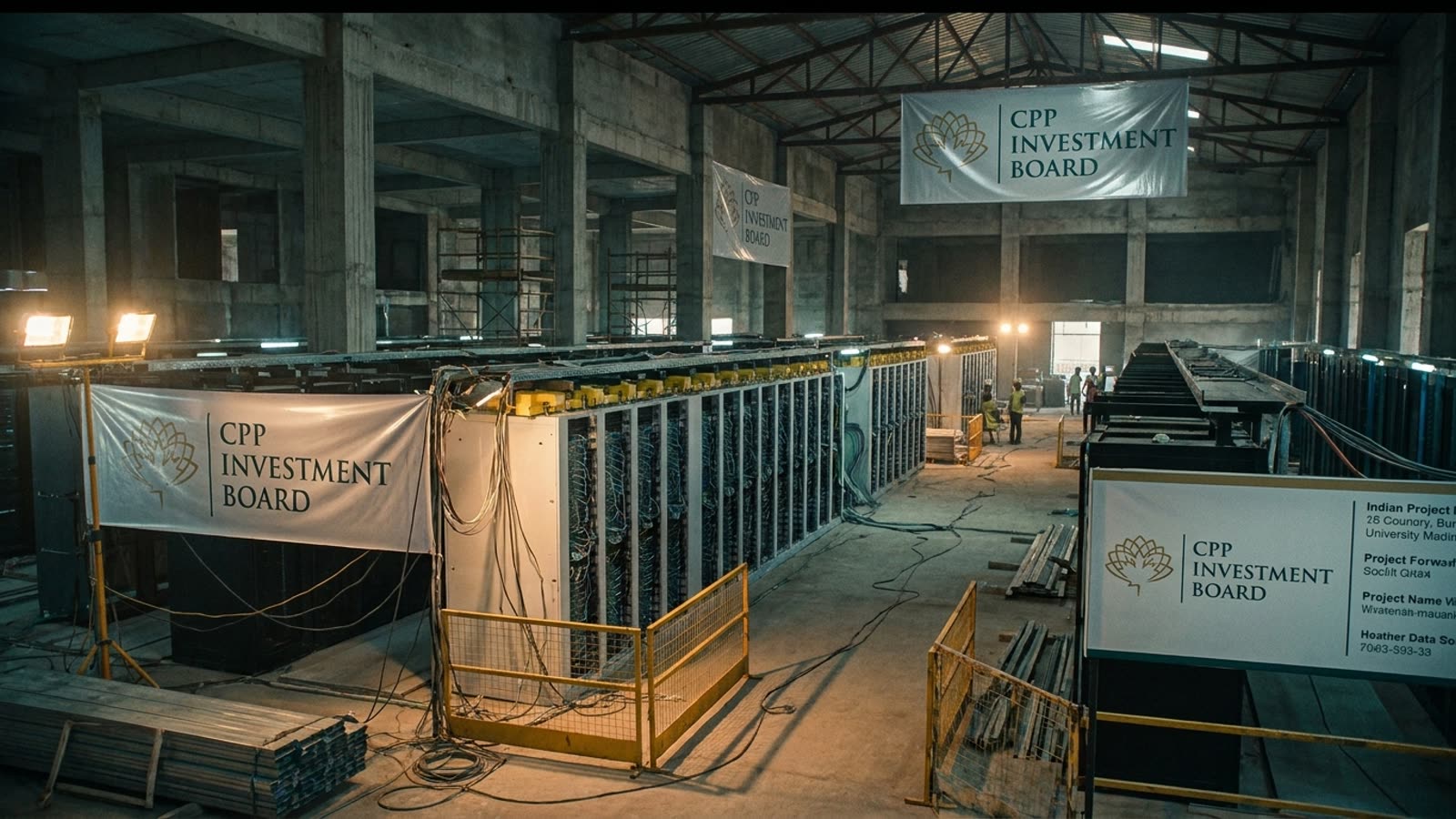
The Canada Pension Plan Investment Board is finalizing a multi-billion dollar commitment to Indian data center development, joining a growing queue of institutional investors who have concluded that the future of AI infrastructure will not be built exclusively in Nevada deserts and Irish business parks.
The deal, which would see CPPIB take significant stakes in facilities operated by Indian conglomerates including Adani and Reliance, represents a strategic pivot that has been years in the making. India's data center capacity is expected to more than triple by 2028, driven by a combination of domestic AI demand, favorable land costs, and a government that has made digital infrastructure a centerpiece of its economic agenda.
The geography of compute is shifting
For most of the AI boom, the calculus was simple: build where power is cheap and permitting is fast, which meant West Texas, the American Southwest, and Nordic countries with abundant hydroelectric capacity. But that equation is changing. American utilities are increasingly balking at the load requirements of frontier model training. European regulators are tightening water-use restrictions. And the sheer scale of capital required—individual campuses now routinely exceed $10 billion—has pushed even the largest hyperscalers to seek partners.
India offers something none of these markets can: a domestic customer base of 1.4 billion people whose AI adoption is accelerating faster than infrastructure can be built. The country's enterprise AI spending grew 47% last year, and the government's ambitious India AI Mission has earmarked substantial public funding for compute sovereignty. For pension funds with thirty-year time horizons, the thesis writes itself.
What the Western giants are not saying
Conspicuously absent from the Indian data center gold rush are the American hyperscalers themselves. Microsoft, Google, and Amazon have all announced Indian AI initiatives, but their capital commitments remain modest compared to their domestic buildouts. The reasons are partly operational—Indian power grids remain less reliable than American ones, and the regulatory environment can be opaque—but also strategic. These companies are increasingly wary of building critical infrastructure in jurisdictions where they lack political leverage.
This creates an opening for sovereign wealth funds and pension systems, which can afford to take a longer view and are less concerned about quarterly earnings calls. Singapore's GIC, Abu Dhabi's Mubadala, and now CPPIB are all positioning themselves as the patient capital that will own the physical layer of India's AI economy.
Our take
The conventional wisdom holds that AI is a software story, with hardware as a commodity input. The pension funds are making a different bet: that in a world of constrained power, water, and permitting, the owners of physical infrastructure will capture an increasing share of value. They may be right. The question is whether India's grid, governance, and geopolitics can support the ambition. For retirees in Toronto and Singapore, the answer will determine whether their pensions are funded by the next computing revolution—or stranded by it.