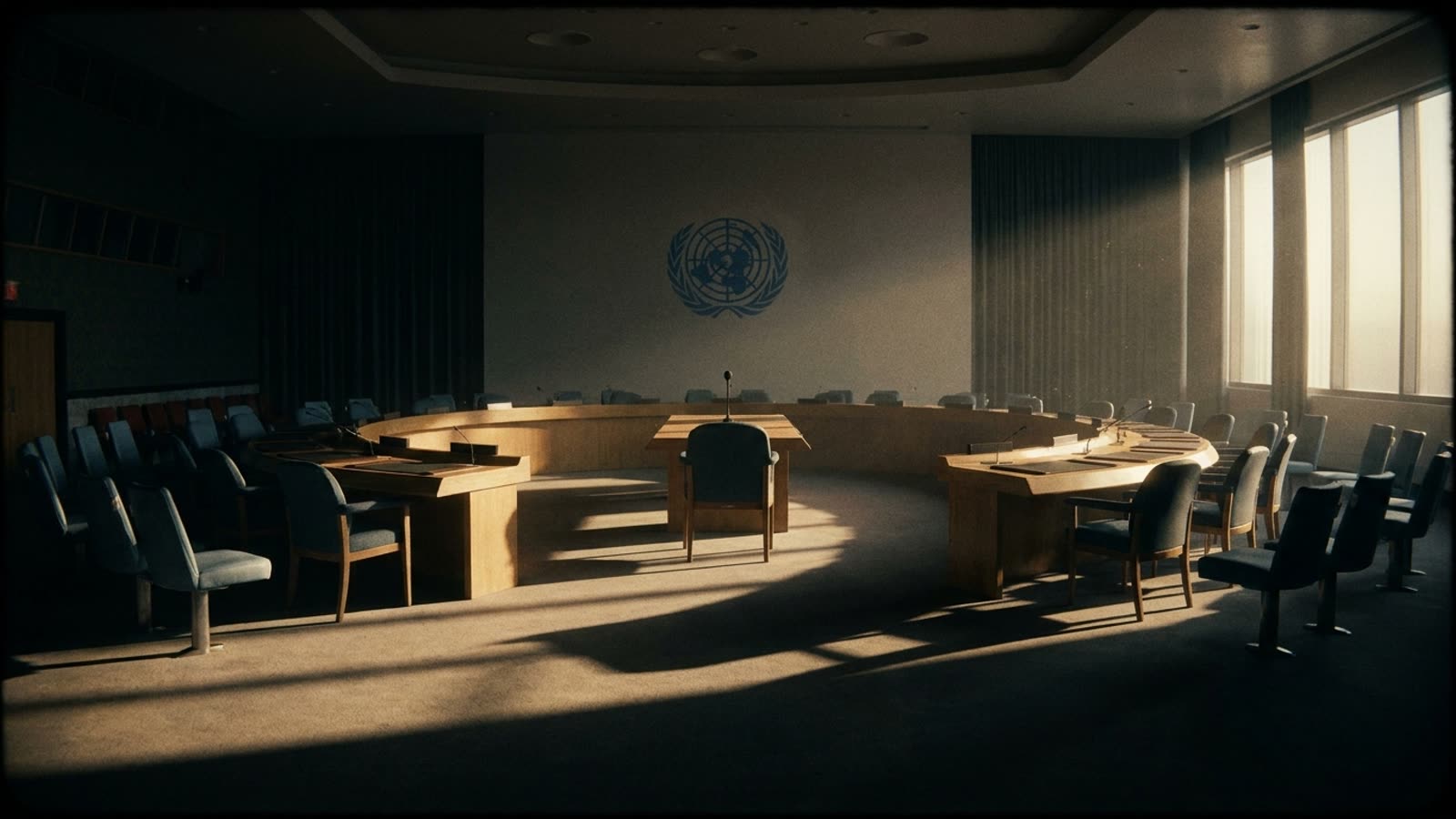
The United Nations Security Council veto is perhaps the most reviled mechanism in international diplomacy. Critics call it an anachronism, a license for great-power impunity, a structural guarantee that the world's most consequential conflicts will remain unresolved. They are correct on all counts. They are also missing the point entirely.
The veto was never designed to produce justice. It was designed to prevent World War III. And by that narrow, unglamorous measure, it has worked.
The Yalta bargain
The Security Council's permanent membership — the United States, Russia, China, France, and the United Kingdom — reflects the power realities of 1945, not those of today. This is frequently cited as evidence of the system's obsolescence. But the framers at Yalta and San Francisco were not attempting to create a representative body. They were constructing a cage.
The League of Nations had failed catastrophically, in part because major powers could simply walk away when collective decisions displeased them. The UN's architects solved this problem through bribery: give the most dangerous states a permanent stake in the institution, and they would remain inside it. The veto was that stake. It guaranteed that no resolution could ever directly threaten a permanent member's core interests without that member's consent.
This was not idealism. It was hostage negotiation dressed in parliamentary procedure.
How it functions in practice
A veto kills a resolution outright. Even a credible threat of veto reshapes negotiations long before any vote occurs. Diplomats speak of the "hidden veto" — proposals that never reach the chamber because their sponsors know they would be blocked. The Council's public record of vetoes (roughly three hundred since 1945) dramatically understates the mechanism's influence.
The veto also creates a peculiar dynamic: the permanent five often avoid forcing each other into public vetoes, preferring quiet compromises or studied inaction. This explains why the Council can appear paralyzed even when no veto has been cast. The threat alone is sufficient.
The reform mirage
Proposals to reform or abolish the veto surface regularly. Expanding permanent membership to include Germany, Japan, India, or Brazil has been debated for decades. Limiting veto use in cases of mass atrocities has attracted significant support. None of these reforms has any realistic prospect of implementation.
The reason is structural: amending the UN Charter requires ratification by all five permanent members. Asking a great power to voluntarily surrender its veto is asking it to accept future constraints on its freedom of action with no compensating benefit. No rational actor would agree. The veto protects itself.
Our take
The Security Council veto is indefensible as a matter of principle and indispensable as a matter of practice. It enshrines inequality, rewards historical accident, and regularly shields atrocities from international response. It also keeps nuclear-armed rivals inside a shared institutional framework, talking rather than fighting. The choice was never between a perfect system and this one. It was between this one and nothing. Reformers who imagine otherwise are engaged in a noble but ultimately decorative exercise. The veto will outlast every one of them.