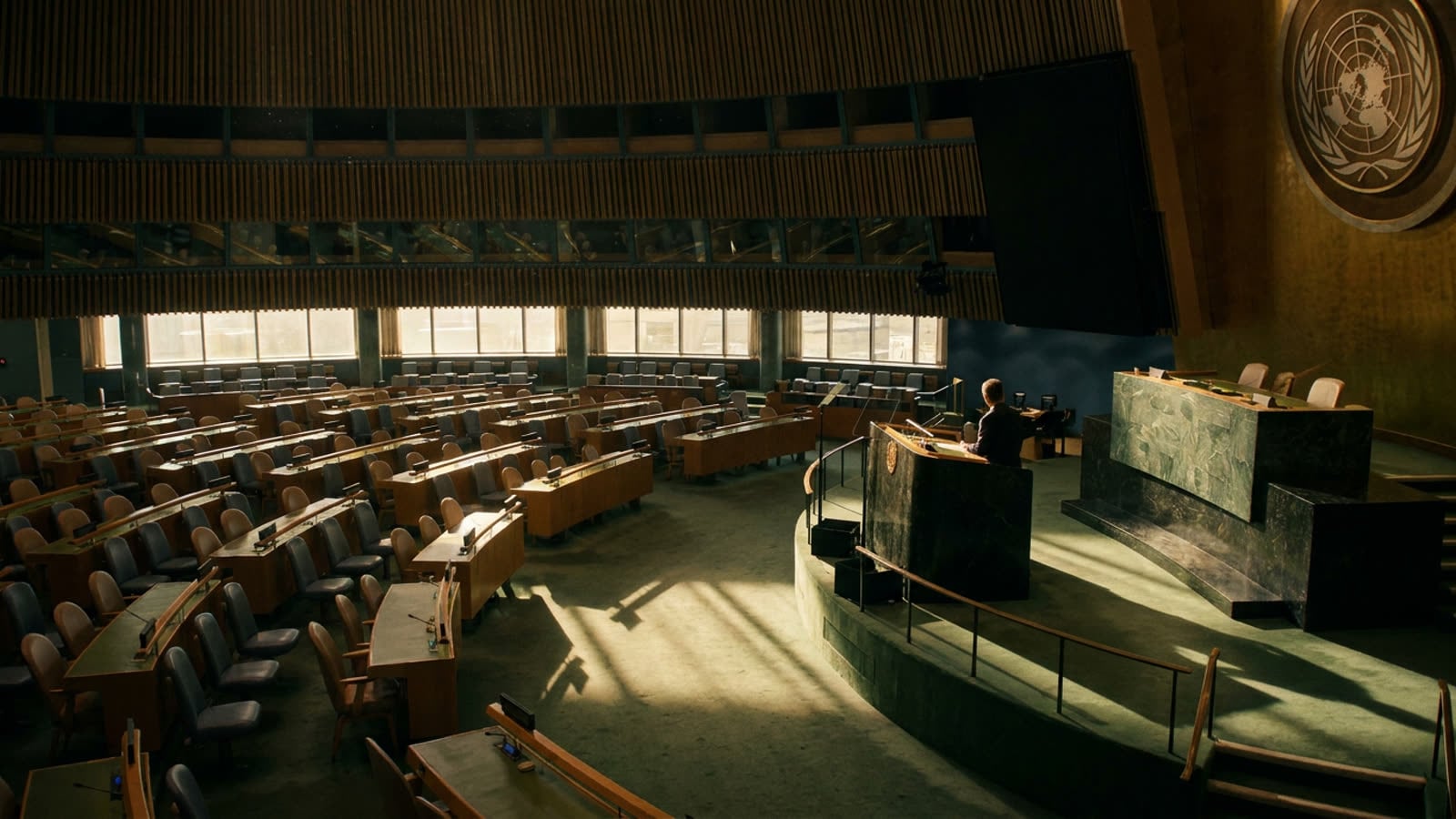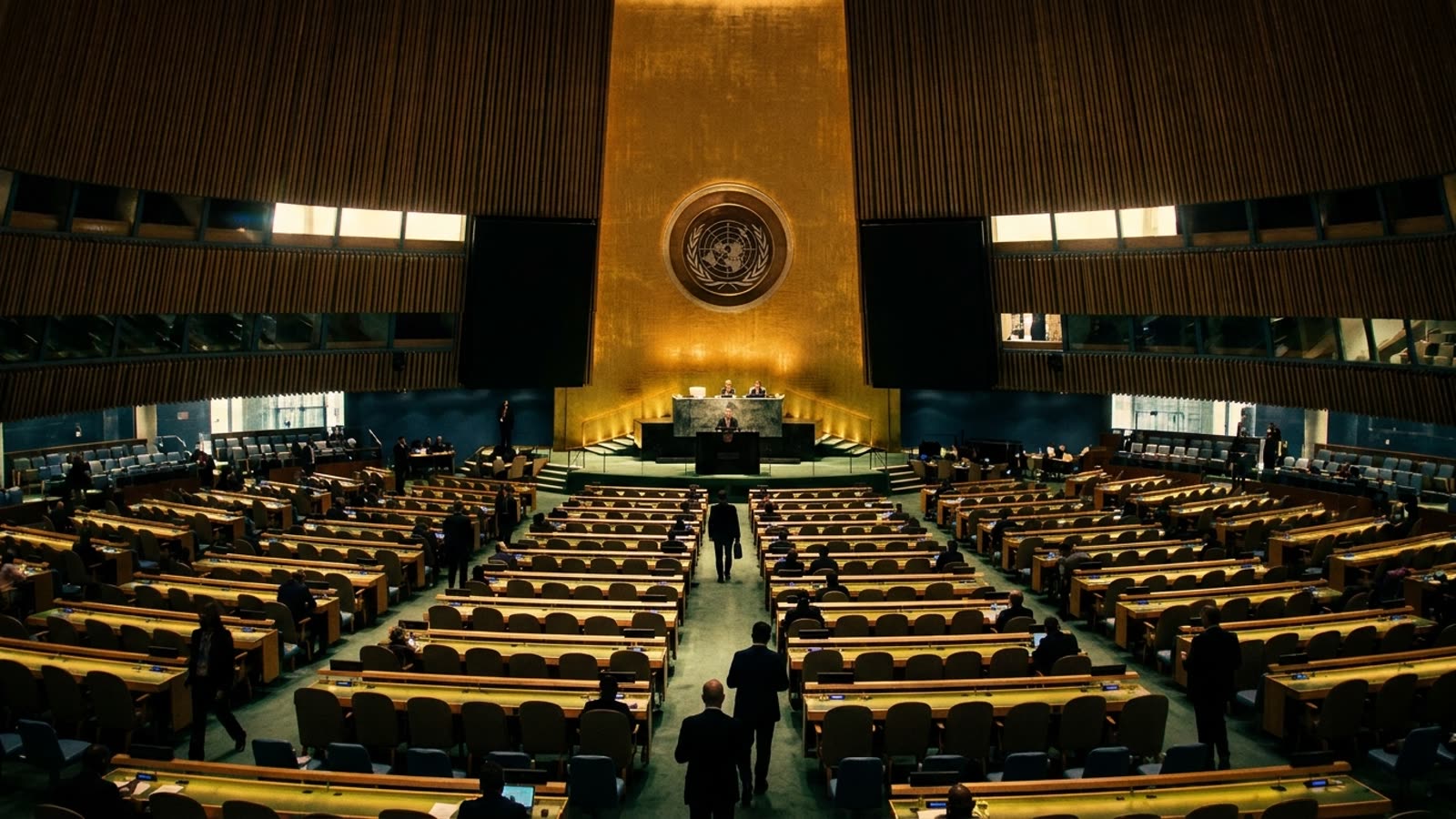
Every September, world leaders descend on Manhattan for the United Nations General Assembly's high-level week, delivering speeches to a chamber that resembles a legislative body but functions as something entirely different. The confusion between appearance and reality explains much of the frustration that surrounds the UN—and much of its quiet utility.
The General Assembly is the only UN organ where all 193 member states have equal voting power. Palau and China each command one vote. This radical equality, enshrined in the 1945 Charter, was a deliberate rejection of the great-power concert system that had failed to prevent two world wars. It was also, from the beginning, a compromise: the founders gave the Assembly moral authority while reserving actual enforcement power for the Security Council, where the victors of 1945 retained their vetoes.
The resolution factory
The Assembly adopts hundreds of resolutions annually, covering everything from Palestinian statehood to the rights of indigenous peoples to the regulation of outer space. None of these resolutions carry binding legal force. They are recommendations—expressions of collective sentiment that carry political weight but no compulsion. A General Assembly resolution cannot deploy peacekeepers, impose sanctions, or authorize military action.
This limitation is often cited as evidence of the UN's impotence. But it misreads the institution's design. The Assembly was never meant to govern; it was meant to legitimize. When a resolution passes with overwhelming support, it establishes a normative baseline that shapes subsequent diplomacy, influences domestic politics, and provides rhetorical ammunition for decades. The 1960 Declaration on the Granting of Independence to Colonial Countries and Peoples did not free a single colony by itself, but it codified the principle that colonialism was illegitimate, accelerating decolonization across Africa and Asia.
The procedural machinery
Beneath the speeches lies an elaborate committee structure that does much of the Assembly's actual work. The First Committee handles disarmament. The Second addresses economic development. The Third covers human rights. The Fourth manages decolonization and peacekeeping oversight. The Fifth controls the UN budget. The Sixth handles legal matters. Each committee debates, amends, and forwards resolutions to the plenary for final adoption.
Voting patterns in these committees reveal geopolitical alignments more clearly than summit photographs. The Non-Aligned Movement, a Cold War relic, still coordinates positions among over a hundred developing nations. The European Union votes as a bloc on most issues. The United States and Israel frequently find themselves isolated on Middle East resolutions, sometimes by margins exceeding 150 to 5.
Consensus adoption—passing resolutions without a formal vote—has become increasingly common, now accounting for the majority of resolutions. This practice obscures disagreement but accelerates proceedings and allows states to avoid being recorded on sensitive issues.
The Uniting for Peace loophole
One mechanism gives the Assembly teeth it was not originally designed to have. Resolution 377, adopted in 1950 during the Korean War when Soviet vetoes paralyzed the Security Council, allows the Assembly to convene in emergency special session and recommend collective measures, including the use of force, when the Council fails to act. The resolution has been invoked rarely—most recently regarding Ukraine and Gaza—but its existence means the Assembly can at least formally address crises that the veto system blocks.
The legal status of Uniting for Peace remains contested. It cannot override the Charter's grant of enforcement authority to the Security Council. But it provides a procedural escape valve and generates political pressure that the permanent five cannot entirely ignore.
Our take
The General Assembly's critics want it to be something it was never designed to be: a world legislature with enforcement power. Its defenders sometimes overclaim its influence. The truth is more interesting. The Assembly is a forum where the international community performs its values, tests its coalitions, and slowly builds the normative infrastructure that constrains state behavior over decades rather than days. It matters, but not in the way parliaments matter. It is, in the end, exactly what its architects intended: a stage where legitimacy is contested and occasionally, painstakingly, constructed.