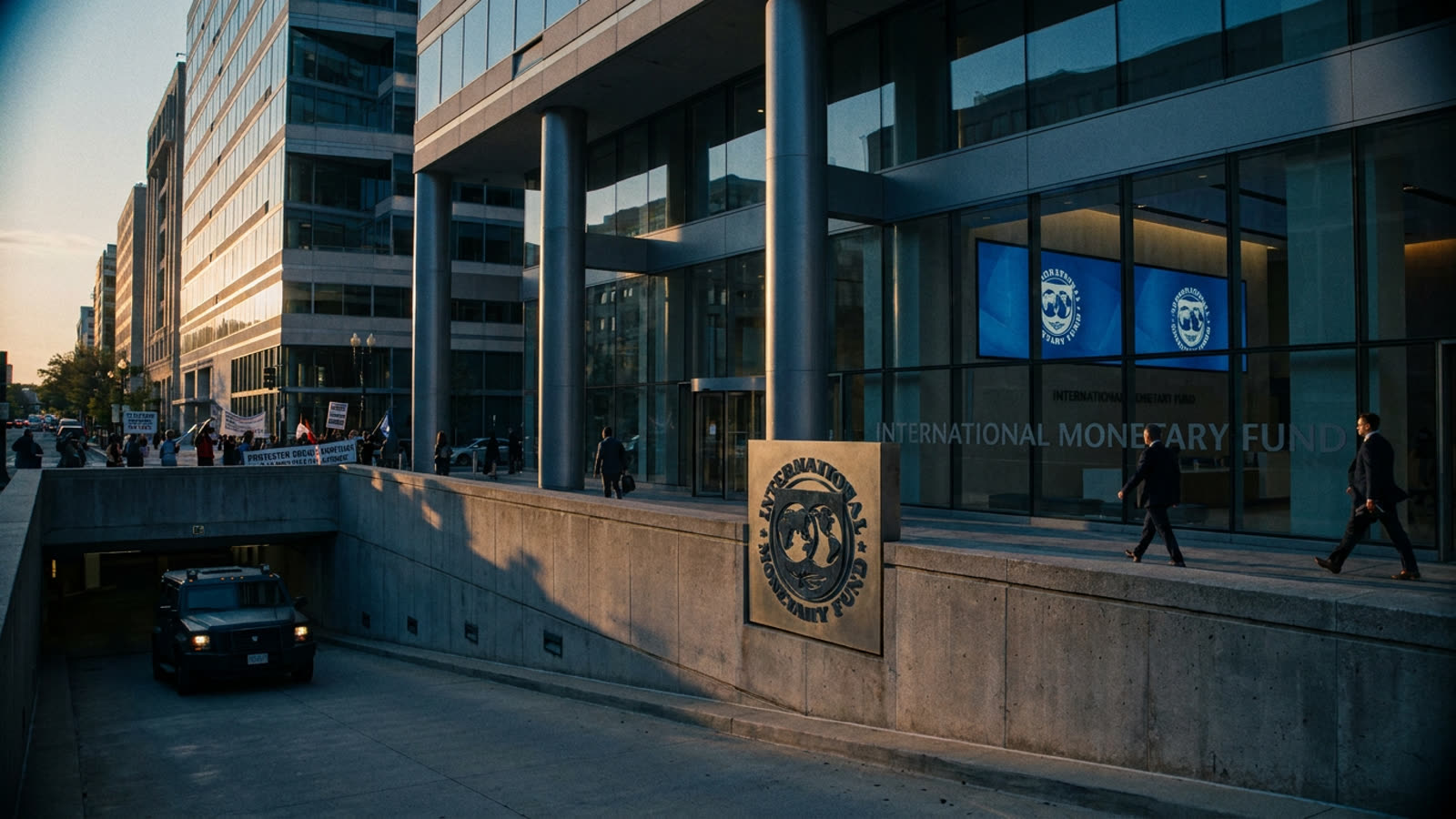
The International Monetary Fund occupies a peculiar position in the global imagination: simultaneously accused of being an instrument of American imperialism, a tool of heartless austerity, and a toothless talking shop. All three characterizations contain fragments of truth, which is precisely why none of them captures the institution's actual mechanics.
The IMF is, at its core, a credit union for countries. Its 190 member nations pay in according to their economic weight, and in return gain access to emergency lending when their currencies collapse or their governments cannot pay their debts. The institution cannot force any country to do anything — it can only attach conditions to the money it offers. This distinction matters enormously, though it is routinely ignored.
The quota system that shapes everything
Every member nation holds a quota, denominated in Special Drawing Rights, that determines both how much it must contribute and how much voting power it wields. The United States holds roughly 17 percent of total votes, which sounds modest until you understand that major decisions require 85 percent approval. This gives Washington an effective veto over structural changes — a fact that infuriates critics and reassures American policymakers in equal measure.
China's quota was substantially increased in 2016 after years of lobbying, making it the third-largest shareholder behind the United States and Japan. Yet Beijing's voting power still falls well short of its share of global GDP, a discrepancy that has fueled the creation of parallel institutions like the Asian Infrastructure Investment Bank. The quota formula, which blends GDP, trade openness, and financial reserves, has become a proxy battlefield for arguments about whose economy really matters.
The conditionality paradox
When Argentina or Pakistan or Sri Lanka turns to the Fund, it does so because private creditors have already fled and bilateral lenders have dried up. The IMF arrives as the lender of last resort, which means its leverage is both immense and illusory. It can demand fiscal consolidation, currency devaluation, or structural reforms — but only because the borrowing government has no better option. The moment that government calculates it can survive without Fund money, conditionality evaporates.
This creates a persistent tension. Programs that demand too little get criticized for enabling profligacy. Programs that demand too much get blamed for social collapse. The Fund's own internal evaluations have repeatedly found that growth projections in program documents tend toward optimism, and that fiscal targets are frequently missed. Staff economists know this; they also know that admitting uncertainty upfront would make programs politically impossible to approve.
The surveillance function nobody notices
Beyond crisis lending, the IMF conducts annual consultations with every member country, producing detailed reports on fiscal policy, monetary conditions, and structural vulnerabilities. These Article IV consultations generate thousands of pages of analysis that almost nobody reads — except the finance ministers and central bankers who occasionally find their policy choices politely questioned in public documents.
For wealthy nations, surveillance is largely ceremonial. The Fund can note that American fiscal deficits look unsustainable or that German wage growth seems too restrained, but it has no mechanism to enforce recommendations. For smaller economies, the dynamic differs: a critical Article IV report can spook investors and raise borrowing costs, giving the Fund's assessments a coercive edge even when no loan is on the table.
Our take
The IMF functions less as a global financial policeman than as an awkward intermediary between debtor governments that want money without conditions and creditor governments that want conditions without responsibility. Its real influence lies not in the loans it makes but in the loans it declines — the implicit threat that misbehaving countries will be cut off from the only emergency lender that cannot go bankrupt. Understanding this requires accepting that the institution is neither the villain of antiglobalization protests nor the neutral technocracy it claims to be, but something more banal: a committee of rich countries trying to manage poor countries' crises without spending too much of their own money.