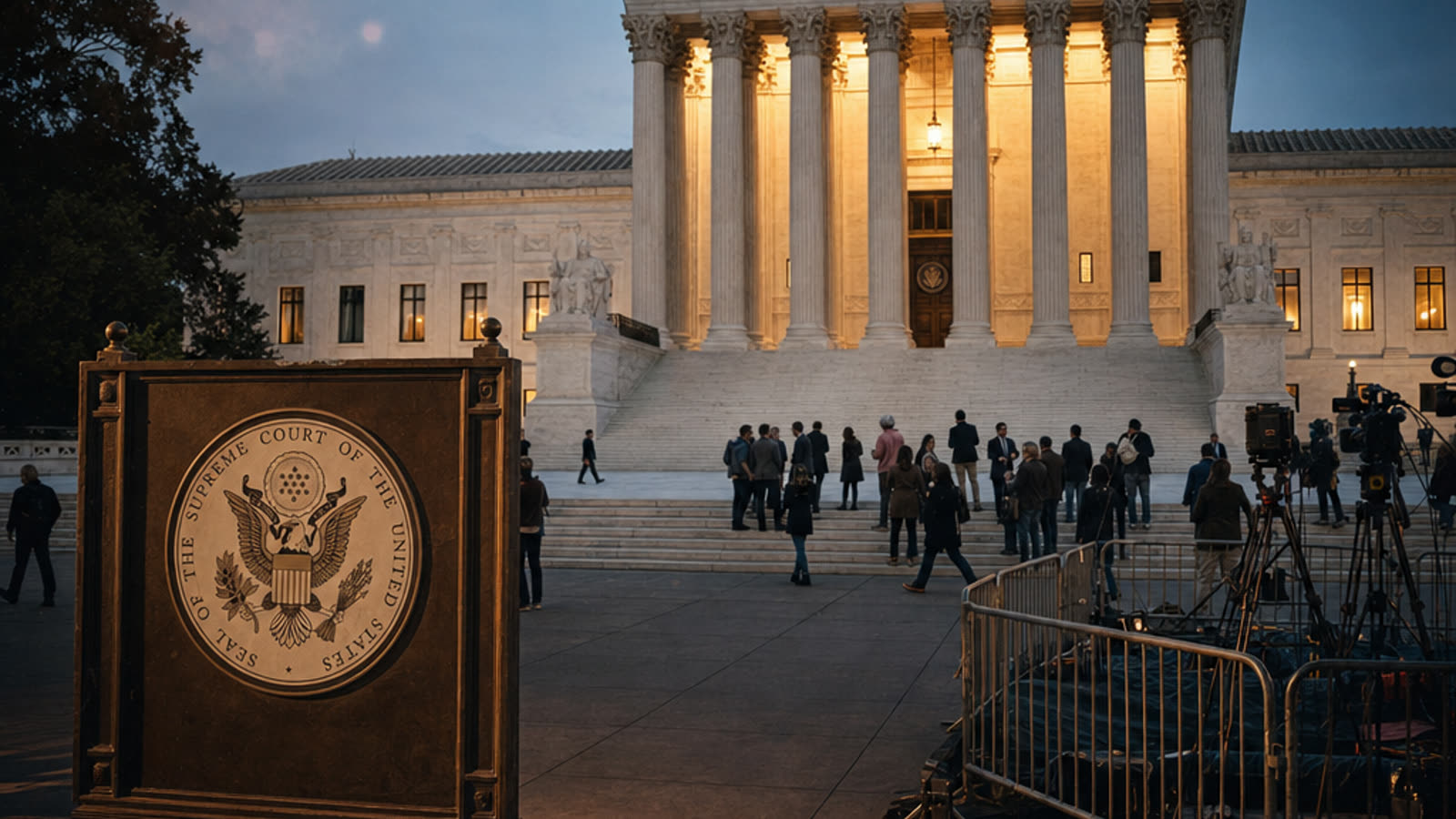
The Supreme Court of the United States decides roughly 60 to 80 cases per year. It receives more than 7,000 petitions. The mechanism that separates the chosen from the ignored is called certiorari, and it may be the most consequential and least understood power in American government.
Unlike trial courts, the Supreme Court has almost complete discretion over its docket. Congress stripped away most mandatory jurisdiction decades ago, leaving the justices free to select only the disputes they find worthy. This is not a neutral administrative function. It is an act of agenda-setting that shapes which rights get defined, which precedents get overturned, and which injustices remain unaddressed for generations.
The Rule of Four
To grant certiorari—to agree to hear a case—requires only four of the nine justices. This "Rule of Four" is not in the Constitution or any statute; it is an internal custom dating to the Judiciary Act of 1925. The threshold is deliberately low, designed to ensure that a determined minority can force the full Court to confront an issue even when the majority would prefer to avoid it.
The practical effect is profound. A cohesive ideological bloc of four justices can systematically pull cases onto the docket that advance their jurisprudential project, even if they suspect they might lose on the merits. Sometimes they win converts during deliberation. Sometimes they write influential dissents that seed future reversals. Either way, the power to select the battlefield often matters more than the power to win any single battle.
The Cert Pool and Its Critics
Most petitions never receive serious individual attention from the justices themselves. Since 1972, participating justices have shared a "cert pool" in which law clerks divide the incoming petitions and write memoranda recommending whether to grant or deny. A single clerk's assessment can effectively doom a case before any justice reads the underlying briefs.
Defenders argue the pool is a necessary efficiency measure; critics counter that it concentrates enormous power in the hands of recent law school graduates and creates groupthink that filters out unconventional arguments. Several justices over the years have refused to participate, preferring to have their own clerks review every petition independently—a choice that signals distrust of the collective screening process.
Strategic Denial and the Shadow Docket
The Court's refusal to hear a case is itself a decision with consequences. Lower court rulings stand, circuit splits persist, and legal uncertainty compounds. Justices sometimes deny certiorari strategically, waiting for a cleaner vehicle or a more favorable composition of the bench. Occasionally, a justice will write a dissent from denial, signaling to future litigants exactly what kind of case might succeed.
Meanwhile, the Court's emergency orders—the so-called shadow docket—have expanded dramatically in recent years. These unsigned, often unexplained rulings on stays and injunctions now shape policy on immigration, elections, and public health without full briefing or oral argument. The shadow docket has become a parallel certiorari process, one with even less transparency and accountability.
Our take
The certiorari process is democracy's chokepoint, the narrow passage through which all constitutional meaning must flow. Four unelected lawyers can decide that a question affecting millions simply does not deserve an answer—or that a settled matter must be reopened. This is neither good nor bad in the abstract; it is power, and power demands scrutiny. Americans who care about the Court's rulings should care at least as much about how those rulings come to exist in the first place.