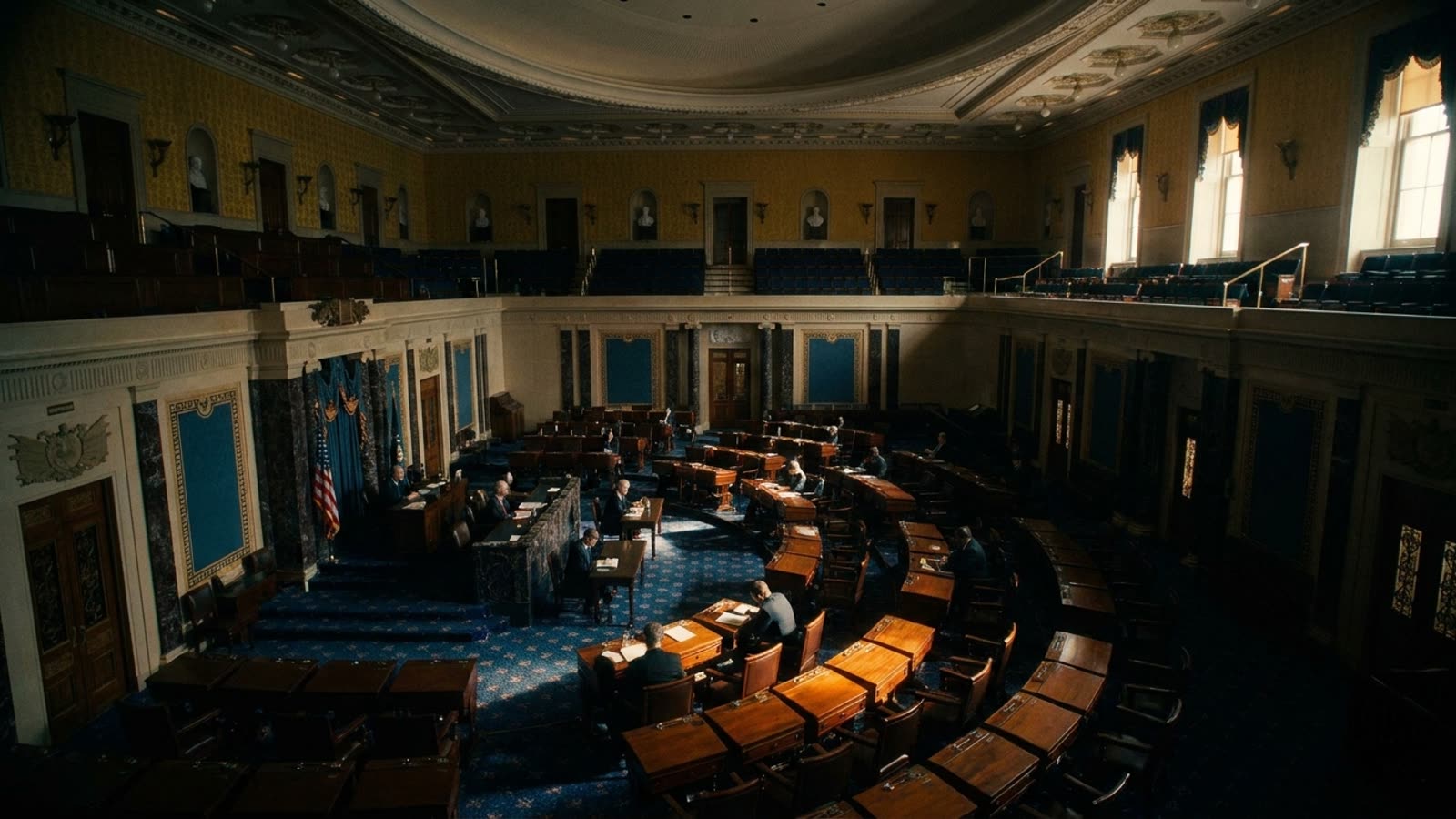
The most powerful obstruction tool in American politics requires no vote, no floor speech, and often no public disclosure. It is called the hold, and it allows any United States Senator to indefinitely delay consideration of presidential nominations or legislation simply by informing their party leader of their objection. The practice has no basis in the Constitution, no grounding in Senate rules, and no formal limit on duration. It exists purely by tradition, which in the Senate means it might as well be carved in marble.
The hold began as a courtesy in the mid-twentieth century, a way for senators to signal they needed more time to review a nominee or bill before it came to the floor. Party leaders honored these requests because the Senate runs on unanimous consent agreements — the informal deals that allow business to proceed without invoking the full weight of procedural rules. A single senator who objects can force leadership to file cloture, eat up floor time, and grind the chamber's already glacial pace to a halt. Rather than fight that battle over every appointment, leaders simply wait out the hold or negotiate with the objecting member.
The Mechanics of Paralysis
A hold works because the Senate's default state is inaction. Unlike the House, where the majority can generally force votes, the Senate requires supermajority thresholds or unanimous consent to move efficiently. When a senator places a hold, they are essentially promising to object to any unanimous consent request regarding the matter, which forces leadership to choose between spending days of floor time on cloture proceedings or leaving the nomination in limbo.
Holds can be public or secret. For decades, senators could block nominees anonymously, their objections known only to party leadership. Reforms in 2007 and 2011 attempted to require disclosure, but enforcement remains inconsistent, and senators have found creative workarounds, including rotating holds among colleagues to obscure individual responsibility.
Leverage Without Accountability
The hold has evolved from a scheduling convenience into a tool of political extortion. Senators routinely place holds on nominees unrelated to their actual objection, using confirmations as hostages to extract concessions on entirely separate matters. A senator might block a judicial nominee to pressure the executive branch on a military base in their state, or freeze ambassadorial appointments to protest an unrelated policy.
This dynamic means that presidents of both parties have seen qualified nominees languish for months or years, not because of any substantive concern about their fitness, but because they became collateral in disputes they had nothing to do with. Executive agencies operate with acting officials who lack full authority. Courts develop backlogs as judgeships sit vacant.
Why Reform Never Sticks
Every senator who has complained about holds while in the minority has quietly used them upon returning to the majority. The asymmetry of the tool — costless to deploy, expensive to overcome — makes it irresistible to individual members even as it degrades the institution collectively. Proposed reforms have repeatedly died because senators recognize they might someday need the leverage themselves.
The hold persists because it reflects the Senate's deeper design philosophy: that individual members should possess outsized power to slow collective action. In theory, this forces deliberation and compromise. In practice, it creates a chamber where a single determined member can impose their preferences on the entire government without ever having to defend that choice in public.
Our take
The hold is not a bug in American governance; it is the logical endpoint of a system that treats obstruction as a feature. Defenders argue it protects minority rights and forces presidents to consult broadly. Perhaps. But a mechanism that allows anonymous, indefinite, and unaccountable delay of government function is not deliberation — it is hostage-taking with parliamentary characteristics. The Senate's refusal to eliminate the practice tells you everything about how the institution actually values its own power relative to functional government.