Every four years, Americans participate in what they believe is a presidential election. They are, technically speaking, wrong. They are voting for slates of electors who will, weeks later, cast the actual votes that determine who occupies the Oval Office. This distinction is not merely academic—it is the load-bearing wall of American presidential politics, and most citizens have never examined its architecture.
The Electoral College is often described as a compromise between large and small states at the Constitutional Convention. This is a simplification that borders on fiction. The real negotiations involved competing fears: fear of mob rule, fear of congressional tyranny, fear of foreign interference, and the ever-present fear among Southern delegates that direct democracy would dilute the political power derived from their enslaved populations. The three-fifths clause and the Electoral College were not separate bargains; they were interlocking mechanisms.
The Mechanics Nobody Teaches
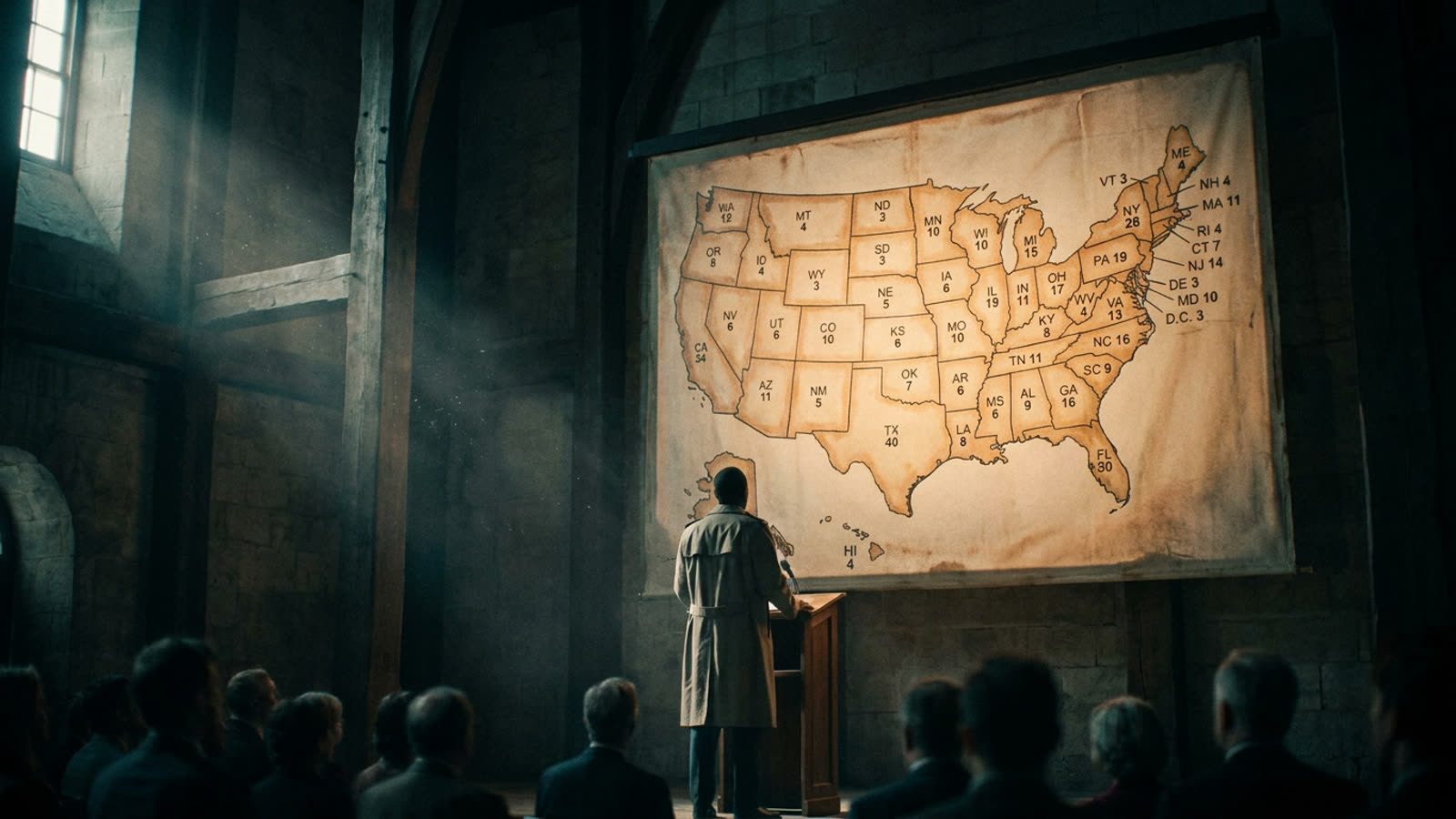
Each state receives electoral votes equal to its total congressional delegation—House seats plus two senators. This formula means Wyoming's roughly 580,000 residents get three electoral votes, while California's 39 million get 54. Per capita, a Wyoming vote carries approximately 3.6 times the electoral weight of a California vote. This is not a bug; it is the mathematical expression of a political settlement older than the country itself.
The winner-take-all allocation used by 48 states is not constitutionally mandated. States adopted it gradually during the early nineteenth century because it maximized their influence. Maine and Nebraska use a district-based system, though it rarely produces split results. Nothing prevents other states from changing their methods—except, of course, the party that currently benefits from the existing arrangement.
Why Reform Keeps Failing
The National Popular Vote Interstate Compact represents the most serious reform effort in decades. States joining the compact pledge to award their electoral votes to the national popular vote winner, but only once states totaling 270 electoral votes have signed on. Currently, states representing 209 electoral votes have joined. The remaining states needed are precisely those whose political power would diminish under such a system—a structural Catch-22 that explains the compact's decade-long stall.
Constitutional amendment is theoretically possible but practically impossible. Abolishing the Electoral College would require two-thirds of Congress and three-fourths of state legislatures—meaning 13 small states could block any change. Those 13 states have no rational incentive to surrender their disproportionate influence.
Our Take
The Electoral College persists not because Americans prefer it—polling consistently shows majority support for direct election—but because the institution was designed with its own antibodies against reform. Understanding this is not an argument for resignation; it is a prerequisite for realistic strategy. The system will change only when the coalition benefiting from it loses enough consecutive elections to reconsider the bargain. Until then, the peculiar American method of choosing presidents remains what it has always been: a monument to eighteenth-century anxieties, maintained by twenty-first-century self-interest.