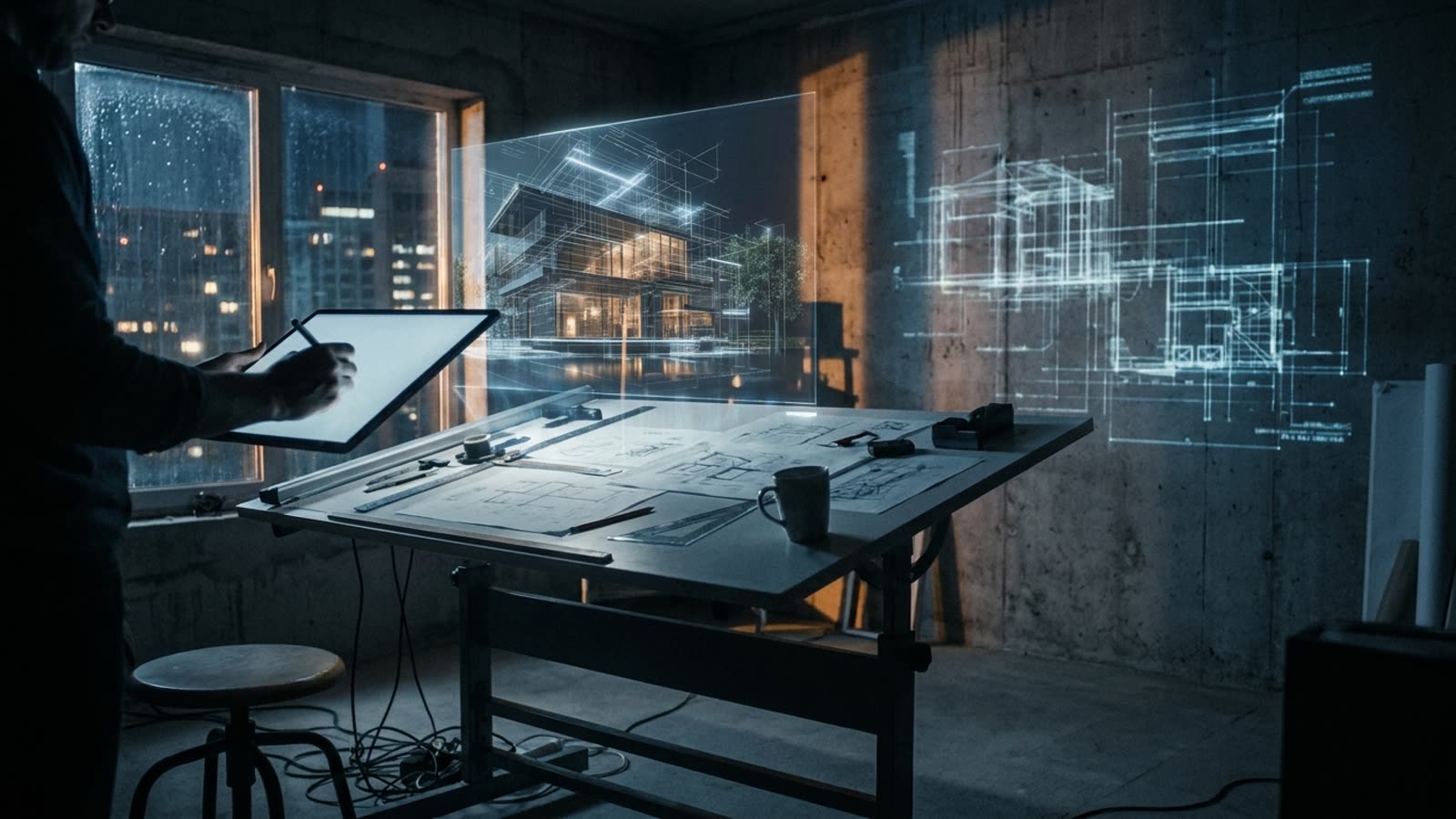
Architecture has always been a profession of constraints. The architect must reconcile the client's vision with the laws of physics, the building code with the budget, the aesthetic ambition with the practical reality of plumbing. For centuries, this reconciliation happened in the architect's mind, mediated by pencil, paper, and eventually computer-aided design software. Now a new collaborator has entered the studio, and it never sleeps.
Artificial intelligence tools are infiltrating architectural practice at every stage of the design process, from the earliest site analysis to the final construction documents. The transformation is less dramatic than the breathless coverage of AI-generated buildings might suggest, but it is arguably more consequential. These tools are not replacing architects; they are changing what architects spend their time doing, which ultimately changes what architecture becomes.
The grunt work revolution
The most immediate impact of AI in architecture is on the unglamorous work that consumes much of a junior architect's time. Zoning analysis, code compliance checking, and the tedious process of generating multiple design iterations for client review—these tasks that once required weeks of drafting can now be accomplished in hours. Generative design tools can produce hundreds of building massing options that satisfy a given set of constraints, allowing architects to explore possibilities that would have been impractical to investigate manually.
This efficiency gain is real and significant. But it also raises uncomfortable questions about the profession's traditional apprenticeship model. If junior architects no longer spend years learning through the repetitive work of drafting and redrafting, how do they develop the intuition that separates competent practitioners from exceptional ones? The profession has not yet reckoned with this question.
The creativity paradox
More philosophically troubling is the question of authorship. When an AI system generates a building form that satisfies all programmatic requirements and optimizes for energy efficiency, structural economy, and natural light—and when the architect then refines and develops that form—who designed the building? The answer matters for more than ego. It matters for professional liability, for intellectual property, and for the cultural status of architecture as an art form.
Some architects embrace AI as simply a more sophisticated version of the tools the profession has always adopted, from the T-square to the parametric modeling software. Others worry that something essential is being lost—that the struggle with constraints, the friction of the design process itself, is where architectural meaning emerges. The tools do not care about this debate. They simply get better.
Our take
The honest assessment is that AI will make architecture more efficient and probably more technically optimized, while making it harder to identify what distinguishes one architect's work from another's. The profession will adapt, as it always has. But the buildings that result may tell us less about their creators and more about the algorithms that helped generate them. Whether that represents progress depends entirely on what you believe architecture is for.