Four months into the Iran conflict, the most consequential metric for global energy markets is not the price of Brent crude but the number of hulls passing through a 21-mile gap between Oman and Iran. That number is rising—and the reason tells us as much about the limits of American power as its reach.
The Strait of Hormuz handles roughly 20 percent of the world's daily oil consumption. When tensions spiked in February, insurers jacked up war-risk premiums and several major tanker operators quietly rerouted cargoes or delayed loadings. The result was a de facto partial blockade achieved without Iran firing a single missile at commercial shipping. Markets did Tehran's work for it.
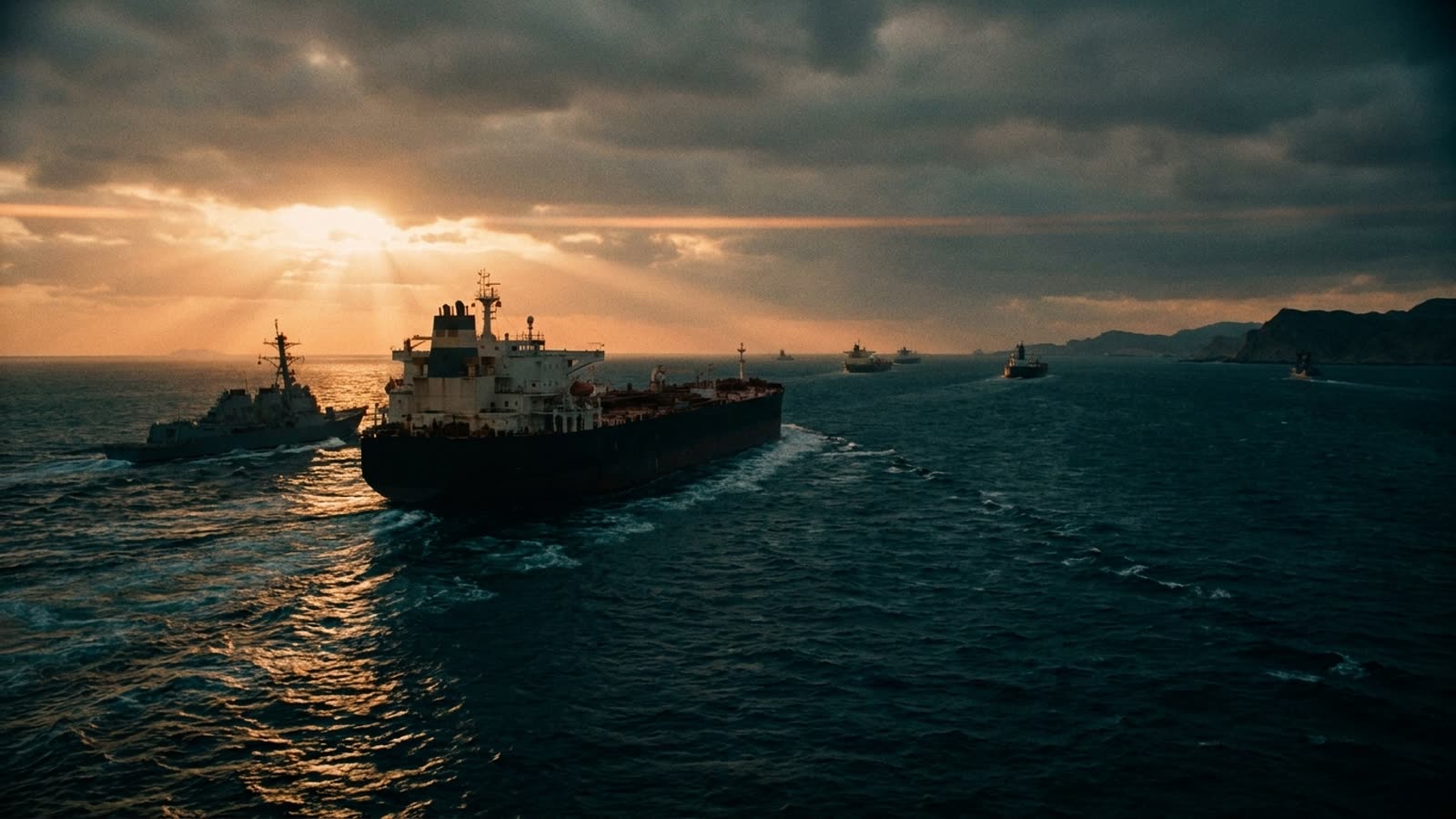
The US response has been decidedly old-school: convoy escorts. Navy destroyers and Coast Guard cutters now shepherd clusters of tankers through the strait's shipping lanes, a throwback to the 1987-88 "Earnest Will" operation that protected Kuwaiti tankers during the Iran-Iraq war. The tactic appears to be restoring confidence. Transit volumes have climbed back toward pre-crisis levels over the past three weeks, according to shipping data, and war-risk premiums have eased from their March peaks.
The economics of escort
Convoy protection is expensive and manpower-intensive. The Navy is running a rotation that ties up assets otherwise earmarked for Indo-Pacific presence, a trade-off that has not gone unnoticed in Beijing. But for tanker operators, the calculus is simple: a US warship alongside means lower insurance costs and, crucially, crews willing to make the transit. The human element matters—seafarers have leverage in a tight labor market, and many were refusing Hormuz routes without military cover.
The rebound in transits has helped cap oil prices, which had threatened to breach $110 per barrel in March. Brent has since settled into the mid-$90s, painful but not catastrophic for consuming economies. The Biden-era Strategic Petroleum Reserve drawdown left Washington with limited buffer stock, so keeping physical barrels flowing through Hormuz is the only real supply-side tool available.
Fragile equilibrium
Iran has so far declined to test the convoys directly, likely calculating that attacking a US-escorted vessel would trigger a response it cannot absorb. But the regime retains asymmetric options: mines, fast-boat swarms, shore-based missiles aimed at tankers outside convoy windows. The current calm is a function of mutual deterrence, not resolution.
Treasury Secretary Bessent's "we'll see" on potential sanctions relief suggests the administration is keeping diplomatic channels ajar, but no breakthrough appears imminent. The war's fourth month looks much like its third: attritional, costly, and dangerously dependent on neither side miscalculating.
Our take
The Hormuz escort operation is a tactical success and a strategic warning. It demonstrates that American naval power can still underwrite global commerce when Washington chooses to deploy it—but also that the margin for error is razor-thin. One Iranian Revolutionary Guard commander with more ambition than judgment, one mine that drifts into a convoy's path, and the fragile equilibrium shatters. The tankers are moving, but the world's most important shipping lane remains one bad decision away from crisis.