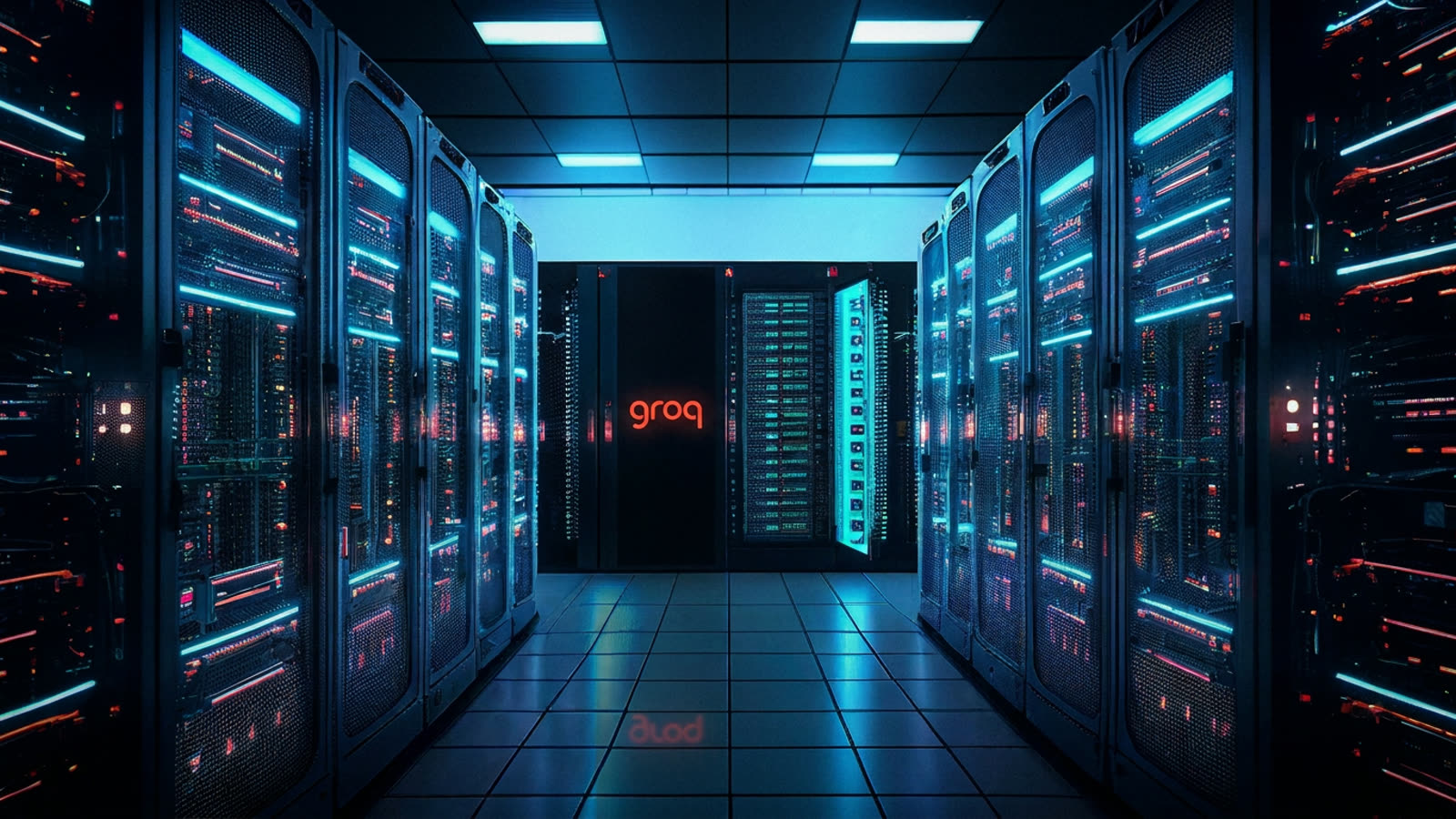
Nvidia's preferred acquisition strategy has always been elegant in its brutality: if you can't buy the company, buy the people. The chip giant's reported $20 billion not-quite-acquisition of Groq talent earlier this year looked like a death blow to one of the few startups genuinely challenging Nvidia's inference dominance. Instead, Groq is reportedly raising $650 million, suggesting the company views the talent exodus as a survivable wound rather than a fatal one.
The fundraise, if completed, would represent a remarkable act of corporate defiance. Groq's Language Processing Units promised a fundamentally different architecture for AI inference—deterministic, compiler-driven, optimized for the predictable workloads that constitute most of production AI. Nvidia's talent raid targeted precisely the engineers who understood this architecture best.
The inference opportunity remains enormous
The AI chip market has bifurcated into two distinct competitions. Training—the computationally intensive process of creating models—remains Nvidia's fortress, with H100s and their successors commanding both the performance crown and the bulk of hyperscaler budgets. Inference—running those models in production—is messier, more fragmented, and potentially larger in total addressable market.
Every ChatGPT query, every AI-generated image, every autonomous vehicle decision requires inference. As AI moves from research curiosity to production utility, inference workloads are growing faster than training workloads. Groq's bet is that this shift creates room for specialized hardware that Nvidia's general-purpose GPUs cannot efficiently serve.
Nvidia's acqui-hire playbook faces limits
Nvidia has perfected the art of the acqui-hire: paying acquisition-level prices for talent while avoiding the regulatory scrutiny and integration headaches of actual acquisitions. The strategy has systematically weakened potential competitors while enriching their best engineers. But it has a structural limitation: it cannot acquire the institutional knowledge, customer relationships, and architectural innovations that remain with the company.
Groq's fundraise suggests its investors believe the company retained enough of each to remain viable. The $650 million target implies a valuation that, while likely down from peak, still reflects genuine confidence in the technology. Venture capitalists are not sentimental; they are pricing in a path to returns that survives Nvidia's best efforts at competitive destruction.
Our take
The AI chip wars have entered their most interesting phase. Nvidia's dominance is real but not inevitable; its acqui-hire strategy is effective but not comprehensive. Groq's fundraise is a bet that specialized inference hardware can carve out a defensible market even against a competitor with unlimited resources and a proven willingness to use them. The smart money is still mostly on Nvidia. But the existence of any smart money on the other side suggests the game is not yet over.