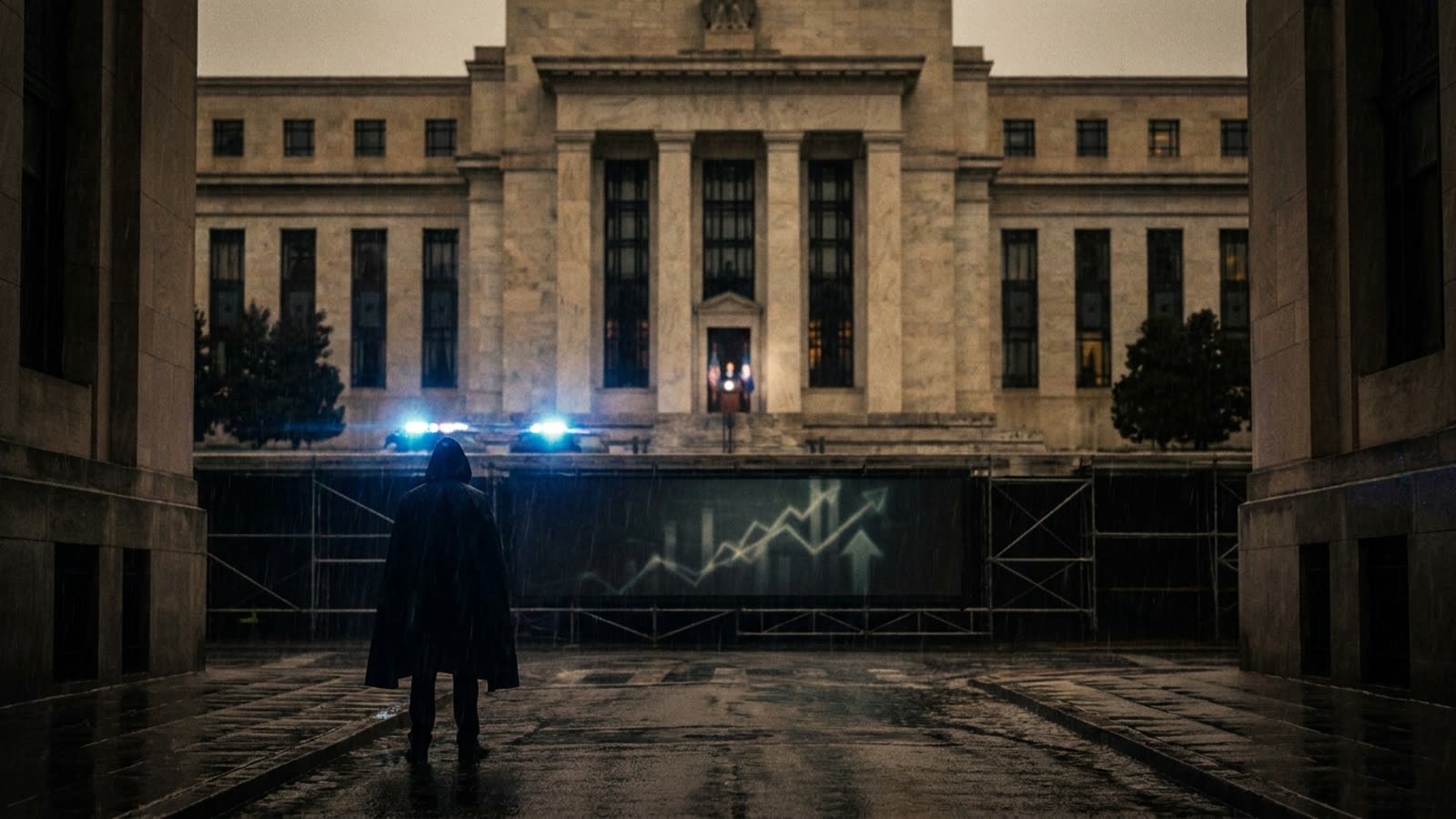
The traditional safe-haven playbook is malfunctioning. Gold, which ought to rally when missiles fly, slipped on Friday as traders weighed two countervailing forces: escalating U.S.-Iran hostilities that sent oil higher, and a Federal Reserve that appears increasingly inclined to keep rates elevated—or raise them further. The result is a market caught in a tug-of-war between geopolitical anxiety and the gravitational pull of higher yields.
The logic, once straightforward, now requires a flowchart. Conflict in the Middle East typically sends investors rushing into gold. But higher oil prices feed inflation expectations, which in turn strengthen the case for tighter monetary policy. And when real yields rise, gold—which pays nothing—loses its shine. On Friday, that second mechanism won.
The Fed factor
Markets have spent much of 2026 oscillating between hopes for rate cuts and fears of another hike. The latest U.S.-Iran exchange has tilted expectations toward the latter. Oil's jump above $85 per barrel reminded traders that energy costs remain a stubborn inflation input, one the Fed cannot ignore. Treasury yields firmed, and gold futures retreated below $2,300 per ounce, erasing gains accumulated earlier in the week when ceasefire rumors briefly circulated.
The Fed's June statement left the door open to further tightening, and Chair Powell has been characteristically noncommittal. But the bond market is doing the talking: two-year yields have climbed roughly 15 basis points since mid-June, reflecting bets that the central bank will stay hawkish through the summer. For gold bulls, that is a headwind no geopolitical flare-up can easily overcome.
Oil's divergent path
Crude, by contrast, is having a cleaner run. Every headline about renewed strikes near the Strait of Hormuz adds a risk premium, and traders are pricing in potential supply disruptions even if none have materialized. Brent and WTI both rose Friday, with energy equities following suit. The divergence between oil and gold is not unprecedented, but it underscores how fragmented the current macro environment has become. Commodities are no longer moving as a bloc; each is responding to its own idiosyncratic drivers.
For equity markets, the picture is muddled. European and Asian indexes drifted, unable to commit to a direction. U.S. futures pointed to a flat open. Investors appear to be waiting—for clarity on Iran, for the next inflation print, for any signal that resolves the current ambiguity.
Our take
Gold's stumble is a reminder that safe havens are only as safe as the opportunity cost allows. When holding cash or short-dated Treasuries yields five percent, bullion's appeal dims regardless of how many missiles are in the air. The market is not ignoring geopolitical risk; it is simply discounting it against a Fed that refuses to blink. Until either the conflict escalates dramatically or inflation cools enough to revive rate-cut hopes, gold will remain caught in this uncomfortable middle ground—neither crashing nor rallying, just drifting while the world burns slowly.