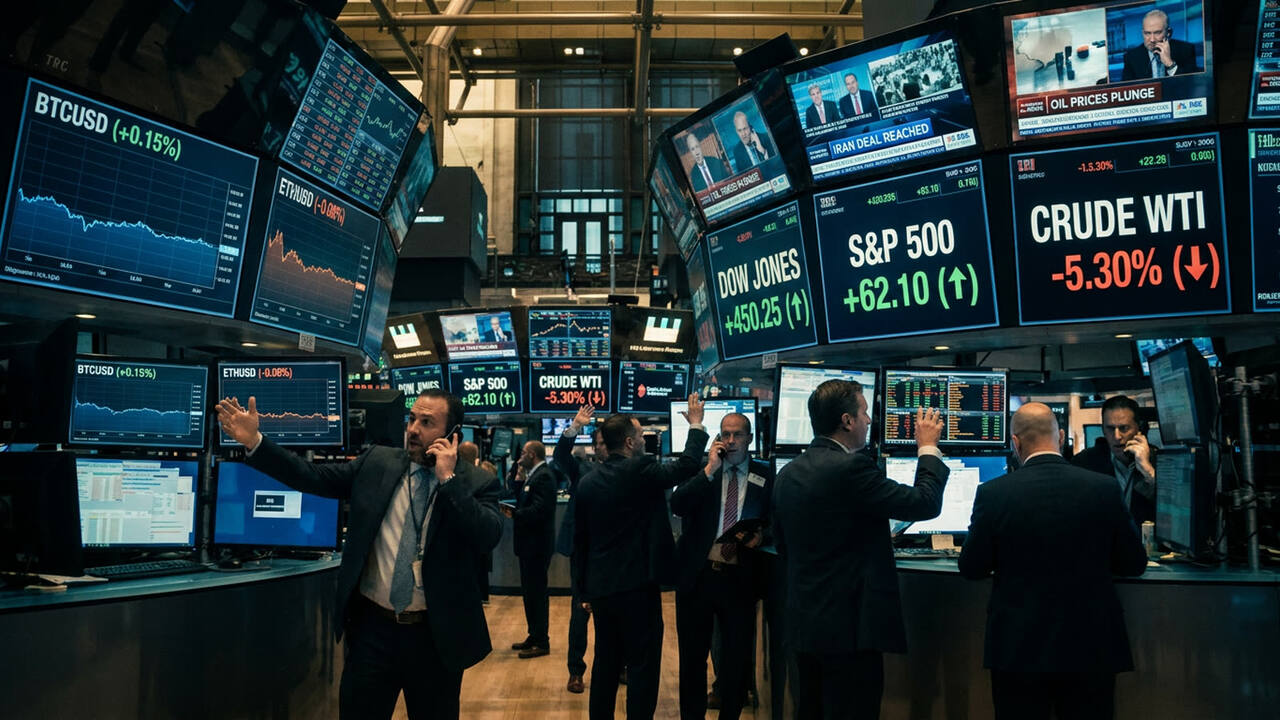
Gold's quiet climb this week tells a story about what traders actually believe, and it is not the straightforward safe-haven narrative that usually accompanies Middle East headlines. The metal edged higher as the U.S.-Iran peace framework took shape, but the buying had less to do with geopolitical hedging than with a suddenly rosier outlook for interest rates.
The logic runs like this: a durable deal with Tehran means lower oil prices, which means softer inflation prints, which means the Federal Reserve can afford to hold rates steady—or even cut—rather than resume tightening. For gold, which pays no yield and suffers when real rates rise, that is the friendlier environment. Spot prices have nudged above $2,340 per ounce, still well off the all-time highs from early 2024 but comfortably above the lows that followed last year's hawkish Fed pivot.
The rate-expectations game
Fed funds futures now price in roughly two cuts by year-end, up from barely one before the Iran breakthrough. That shift has pulled real yields lower and given gold a modest tailwind. But the metal's gains remain muted because the macro picture is genuinely ambiguous. Core inflation is still running above the Fed's target, wage growth has reaccelerated, and the labor market refuses to crack. Traders are betting on disinflation, not buying insurance against disaster.
The irony is that a successful peace deal—traditionally a risk-on event that would send gold lower—has become bullish for the metal precisely because it changes the inflation calculus. Geopolitics and monetary policy are now so intertwined that the old heuristics barely apply.
Central-bank demand remains the floor
Underpinning the market is relentless buying from emerging-market central banks, particularly in Asia and the Middle East, looking to diversify away from dollar reserves. That structural bid has kept gold from falling as far as rising real rates would normally dictate. Even if the Fed surprises hawkish, the floor is probably higher than it was a decade ago.
Our take
Gold is no longer just a fear trade; it is a bet on the entire macro regime. The Iran deal matters not because it makes the world safer in some abstract sense, but because it reshapes the inflation outlook and, by extension, the path of policy rates. That is a more cerebral thesis than "buy gold when bombs fall," and it is also a more fragile one. If oil stays low and inflation cools, gold could grind higher. If the deal unravels or the Fed turns hawkish anyway, the recent gains will look like a head-fake. For now, the metal is telling us that markets believe diplomacy just bought the Fed some breathing room.