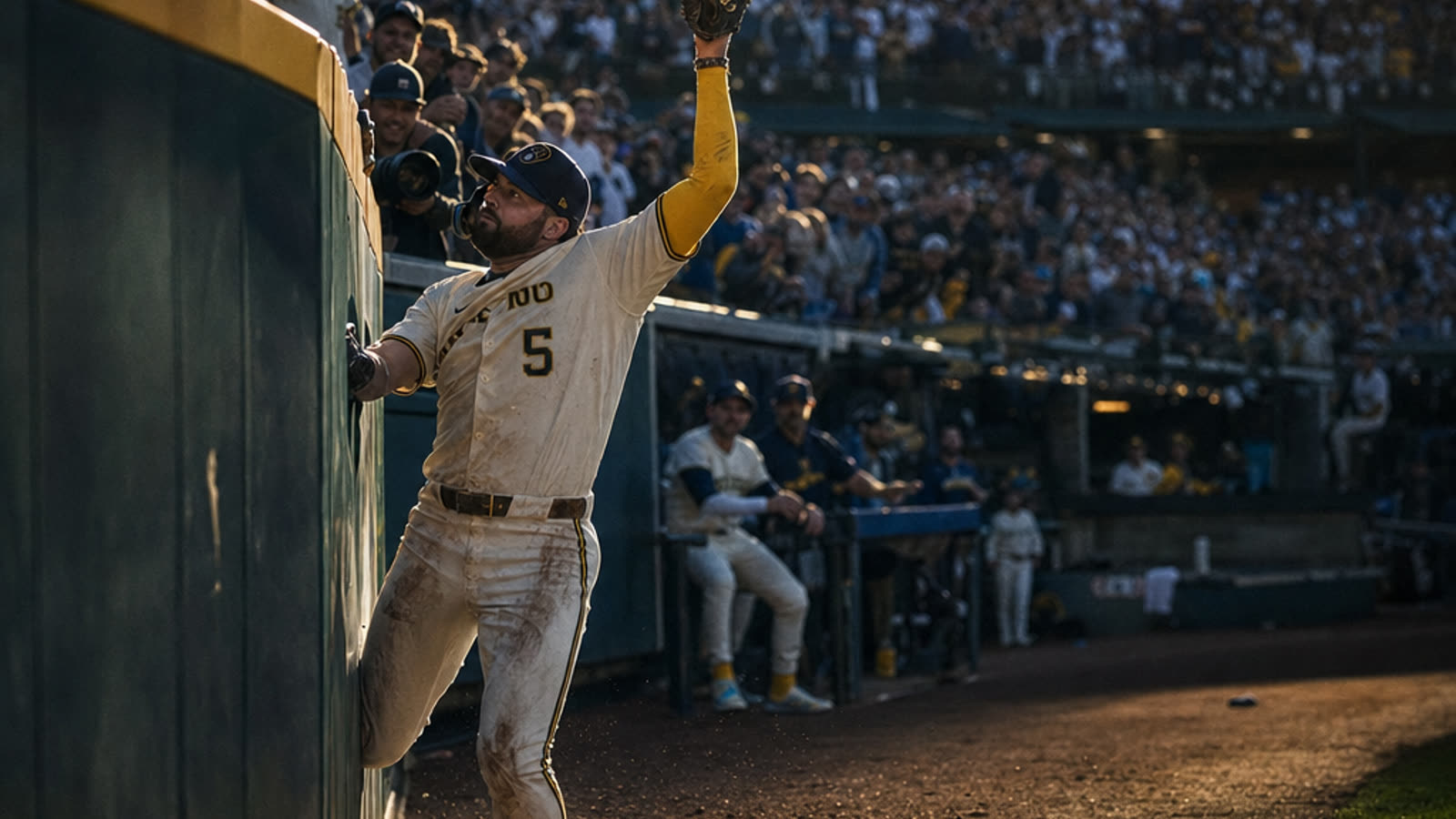
Garrett Mitchell does not hit like a star. His offensive numbers remain modest, his swing occasionally betrays him in big moments, and yet the Milwaukee Brewers are heading to the National League Championship Series in no small part because of him. In the decisive game of their Division Series, with the Padres threatening late, Mitchell scaled the center-field wall and robbed what would have been a go-ahead home run—the kind of play that doesn't show up in OPS but rewrites October narratives.
The catch sealed Milwaukee's victory and set up a rematch with the Los Angeles Dodgers, the team that eliminated them in last year's playoffs. For a franchise that has spent decades in the shadow of larger-market rivals, the symbolism was unmistakable: sometimes you advance not by outspending or out-slugging the opposition, but by refusing to let the ball leave the yard.
The anatomy of a robbery
Home run robberies are rare in the postseason, where every at-bat carries existential weight and outfielders tend toward caution. Mitchell's catch required perfect timing, spatial awareness at the warning track, and the athletic audacity to leave his feet with the game hanging in the balance. The Padres' hitter watched in disbelief as what appeared to be a series-extending blast died in Mitchell's glove. Milwaukee's dugout erupted; San Diego's season ended.
The play underscored a broader truth about the Brewers' roster construction. They lack the star power of the Dodgers or the payroll of the Yankees, but they have assembled a collection of players who do specific things exceptionally well. Mitchell's elite defense in center field is one such weapon, even when his bat goes cold.
A rematch with baggage
Milwaukee's reward is another crack at Los Angeles, a team that has become their postseason nemesis. The Dodgers have ended the Brewers' October hopes multiple times in recent memory, and the talent disparity on paper remains significant. Los Angeles boasts a lineup capable of scoring in bunches and a pitching staff with playoff pedigree.
But the Brewers have something they lacked in previous matchups: momentum forged through defensive brilliance rather than offensive explosions. Mitchell's catch was not an isolated event; it was emblematic of a team that wins ugly, grinds out close games, and trusts its gloves as much as its bats. Whether that formula can topple the Dodgers over a seven-game series is uncertain, but Milwaukee has at least earned the right to try.
Our take
Baseball's postseason rewards the spectacular, and Mitchell's robbery was exactly that—a moment of pure athletic theater that no sabermetric model could have predicted or valued in advance. The Brewers may well lose to the Dodgers again, but they'll enter the NLCS knowing they belong there, their ticket punched by a center fielder who understood that sometimes the most important hit is the one you prevent.