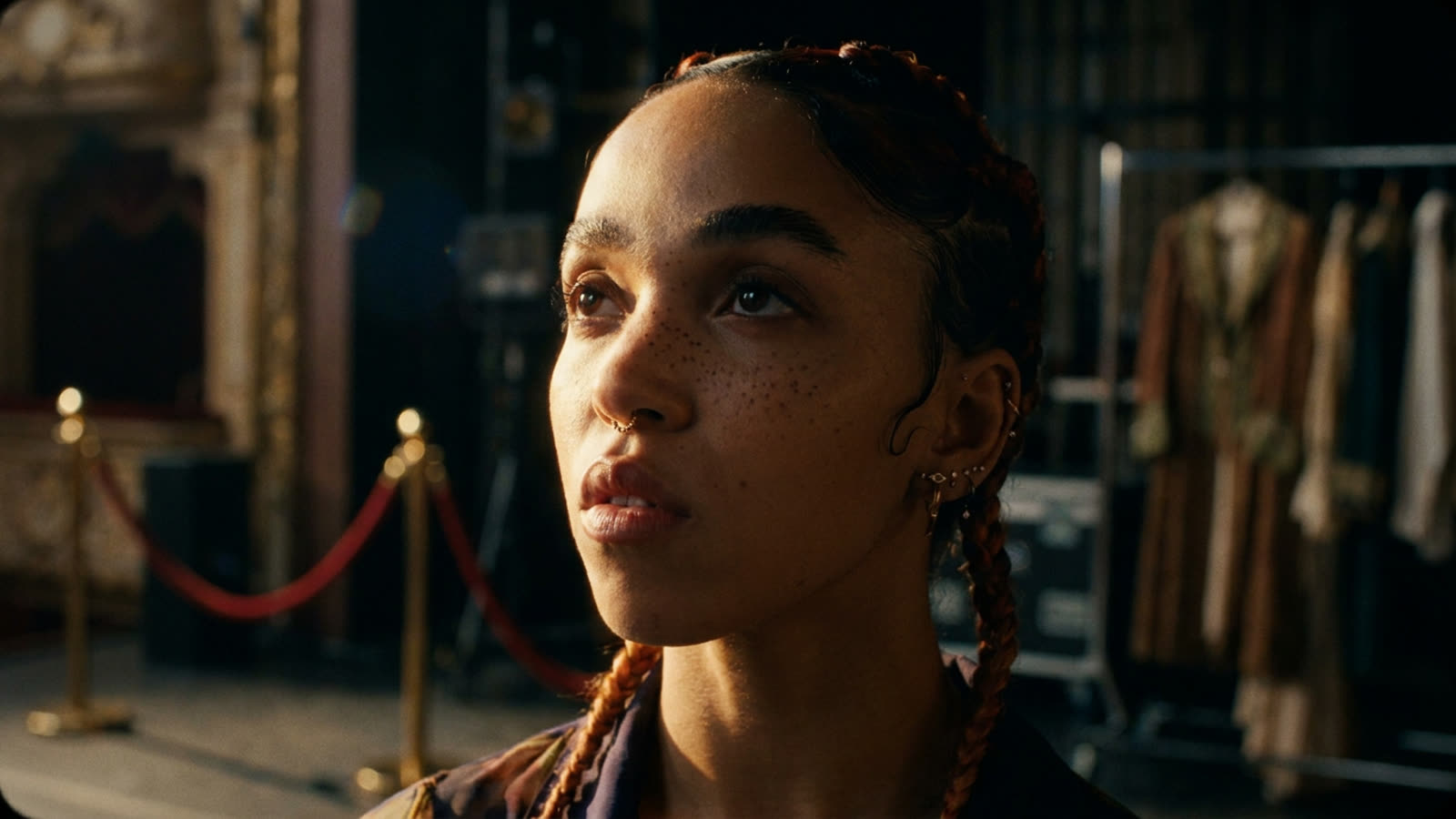
The announcement lands with a satisfying click: FKA twigs, the British singer-dancer-provocateur whose entire artistic project has been about reclaiming the surveilled female body, will portray Josephine Baker, the woman who weaponised her own objectification to become the most famous entertainer of the Jazz Age. StudioCanal confirmed the project this week, with Maïmouna Doucouré—whose 2020 film Cuties ignited a firestorm over the depiction of girlhood and sexuality—attached to write and direct.
The biopic is the first to receive full endorsement from Baker's estate, a detail that matters more than it might seem. Previous attempts to dramatise Baker's life have stalled over rights, tone, or the sheer impossibility of containing her. Born in St. Louis poverty, Baker became a Parisian deity, a Resistance spy, a civil-rights icon who addressed the March on Washington, and the adoptive mother of twelve children she called her "Rainbow Tribe." She died in 1975, the night after a sold-out comeback show. Her story resists the three-act redemption arc Hollywood adores.
Why twigs fits the brief
Casting is often a cynical exercise in name recognition, but this pairing has conceptual integrity. Twigs trained as a dancer before she ever sang; her live performances are feats of physical endurance that quote both pole dancing and classical ballet, refusing to let audiences separate the erotic from the athletic. Baker did the same thing a century earlier, performing in a banana skirt that was simultaneously a joke, a critique, and an invitation. Both women have made careers out of forcing viewers to confront their own gaze.
Twigs also brings recent, public experience with the machinery of image-making and its abuses. Her 2021 lawsuit against Shia LaBeouf, alleging assault and emotional manipulation, placed her at the centre of conversations about power, coercion, and performance. A Baker biopic that ignored the performer's complicated relationships—with men, with France, with her own mythology—would be hagiography. Twigs is unlikely to let that happen.
The Doucouré factor
Doucouré's involvement is the wilder card. Cuties was a Sundance-awarded film that became a culture-war grenade when Netflix's marketing reduced its critique of hypersexualised girlhood to the very images it interrogated. The backlash was ferocious and largely illiterate, but it revealed how thin the line is between examining exploitation and replicating it. Baker's banana dance, her nude Folies Bergère appearances, her deliberate play with primitivist fantasies—all of it will require a director confident enough to show the spectacle without endorsing it. Doucouré has proven she can walk that wire, even if the wire occasionally catches fire.
Production details remain sparse. No shoot dates, no co-stars, no indication of which slice of Baker's sprawling life the script will prioritise. The estate's involvement suggests access to personal archives, letters, and family testimony that earlier projects lacked.
Our take
Biopics of Black female icons have lately oscillated between reverent and revisionist, often landing in a muddle. This one has the raw materials for something sharper: a subject whose life was an act of radical self-invention, a star who understands performance as survival, and a director with no interest in making anyone comfortable. Whether StudioCanal lets them make that film—or sands it into prestige-picture safety—will determine if this is an event or just another biopic.