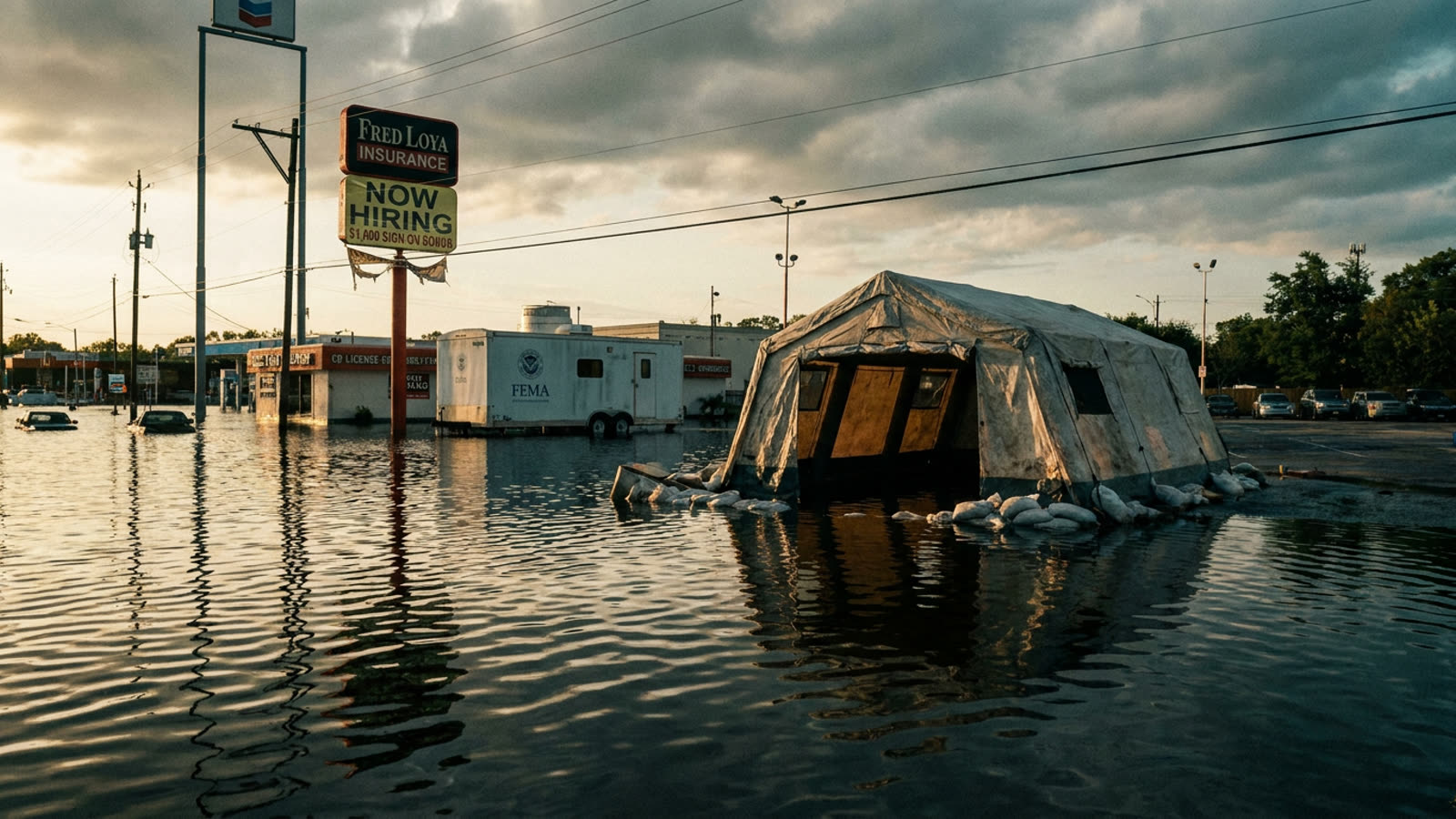
The Federal Emergency Management Agency was designed to be the calm center of national catastrophe. Instead, as the 2026 Atlantic hurricane season opens on June 1, the agency resembles the disasters it is meant to manage: chaotic, under-resourced, and leaderless at critical junctures.
Internal turmoil has paralyzed FEMA at precisely the wrong moment. The agency has cycled through acting administrators, seen senior career officials depart, and watched its workforce morale crater—all while climate science suggests another above-average storm season is likely. The dysfunction is not merely bureaucratic theater; it translates directly into delayed pre-positioning of supplies, slower evacuation coordination, and weaker partnerships with state emergency managers who depend on federal backstop.
The leadership vacuum
FEMA's revolving door at the top has created institutional whiplash. Career professionals who once provided continuity have either retired or been sidelined, leaving mid-level managers to interpret shifting priorities from Washington. The result is an agency that struggles to speak with one voice to governors, mayors, and the private logistics firms that move water, generators, and medical supplies into disaster zones. Coordination failures that might be forgiven in peacetime become lethal when a hurricane stalls over a coastal city.
Budget brinkmanship
The agency's Disaster Relief Fund—the main account that pays for immediate response—has been subject to the same congressional dysfunction afflicting the broader federal budget. Continuing resolutions and last-minute appropriations prevent long-term contracts with vendors and force FEMA to operate in a perpetual state of fiscal uncertainty. Stockpiles that should be refreshed sit depleted; training exercises that should be routine get postponed. The money eventually arrives, but the planning horizon shrinks to weeks rather than months.
Morale and the mission
FEMA's workforce has endured years of back-to-back deployments—wildfires, hurricanes, pandemics, border surges repurposed as disaster events. Burnout is endemic. Employee surveys show confidence in leadership at historic lows, and recruitment struggles to keep pace with attrition. The people who know how to stand up a joint field office in 48 hours are leaving faster than they can be replaced. Institutional knowledge walks out the door with every retirement.
Our take
Disaster response is one of the few government functions that enjoys genuine bipartisan support—until it doesn't work. FEMA's current dysfunction is a policy choice, not an act of God. The agency can be rebuilt, but only if Congress funds it properly and the White House installs permanent leadership with a mandate to professionalize, not politicize. The Atlantic doesn't wait for Washington to get its act together. Neither should voters.