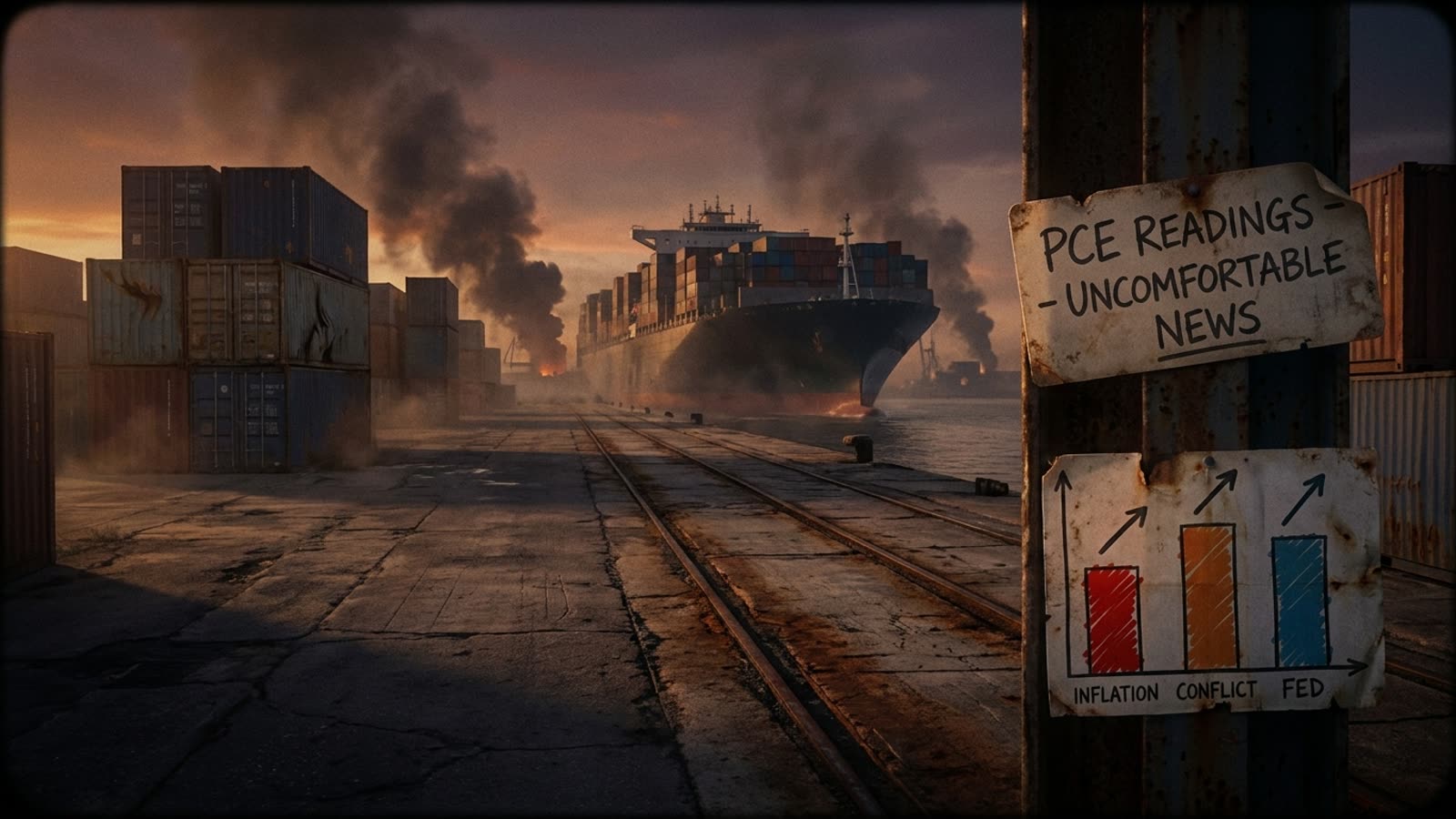
The personal consumption expenditures price index, the Federal Reserve's favored measure of inflation, is poised to reveal what markets have been pricing in for weeks: the conflict with Iran has undone months of careful disinflation progress, and the central bank's rate-cut timeline is now academic.
Economists surveyed ahead of Friday's release expect the core PCE to show a meaningful acceleration from April's reading, driven primarily by energy pass-through effects and supply-chain disruptions that have rippled from the Strait of Hormuz through global shipping lanes to American gas pumps and grocery aisles. The headline number, which includes volatile food and energy components, is expected to be uglier still.
The anatomy of war-driven inflation
This is not the demand-pull inflation of 2021-22, when stimulus checks and reopening euphoria sent Americans on a spending spree. Nor is it the supply-shock inflation of the early pandemic, when factories shuttered and container ships idled. This is something the Fed has less experience managing: geopolitically induced cost-push inflation that operates largely outside monetary policy's reach.
Oil prices have surged on fears of sustained disruption to Persian Gulf shipping. Insurance premiums for tankers transiting the region have multiplied. And the dollar, typically a haven in times of conflict, has weakened as foreign investors question the fiscal trajectory of a nation simultaneously prosecuting military operations and cutting taxes. The result is imported inflation layered atop energy inflation layered atop the base effects of a still-tight labor market.
What the Fed can and cannot do
Chair Kevin Warsh, who took the helm in February, has been careful to distinguish between inflation the Fed can influence and inflation it cannot. In testimony last month, he noted that monetary policy "cannot drill for oil or negotiate ceasefires." The implication was clear: don't expect rate cuts to come riding to the rescue of an economy buffeted by external shocks.
But the Fed's options are constrained in the other direction too. Raising rates to combat war-driven inflation would punish American households and businesses for events beyond their control, and would risk tipping an already slowing economy into recession. The most likely path is prolonged pause—rates held steady while policymakers wait for clarity that may not come for months.
Markets are already adjusting
Fed funds futures have pushed the first expected rate cut well into 2027. The two-year Treasury yield, sensitive to near-term policy expectations, has climbed back above 4.5 percent after briefly dipping below 4 percent in early spring. Equity markets, meanwhile, have shown remarkable resilience, buoyed by the same defense and energy stocks that benefit from the conflict driving inflation higher.
Our take
The Fed spent three years trying to engineer a soft landing, and for a brief moment this spring it looked like they might pull it off. Then geopolitics intervened, as it has a habit of doing. Friday's PCE print will confirm what everyone already suspects: the inflation fight is not over, it has merely entered a new phase—one where the central bank is more spectator than protagonist. Warsh's Fed will need to communicate patience without appearing passive, and resolve without appearing reckless. It is a needle that may prove impossible to thread.