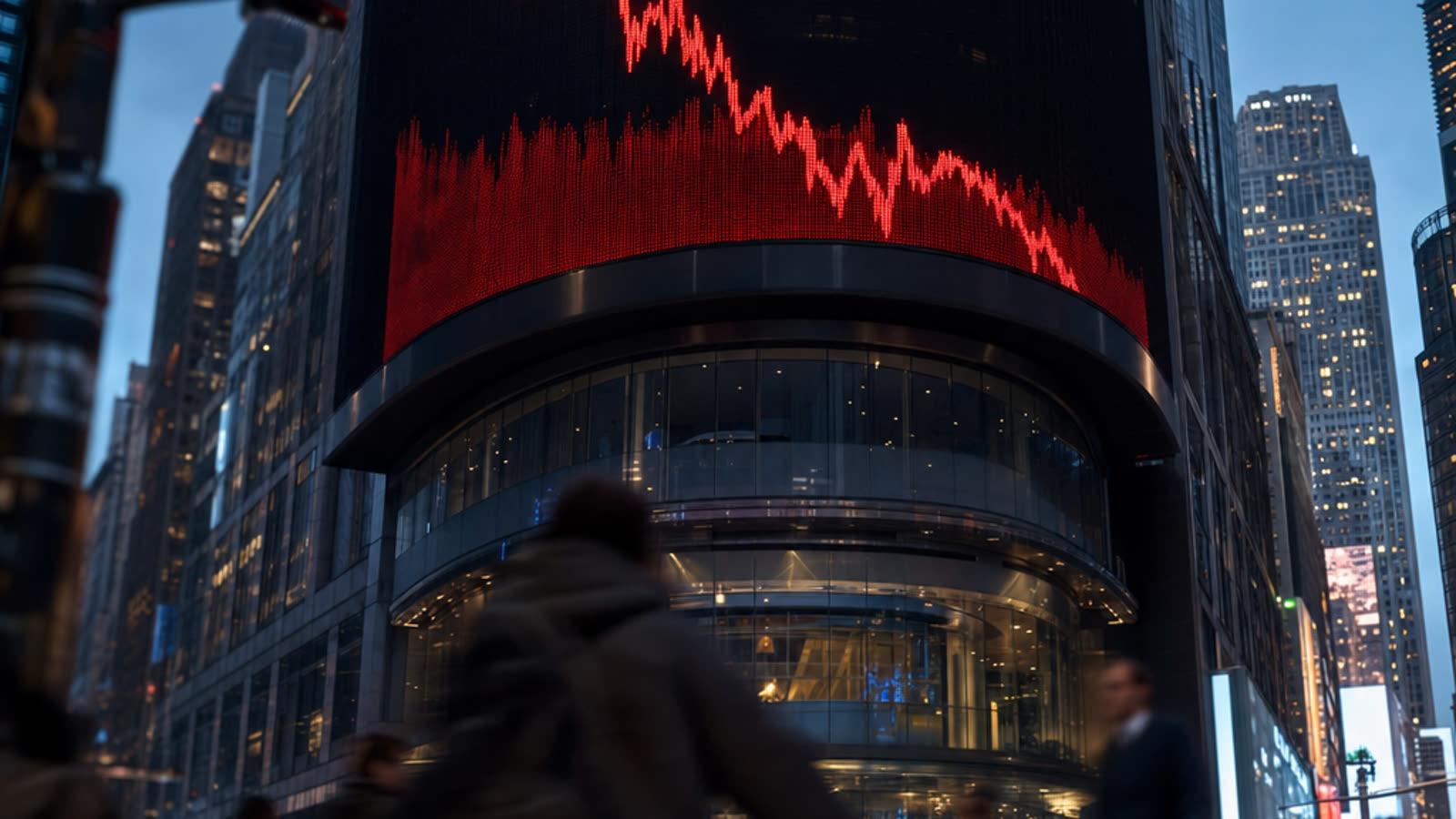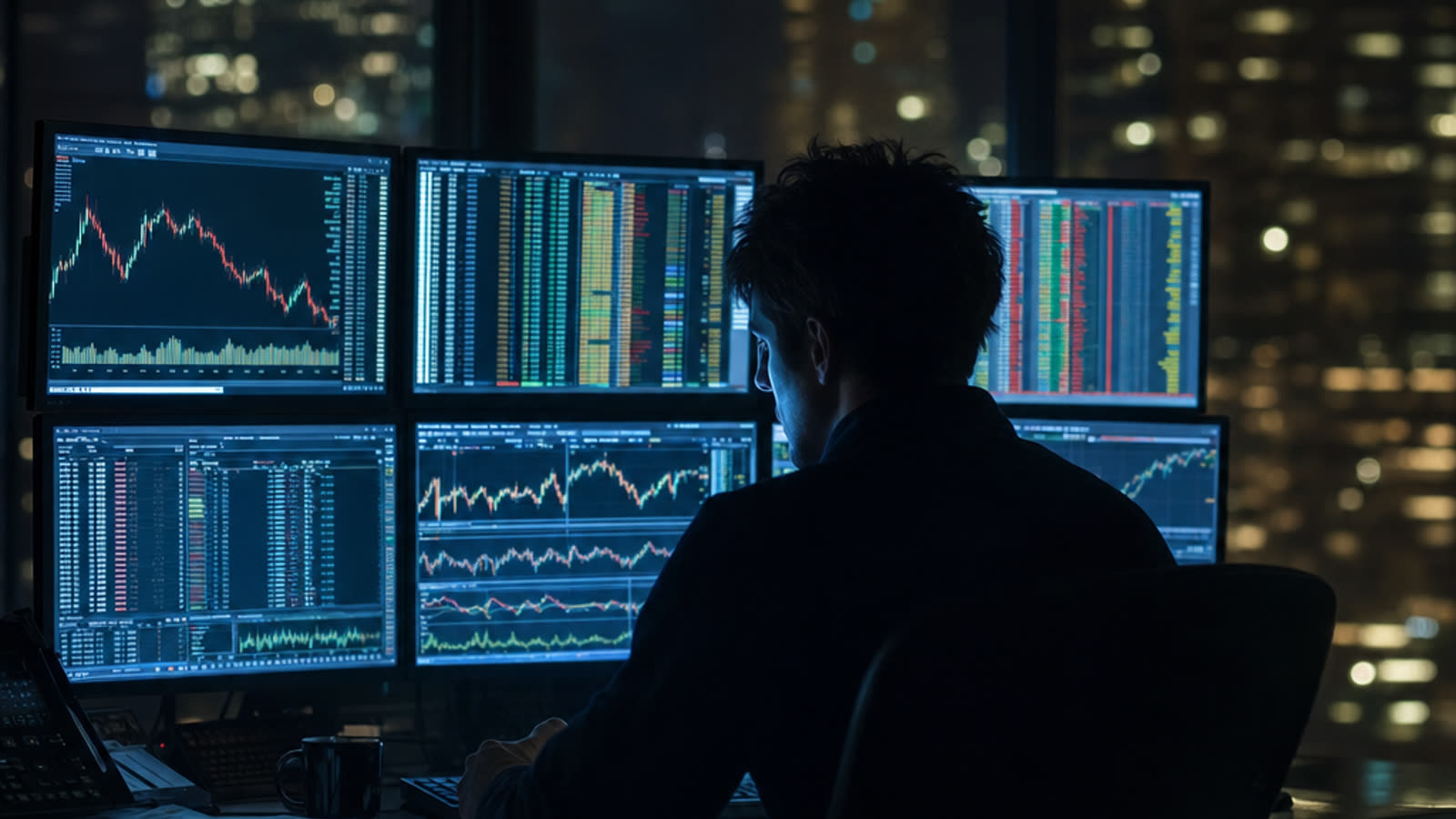
The stock market's basic architecture is shifting beneath investors' feet, reshaped by artificial intelligence systems that have come to dominate trading in recent years and are now altering the fundamental mechanics of how securities change hands.
Displayed liquidity — the visible buy and sell orders that once filled exchange order books — has declined by nearly 40 percent over the past five years across major U.S. equity venues, according to data compiled by a market-structure economist who advises institutional investors. At the same time, intraday volatility has widened noticeably during ordinary trading sessions, a pattern market participants attribute in part to the proliferation of machine-learning models that respond to price signals in microseconds.
The transformation marks a departure from the gradual automation that has unfolded over two decades. What distinguishes the current wave is the concentration of sophisticated AI-driven strategies in the hands of a small number of quantitative trading firms, a development that has drawn the attention of regulators even as they remain publicly circumspect about intervention.
"We're seeing structural changes that are qualitatively different from the shift to electronic markets," the market-structure economist said in an interview. "The speed and adaptability of these systems means liquidity can appear and disappear in ways that weren't possible even five years ago."
The Vanishing Order Book
Exchange order books, once thick with resting limit orders that provided a visible cushion for large trades, have thinned considerably. AI-driven trading systems often avoid displaying their intentions, instead relying on sophisticated algorithms that slice orders into tiny pieces and execute them across dozens of venues in fractions of a second.
The result is a market in which the apparent depth — the volume of shares available at prices near the current quote — has become a less reliable signal. Institutional investors attempting to execute large positions increasingly find that visible liquidity evaporates as they begin trading, forcing them to accept worse prices or abandon strategies that depend on stable order books.
An official at a major U.S. exchange said the shift has required venues to rethink how they attract order flow. "The traditional model assumed participants wanted to advertise liquidity and earn rebates," the official said. "Now the most sophisticated players optimize around not being seen. That changes the entire competitive dynamic among exchanges."
Intraday volatility, measured by the average range between high and low prices during regular trading hours, has climbed even as overnight and multi-day volatility has remained relatively subdued. Market participants point to AI systems' tendency to react in unison to certain signals — a sudden jump in trading volume, an unexpected economic data release, or even the trading patterns of other algorithms.
Concentration and Regulatory Concern
Perhaps most significant is the concentration of AI-driven trading capacity. While thousands of firms employ algorithmic strategies, a small cohort of quantitative trading houses command the most sophisticated machine-learning infrastructure and account for a disproportionate share of market volume.
Regulators at the Securities and Exchange Commission and the Commodity Futures Trading Commission have begun examining whether this concentration poses systemic risks, according to people familiar with internal discussions at both agencies. The concern centers not on any single firm's behavior but on the potential for correlated responses during periods of stress, when multiple AI systems might simultaneously withdraw liquidity or execute in the same direction.
"There's an inherent tension," the market-structure economist said. "These firms provide genuine liquidity and efficiency gains under normal conditions. But the architecture creates fragility that's difficult to observe until it matters most."
The regulatory challenge is compounded by the opacity of machine-learning models. Unlike traditional algorithmic strategies, which follow defined rules, AI systems adapt in ways that can be difficult even for their operators to predict or explain after the fact. That makes pre-emptive regulation complex and raises questions about accountability when markets malfunction.
A Quiet Transformation
For most investors, the changes remain largely invisible. Retail traders executing small orders through brokers experience fills that appear instantaneous and often at prices equal to or better than the displayed quote. The friction surfaces primarily for institutional investors moving large positions and for market makers trying to manage risk in a faster, more opaque environment.
The transformation has also been gradual enough to avoid the kind of dramatic failures that typically spur regulatory action. No "flash crash" has been definitively attributed to AI trading, and market functioning has remained generally orderly even as the underlying structure has shifted.
Yet the accumulation of small changes — thinner order books, wider intraday swings, greater concentration — has left regulators and market participants weighing whether the current trajectory is sustainable or whether new rules will be needed to ensure stability as AI systems become even more dominant.
"We're in a transitional moment," the exchange official said. "The question is whether we're building a more efficient market or a more fragile one."