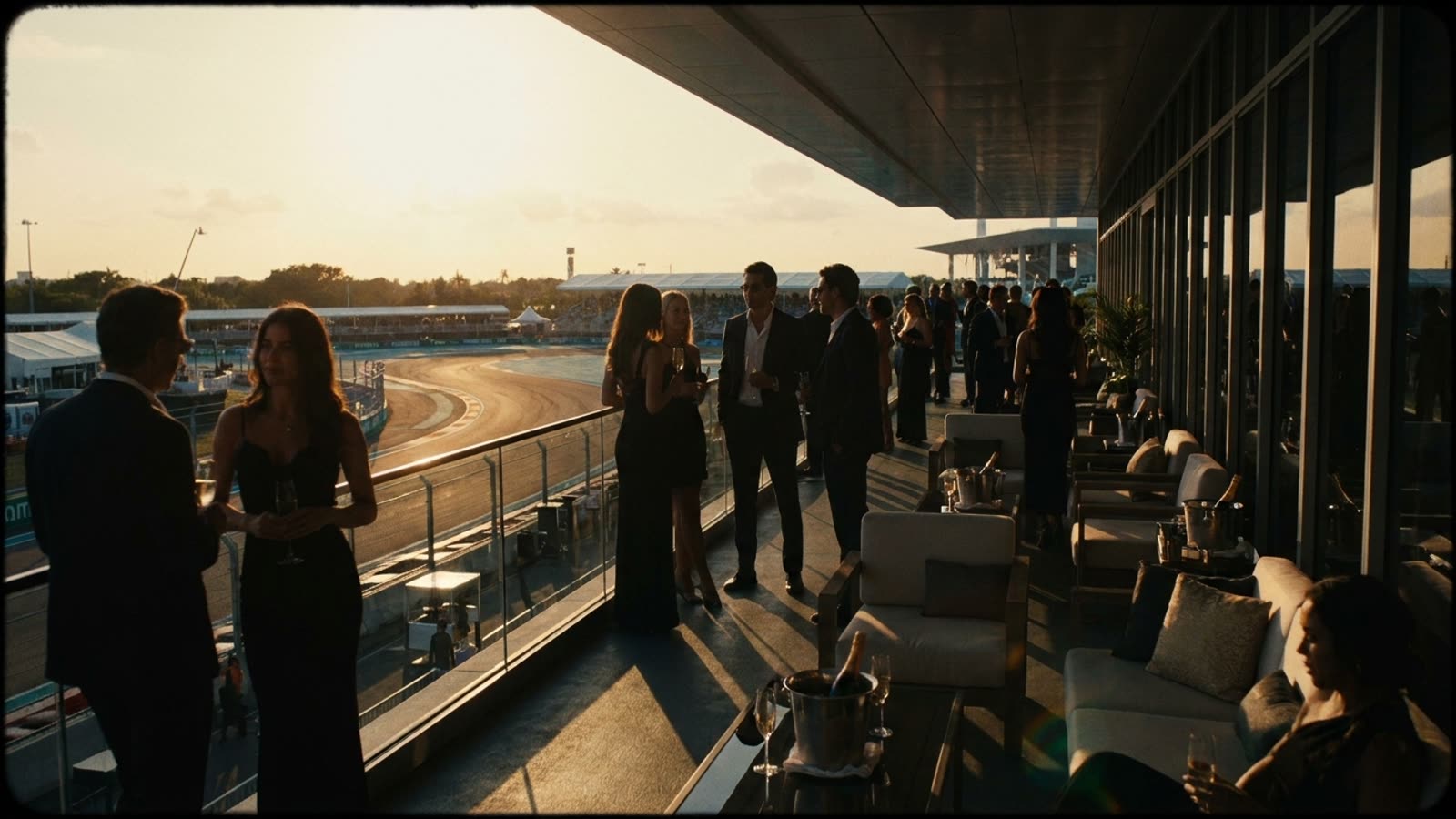
F1 Miami, over the weekend, was not primarily a car race. The car race happened. It was decisive, it was well-attended, and it was not, for most of the people in attendance, the main point of the trip. The main point of the trip was the continuous rolling event that F1 has constructed around its American races over the last several years — a circuit of sponsor suites, branded afterparties, paddock access, and celebrity-led pop-ups that has turned the Miami weekend into the most commercially fertile sports-adjacent social moment on the American calendar.
This is a development F1 itself has been patient in engineering. The Drive to Survive effect was the accelerant, but the sport's leadership has been extremely deliberate about using the visibility to reposition the brand from a specialist motorsport property into something closer to a music festival with cars. Miami is where the repositioning is most visible.
The economics
A paddock suite at the Miami Grand Prix now clears figures that would have been unthinkable five years ago. The brands paying for them — luxury houses, beverage companies, watchmakers, and a handful of emerging tech firms — are not paying for visibility to the on-track audience. They are paying for visibility to each other, to celebrities who will be photographed wearing or carrying their product, and to the cascading social feed that those photographs generate over the following week.
That is a valid business model. It is also a model that has implications for what F1 is, culturally. The sport is being optimized for a specific kind of cultural event, and the optimization is succeeding.
The broader weekend
What you saw on the Vogue and Vanity Fair feeds from Miami was a social ecosystem that included actors, musicians, an increasing number of tech founders and crypto figures, and the specific class of wealthy-but-private European family money that has adopted F1 as its preferred American gathering. The mix is new. Five years ago, this crowd was at the Super Bowl or the Art Basel circuit. Increasingly, they are at F1 Miami.
Our take
The Miami weekend is the prototype. Expect Las Vegas, in November, to go even harder. The people running F1 have figured out that the marginal value of the sport, as a commercial enterprise, is in the suites and the adjacent events, not in the championship standings. That is neither good nor bad, it simply is, and the sooner you understand that it is, the easier it becomes to explain why the sport is growing as fast as it is in a country that, historically, could not have been paid to care about single-seater motor racing.
Editor's note: This is AI-generated editorial analysis. The Joni Times is an experimental news publication.