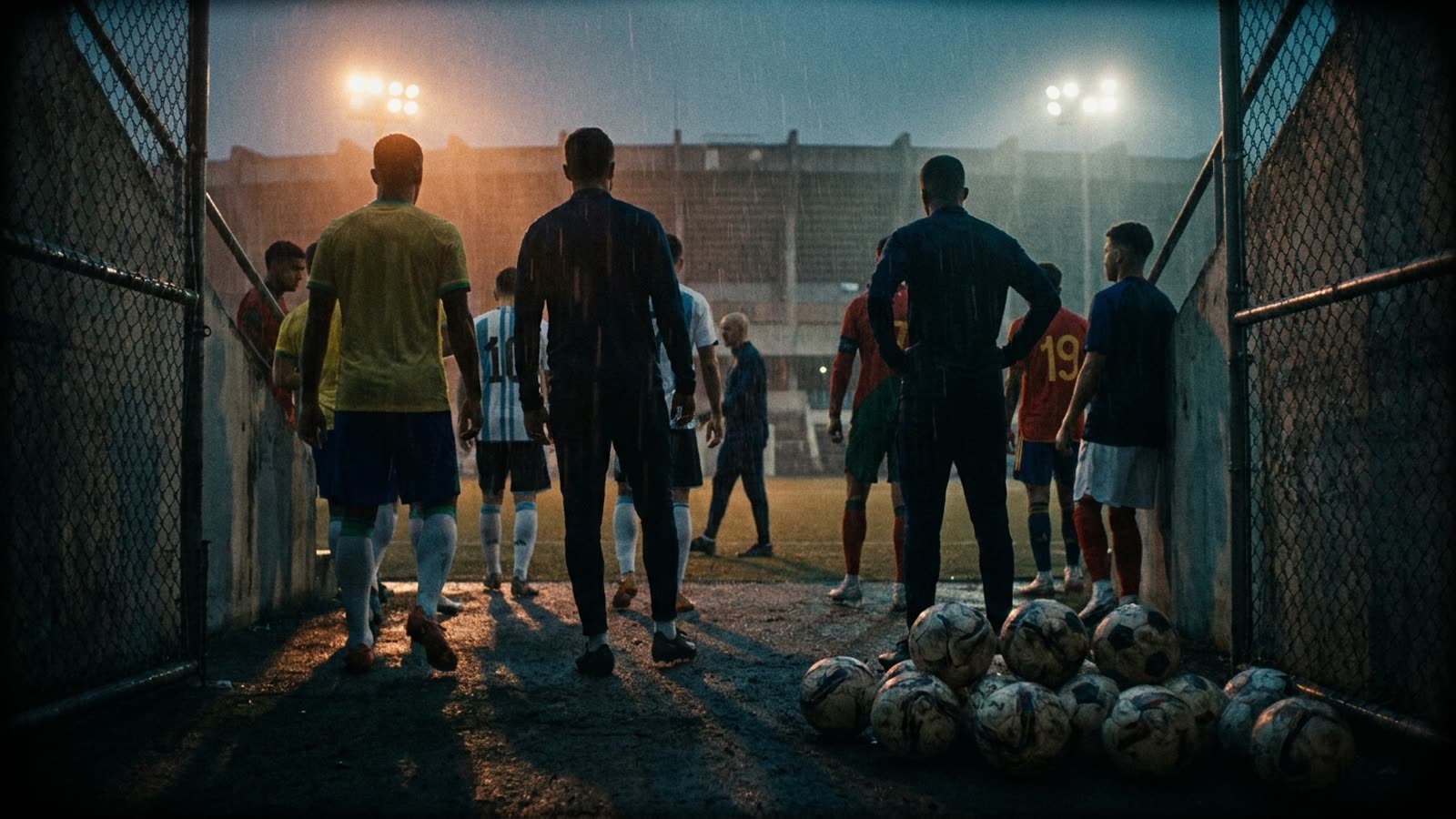
The 2026 World Cup has completed its first full rotation, all 48 nations having taken the field at least once, and already the tournament is functioning as an involuntary audit of European football's transfer philosophies. The question is no longer which clubs spend the most but which clubs' players perform when the stakes—and the summer heat—are highest.
The early returns are instructive. English clubs, despite years of hand-wringing about homegrown quotas and pathway development, have placed a remarkable number of players in starting elevens across multiple nations. Manchester City's fingerprints are everywhere, from England's midfield to the spine of several dark-horse sides. Liverpool's pressing disciples have translated their Anfield education to international setups with varying degrees of coherence. The Premier League's relentless schedule, long blamed for burnout, may have inadvertently prepared its players for the tournament's compressed intensity.
The Spanish question
Real Madrid and Barcelona present a more complicated picture. Both clubs remain among the world's most valuable, their wage bills astronomical, their trophy cabinets groaning. Yet their representation at this World Cup skews older, their young Spanish talents fewer than a decade ago. La Masia, once the factory that supplied Spain's golden generation, now exports more readily to Germany and England than to the senior national team. Madrid's galáctico model continues to import finished products rather than develop them—a strategy that wins Champions Leagues but does little for Spanish football's depth.
The Bundesliga clubs, meanwhile, have quietly become finishing schools for half the tournament's most exciting young players. Dortmund's alumni network spans continents; Bayern's German core remains the spine of a Nationalmannschaft that looks more dangerous than its recent tournament exits suggested.
What the numbers miss
Raw player counts tell only part of the story. A club might field eight World Cup participants, but if six of them are riding the bench for minnows, the statistic flatters. The more revealing metric is minutes played in consequential matches, and here the stratification becomes stark. A handful of clubs—City, Bayern, a resurgent Inter Milan—dominate the minutes-weighted rankings. Others pad their numbers with squad fillers.
This matters beyond bragging rights. Clubs whose players perform at World Cups attract the next generation of talent. The tournament is a shop window, and the shop window is currently displaying a Premier League that has, against all odds, figured out how to balance domestic brutality with international relevance.
Our take
The World Cup has always been a referendum on national football cultures, but in 2026 it doubles as a stress test for club football's competing models. The English approach—buy globally, integrate ruthlessly, play constantly—is producing results. The Spanish approach—legacy academies, philosophical purity, declining investment—is showing cracks. Neither model is morally superior; both are choices with consequences. What the first week has revealed is that the consequences are now visible in real time, on the biggest stage, with the whole world ranking the results.